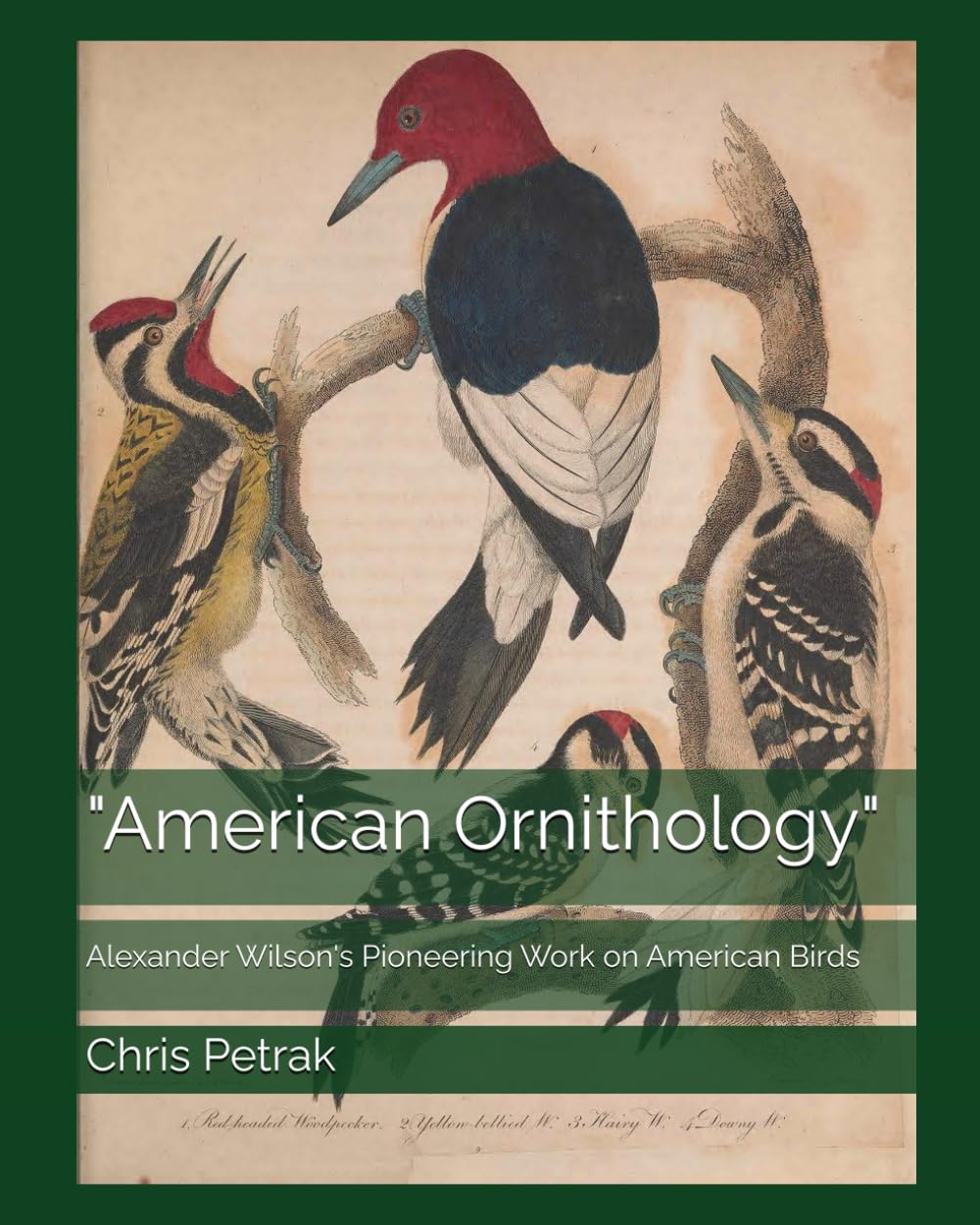
"American Ornithology": Alexander Wilson's Pioneering Work on American Birds
$25.00
by Chris Petrak



When Alexander Wilson published his American Ornithology, 1808-1814, his work broke new ground in multiple ways.It was an American work of science researched, written, and printed entirely in America. It was based on first hand field observations of birds. It challenged some of the most distinguished European naturalists. It attained international status, and became a standard reference for decades. Wilson’s work stimulated successors, most notably John James Audubon whose Birds of America quickly eclipsed Wilson’s ornithology with stunning art work and species accounts filled with pithy anecdotes. Audubon captured the public’s imagination and gave him a celebrity status which has continued to the present time, relegating Wilson to obscurity among the public, but enduring respect among the scientific community. The conventional wisdom is that Audubon was the better artist (in fact, perhaps the finest avian artist ever.) Wilson, on the other hand, was a far superior ornithologist. Part 1 outlines the history of ornithology in America - the European predecessors and the first American ornithologists (Thomas Jefferson, William Bartram, Charles Willson Peale) - then summarizes the creation of the great works on birds by Alexander Wilson and John James Audubon. Part 2 examines the 34 species accounts which make up Volume 1 of Wilson’s American Ornithology, examining how Wilson’s pioneering work stands the test of time for descriptive accuracy of physical characteristics, habitat, migration, nest building, breeding, seasonal habits, and song.