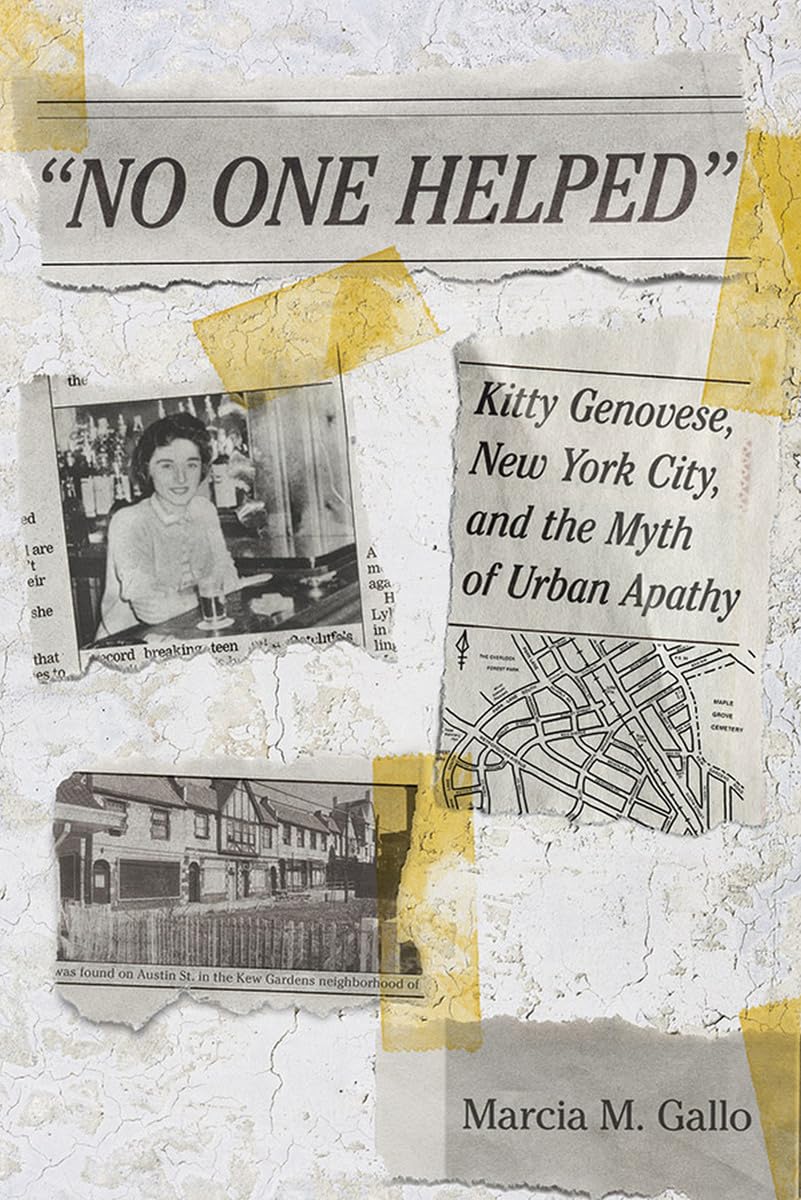
"No One Helped": Kitty Genovese, New York City, and the Myth of Urban Apathy
$25.31
by Marcia M. Gallo



In "No One Helped" Marcia M. Gallo examines one of America's most infamous true-crime stories: the 1964 rape and murder of Catherine "Kitty" Genovese in a middle-class neighborhood of Queens, New York. Front-page reports in the New York Times incorrectly identified thirty-eight indifferent witnesses to the crime, fueling fears of apathy and urban decay. Genovese's life, including her lesbian relationship, also was obscured in media accounts of the crime. Fifty years later, the story of Kitty Genovese continues to circulate in popular culture. Although it is now widely known that there were far fewer actual witnesses to the crime than was reported in 1964, the moral of the story continues to be urban apathy. "No One Helped" traces the Genovese story's development and resilience while challenging the myth it created. "No One Helped" places the conscious creation and promotion of the Genovese story within a changing urban environment. Gallo reviews New York's shifting racial and economic demographics and explores post–World War II examinations of conscience regarding the horrors of Nazism. These were important factors in the uncritical acceptance of the story by most media, political leaders, and the public despite repeated protests from Genovese's Kew Gardens neighbors at their inaccurate portrayal. The crime led to advances in criminal justice and psychology, such as the development of the 911 emergency system and numerous studies of bystander behaviors. Gallo emphasizes that the response to the crime also led to increased community organizing as well as feminist campaigns against sexual violence. Even though the particulars of the sad story of her death were distorted, Kitty Genovese left an enduring legacy of positive changes to the urban environment. Gallo [is] successful in her quest to restore Genovese's 'personhood.' In a chapter evocatively titled 'Hidden in Plain Sight,' Gallo does a wonderful job placing Genovese within the context of her times as a vibrant, successful, homosexual woman. Gallo’s interviews with Genovese’s lover, Mary Ann Zielonko, and some of Genovese’s friends add poignant and touching details to a life cut tragically short. -- Mariah Adin ― H-Net Reviews Gallo's insightful and important book about the Genovese murder is both a provocative history of the ways apathy continues to challenge our popular memory of social activism and an engaging history of the postwar years that highlights the intersection of a range of social issues and political problems. It deserves a wide audience. -- Randy D. McBee ― Journal of American History Several books and numerous articles have marked the 50th anniversary of the infamous murder of Kitty Genovese on the night of March 13, 1964 in the borough of Queens in New York City. Marcia M. Gallo offers a valuable addition to this literature in a well-written, intelligent, comprehensive, and provocative new account of the often-told story. I believe it will be of interest to a broad range of readers, including social psychologists, other social scientists, and to lay and professional readers interested in any of the many questions raised by the case for policy making, journalism, social planning, and more. -- Robert Levine ― PsycCRITIQUES After reading Gallo's solidly researched book, readers can no longer simply accept the standard narrative about Kitty Genovese's murder and the claims of urban apathy.... She asks us to think more broadly about the ways in which historical narratives build up around important events and sometimes cloud our view of the past.... With this book, Gallo has at least brought the real Kitty Genovese back to life. ― Italian American Review Marcia M. Gallo's historically narrative approach to the Kitty Genovese murder is clear and accessible. Gallo's admirably balanced treatment draws on media coverage, oral history, social scientific literature, and changing memories of the crime. -- Karen Halttunen, University of Southern California, author of Murder Most Foul: The Killer and the American Gothic Imagination Marcia M. Gallo is Associate Professor of History at University of Nevada, Las Vegas. She is the author of Different Daughters: A History of the Daughters of Bilitis and the Rise of the Lesbian Rights Movement .