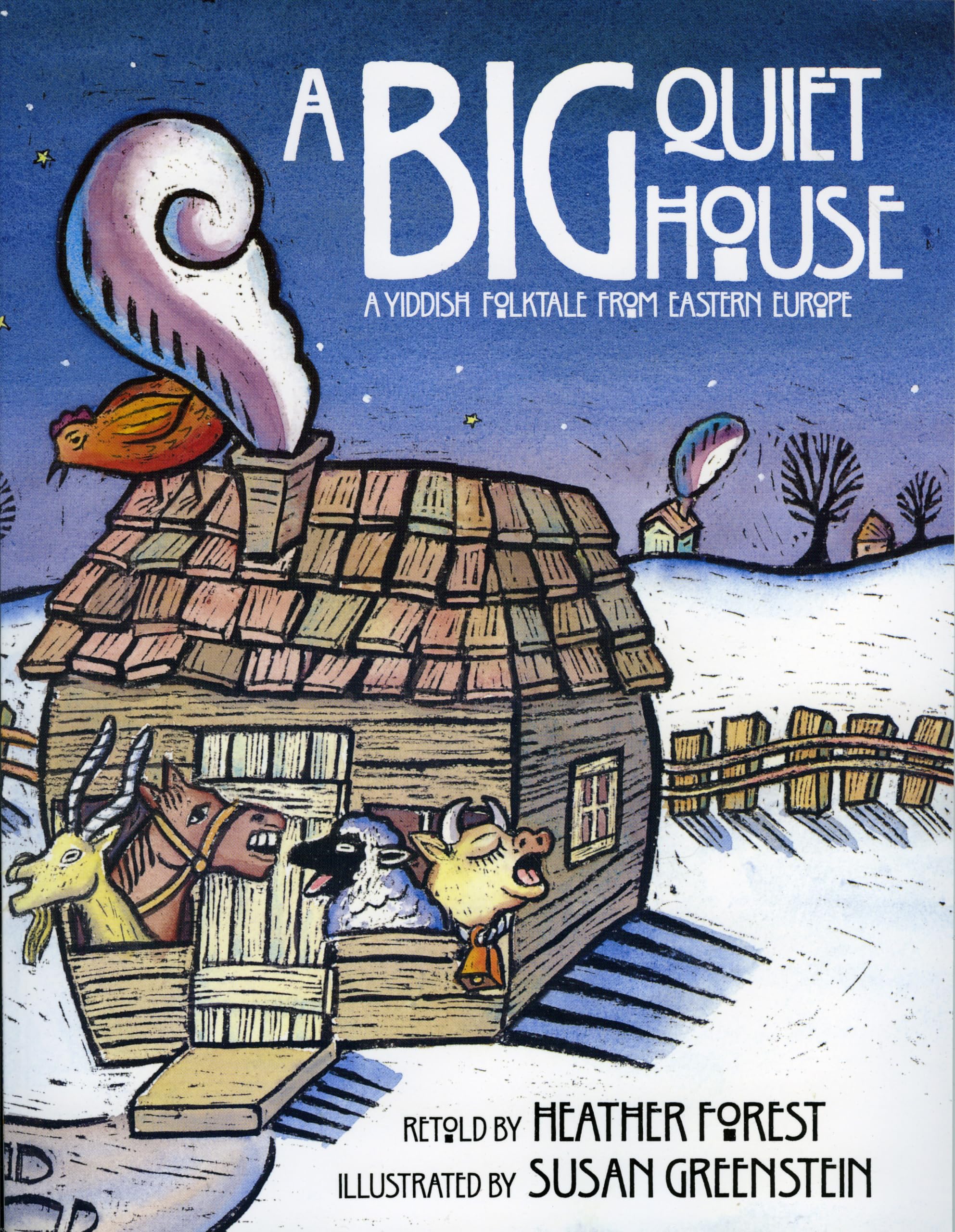



It is the man who changes, and the world he perceives is transformed. With a tiny, cluttered house, giggling children, and a snoring wife, one man can't get a good night's sleep. "If only," he thinks, "I had a big quiet house!" He throws off his covers and decides to visit the wise old woman at the edge of the village. Surely she can help him solve his problem and she does, but not without giving him some very unusual advice. The woman convinces the man to fill his house with rambling animals, none of which cure his sleeping problem. Until one day, the man takes the animals back to where they belong, and he welcomes the rhythmic sound of his wife's snoring. This ancient Yiddish folktale proves that quite often, nonsense makes the best sense of all. Susan Greenstein's bold illustrations—white pencil on black surface with watercolor - carry the reader through the warm interiors and peaceful nights of the shtetls of Eastern Europe. This story highlights the importance of perspective. Everyone has problems, however attitude can dramatically affect perception. It is the man who changes, and the world he perceives is transformed. In a rhythmic storytelling voice, Forest gives us a wonderful version of the old Yiddish folktale ‘It Could Always be Worse.’ Greenstein’s bold, colorful pictures with thick black lines are great for group sharing; they capture the broad farce and the droll characters of the shtetl setting....Shelve this with Margot Zemach’s classic 1976 version of the story. ― Booklist Greenstein’s bright, colorful scratchboard illustrations add a delightfully humorous tone to the piece. ― School Library Journal A poor man who longs for a "big quiet house" where his wife’s snoring and his children’s giggling will not annoy him consults the wisest woman in the shtetl (most versions cast a rabbi as the advice-giver). On successive visits, she instructs him to bring first a chicken, then a goat, horse, cow, and a sheep inside his house, which of course adds to the din. Finally, when she tells him to remove the noisy animals, the man has a new appreciation for his relatively large and quiet house. Forest hams up her telling with intermittent rhymes and refrains, inviting audience participation with a number of animal noises … Greenstein enhances the story’s historical flavor by using watercolor and streaky white pencil on a black surface, resulting in a pleasingly old-fashioned, woodcut-like appearance. Ages 4-7. ― Publishers Weekly There once was a man whose house was very small. It was cluttered with things from wall to wall. With a tiny, cluttered house, giggling children, and a snoring wife, the poor man in this story can't get a good night's sleep. If only, he thinks, I had a big, quiet house! He throws off his covers and goes to visit the wise old woman at the edge of the village. Surely she can help him solve his problem. And she does, but not without giving him some very nonsensical advice. "Bring a chicken into your house", she suggests. And when that doesn't work, she has him add a goat, a horse, a cow, and a sheep. The ending of the story proves, as so many ancient folktales do, that quite often, nonsense makes the best sense of all. Susan Greenstein's bold illustrations -- white pencil on black surface with watercolor -- carry the reader through the warm interiors and peaceful nights of the shtetls of Eastern Europe. Heather Forest Bio: Heather Forest's unique minstrel style of telling stories blends her original music, folk guitar, poetry, and prose along with song and the spoken word to give her stories an uncommon warmth and charm. She has toured widely performing her repertoire of world folktales for the past thirty years to theatres, major storytelling festivals, schools and conferences throughout the world. Heather’s books have received many prestigious awards including the Children’s Choice Award, Parent’s Choice Award, CCBC Choices, ABC Best Books for Children, Best Children’s Books of the Year, Book Sense Winter Children’s Picks, and the National Parenting Publication Awards (NAPPA) among others. Heather is currently working on her tenth book with August House, a collection of ancient and epic tales. Ms. Forest holds a Master's Degree in Storytelling and she is a recipient of the Circle of Excellence Award presented by the National Storytelling Network. Her many performance credits include The Smithsonian Institute, Washington, D.C., The National Storytelling Festival, The Edinburgh Festival in Scotland, Tales of Graz Festival in Austria, the Sidmouth International Festival in England and the Glistening Waters Storytelling Festival in New Zealand. Susan Greenstein Bio: Susan Greenstein grew up in Astoria, Queens and has lived and worked in Brooklyn since she was a college student at Pratt Institute where she received her BFA in Fine Arts in Drawing and Painting, and went on to receive her MSE from Queens College. Susan spent the following 12 years illustra