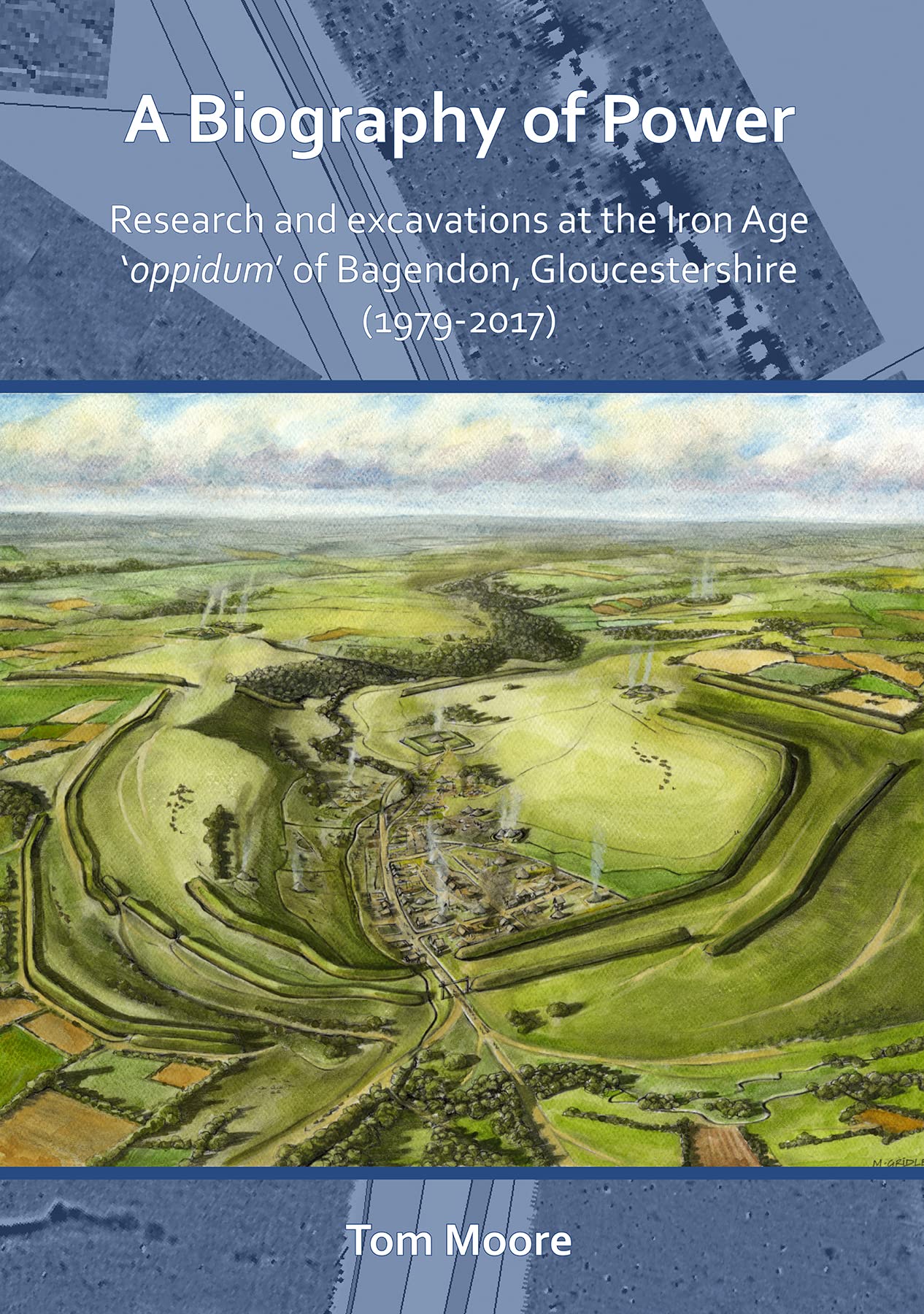



A Biography of Power explores the changing nature of power and identity from the Iron Age to Roman period in Britain. Presenting detailed excavation results and integrating a range of comprehensive specialist studies, the book provides fresh insights into the origins and nature of one of the lesser-known, but perhaps most significant, Late Iron Age oppida in Britain: Bagendon in Gloucestershire. Combining the results of a large-scale geophysical survey with analysis of both historic and new excavations, this volume reassesses Iron Age occupation at Bagendon. It reveals evidence for diverse artisanal activities and complex regional exchange networks that saw livestock, and people, travelling to Bagendon from west of the Severn. The results of the excavation of two morphologically unusual, banjo-like enclosures, and of one of the previously unexamined dykes, has revealed that the Bagendon oppidum had earlier origins and more complex roles than previously envisaged. The volume also provides new insights into the nature of the Iron Age and Roman landscape in which Bagendon was situated. Detailing the discovery of two, previously unknown, Roman villas at Bagendon demonstrates the continued significance of this landscape in the early Roman province. This volume redefines Bagendon as a landscape of power, offering important insights into the changing nature of societies from the Middle Iron Age to the Roman period. It calls for a radical reassessment of how we define oppida complexes and their socio-political importance at the turn of the 1st millennium BC. Contains contributions from Sophia Adams, Michael J. Allen, Sam Bithell, Cameron Clegg, Geoffrey Dannell, Lorne Elliott, Elizabeth Foulds, Freddie Foulds, Christopher Green, Darren Gröcke, Derek Hamilton, Colin Haselgrove, Yvonne Inall, Tina Jakob, Mandy Jay, Sally Kellett, Robert Kenyon, Mark Landon, Edward McSloy, Janet Montgomery, J.A. Morley-Stone, Geoff Nowell, Charlotte O’Brien, Chris Ottley, Cynthia Poole, Richard Reece, Harry Robson, Ruth Shaffrey, John Shepherd, Jane Timby, Dirk Visser, D.F. Williams, Steven Willis. Table of Contents Summary Acknowledgements Chapter 1: Research at Bagendon Chapter 2: The wider Bagendon complex: remote sensing surveys 2008-2016 Chapter 3: Before the ‘oppidum’: Excavations at Scrubditch and Cutham enclosures Chapter 4: Revisiting Late Iron Age Bagendon Chapter 5: After the ‘oppidum’. Excavations at Black Grove Chapter 6: Iron Age and Roman ceramics Chapter 7: Brooches Chapter 8: Metalwork Chapter 9: An analytical study of the Iron Age bloomery slag Chapter 10: Coinage Chapter 11: Coin moulds Chapter 12: Miscellaneous material Chapter 13: Radiocarbon dates and Bayesian analysis Chapter 14: Dating the Roman fort at Cirencester Chapter 15: Human Remains Chapter 16: Faunal Remains Chapter 17: Isotopic analysis of human and animal remains Chapter 18: The plant and invertebrate remains (1979-2017) Chapter 19: Putting the Bagendon complex into its landscape setting: the geoarchaeological and land snail evidence Chapter 20: Viewsheds and Least Cost analysis of the Bagendon complex and its environs Chapter 21: Geophysical survey at Hailey Wood Camp, Sapperton, Gloucestershire Chapter 22: Geophysical survey at Stratton Meadows, Stratton, Gloucestershire Chapter 23: Becoming the Dobunni? Landscape change in the Bagendon environs from the Early Iron Age to AD 150 Chapter 24: The Bagendon complex: a biography Chapter 25: Conclusions and future prospects Bibliography