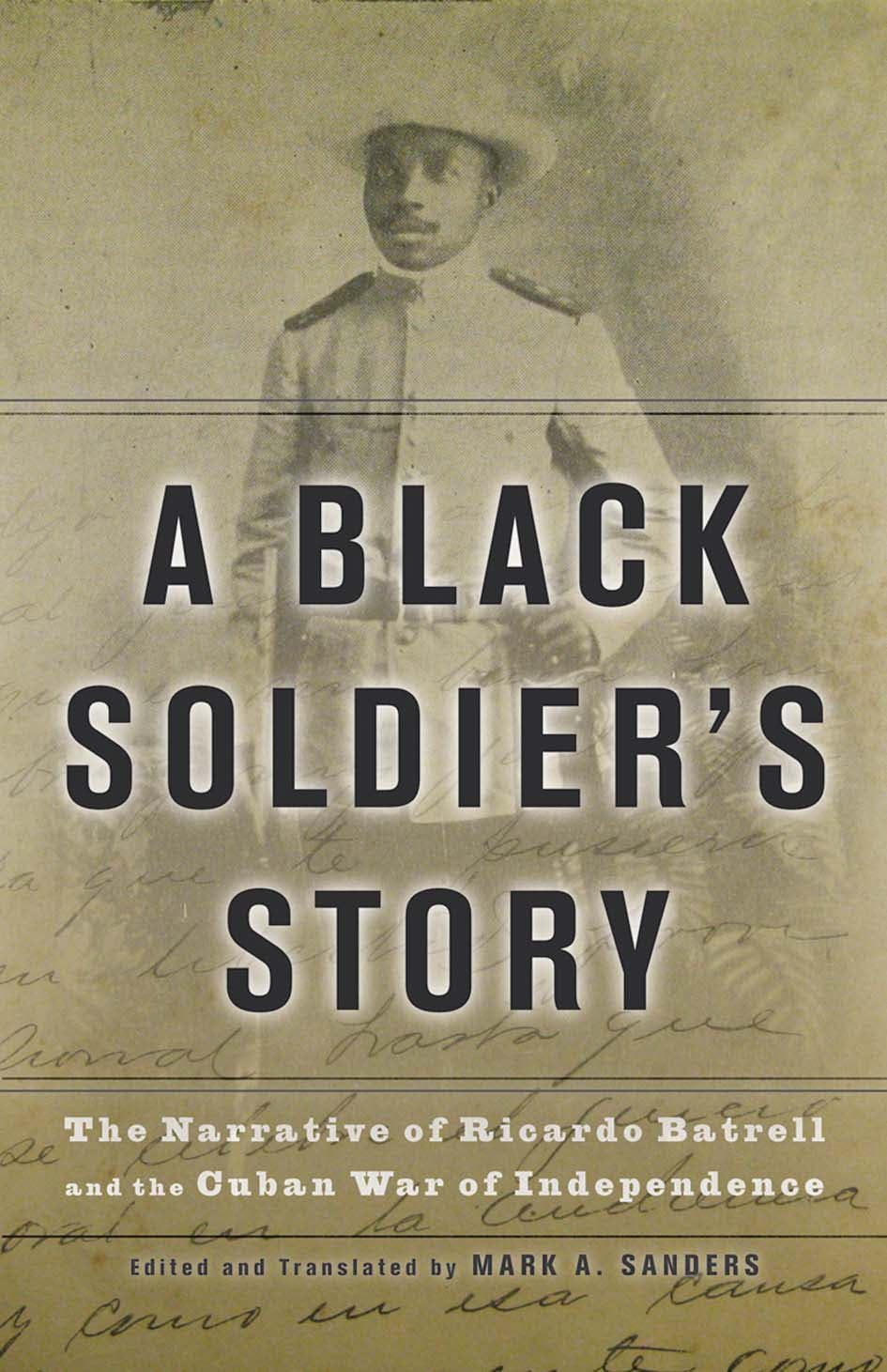
A Black Soldier’s Story: The Narrative of Ricardo Batrell and the Cuban War of Independence
$21.63
by Ricardo Batrell



In 1896, an illiterate, fifteen-year-old Afro-Cuban field hand joined the rebel army fighting for Cuba's independence. Though poor and uneducated, Ricardo Batrell believed in the promise of Cuba Libre, the vision of a democratic and egalitarian nation that inspired the Cuban War of Independence. After the war ended in 1898, Batrell taught himself to read and write and published a memoir of his wartime experiences, Para la Historia . Originally published in 1912-the same year in which the Cuban government massacred more than 5,000 Afro-Cubans-this work of both protest and patriotism is the only autobiographical account of the war written by an Afro-Cuban soldier. After the war, Batrell became dismayed by the Cuban Republic's rapid retreat from the revolution's democratic ideals. Government corruption, racial discrimination, and the systematic exclusion of black veterans from public service had helped to reassert the racial hierarchy of colonial Cuba. With his memoir, Batrell hoped to remind Cubans about the participation of Afro-Cubans in the war (as much as 80 percent of the Cuban Liberation Army may have been Afro-Cuban) and to protest their subjugation in its aftermath. Now available for the first time in English, Batrell's powerful memoir provides profound insights into the role of race in the nation's history. Deftly rendering Batrell's forceful and energetic prose into English, Mark A. Sanders also puts forth a critical introduction that contextualizes Batrell's perspective within Cuba's colonial history and its racial politics. "Black soldiers played a crucial―also inadequately appreciated―role in winning Latin American independence, and nowhere more so than in Cuba. Many thanks to Mark A. Sanders for giving Ricardo Batrell’s rare and remarkable testimony a vigorous, well-contextualized, and carefully-annotated voice in English." ―John Charles Chasteen, University of North Carolina, Chapel Hill "In an anticolonial army that was primarily black, Ricardo Batrell was one of only two black soldiers to write his own memoir of Cuba’s final War of Independence, the riveting story of his experience as a black soldier in a war that mobilized thousands of black men and that profoundly challenged racial hierarchies and assumptions. It is also a moving account of Batrell’s sense of betrayal as the promise of that movement gave way to U.S. intervention. An unusual and wonderfully rich source, available now more widely thanks to Mark Sanders’s lively and most welcome translation." ―Ada Ferrer, NYU "By finding and translating Batrell’s memoir, Sanders has performed a major service. A Black Soldier’s Story is an important work that shows how Cuba has more in common with the black Caribbean than with lighter-coloured mainland Latin America."― Caribbean Review of Books "The English language translation of Batrell’s narrative provides a new vantage point for Atlantic historians to engage in comparative histories regarding the racial attitudes of post-emancipation societies."― Colonial Latin American Historical Review "Thanks to Mark Sanders’s translation and excellent scholarly apparatus, this insightful and elusive work is now available to scholars and students of Cuba, Afro- Latin America, and the era of imperial transitions in the Caribbean."― Hispanic American Historical Review Mark A. Sanders is associate professor of African-American studies and English at Emory University. His books include Afro-Modernist Aesthetics and the Poetry of Sterling A. Brown . Used Book in Good Condition