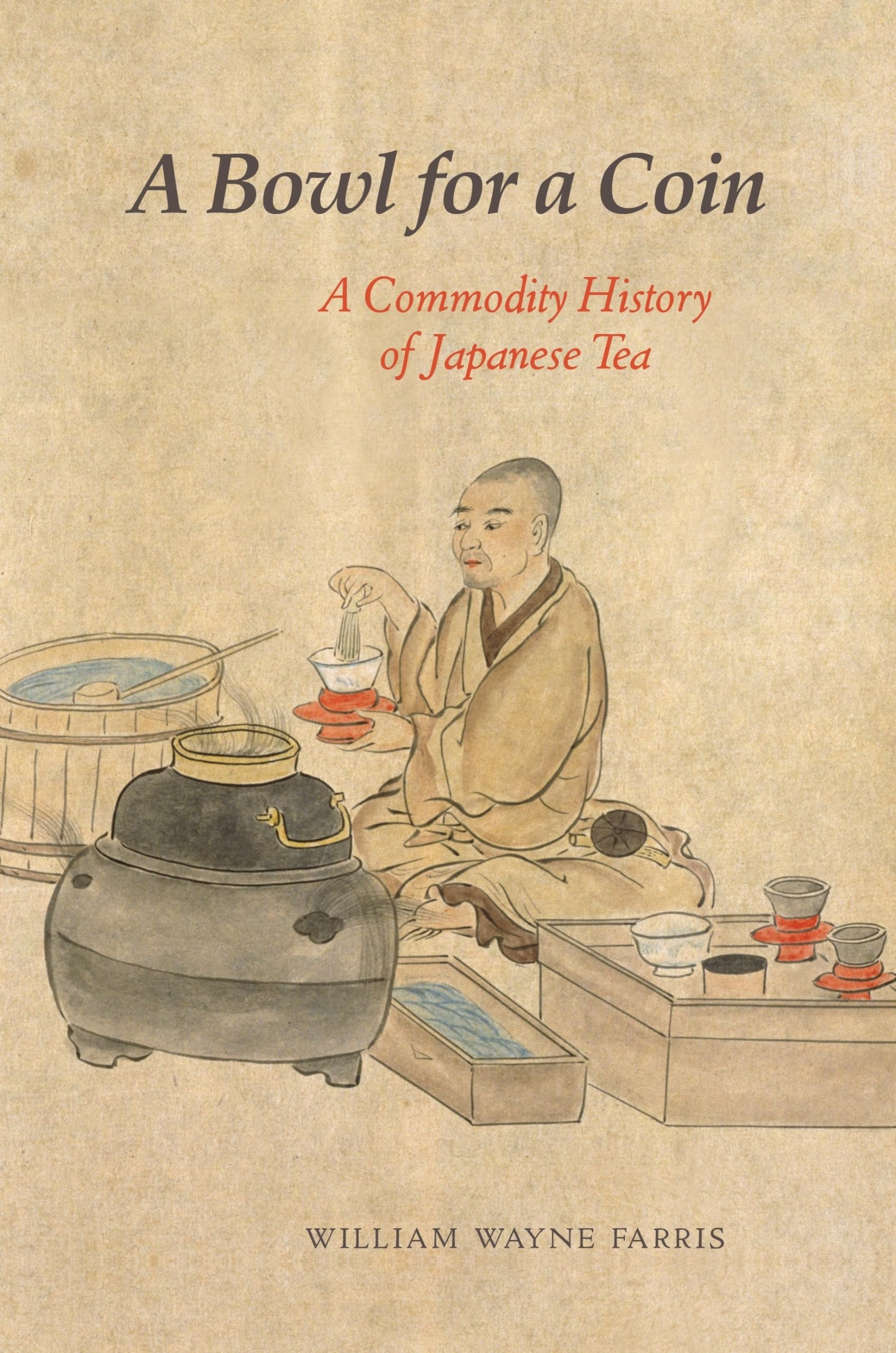



A Bowl for a Coin is the first book in any language to describe and analyze the history of all Japanese teas from the plant’s introduction to the archipelago around 750 to the present day. To understand the triumph of the tea plant in Japan, William Wayne Farris begins with its cultivation and goes on to describe the myriad ways in which the herb was processed into a palatable beverage, ultimately resulting in the wide variety of teas we enjoy today. Along the way, he traces in fascinating detail the shift in tea’s status from exotic gift item from China, tied to Heian (794–1185) court ritual and medicinal uses, to tax and commodity for exchange in the 1350s, to its complete nativization in Edo (1603–1868) art and literature and its eventual place on the table of every Japanese household. Farris maintains that the increasing sophistication of Japanese agriculture after 1350 is exemplified by tea farming, which became so advanced that Meiji (1868–1912) entrepreneurs were able to export significant amounts of Japanese tea to Euro-American markets. This in turn provided the much-needed foreign capital necessary to help secure Japan a place among the world’s industrialized nations. Tea also had a hand in initiating Japan’s “industrious revolution”: From 1400, tea was being drunk in larger quantities by commoners as well as elites, and the stimulating, habit-forming beverage made it possible for laborers to apply handicraft skills in a meticulous, efficient, and prolonged manner. In addition to aiding in the protoindustrialization of Japan by 1800, tea had by that time become a central commodity in the formation of a burgeoning consumer society. The demand-pull of tea consumption necessitated even greater production into the postwar period―and this despite challenges posed to the industry by consumers’ growing taste for coffee. A Bowl for a Coin makes a convincing case for how tea―an age-old drink that continues to adapt itself to changing tastes in Japan and the world―can serve as a broad lens through which to view the development of Japanese society over many centuries. One of the strengths of this book is Farris’s ability to draw the reader’s attention to continuities across time while also highlighting the many changes that took place. As all good macro-histories do, Farris gives the reader some key moments of change to consider. . . . Another strength of the book is the new perspective it gives on some of the oft-repeated points in the story of tea in Japan. Indeed, this alone makes it a must-read for all those interested in Japanese tea history, including the many practitioners of chanoyu tea culture and the increasing number of people working in tea-related business, who all communicate general information about the origins and early development of tea in Japan to public audiences. -- Rebecca Corbett, University of Southern California ― The Journal of Japanese Studies, 79:2 (May 2020) William Wayne Farris is professor emeritus of Japanese history at the University of Hawai‘i, where he served for twelve years as the Sen Sōshitsu XV Distinguished Chair of Traditional Japanese History and Culture.