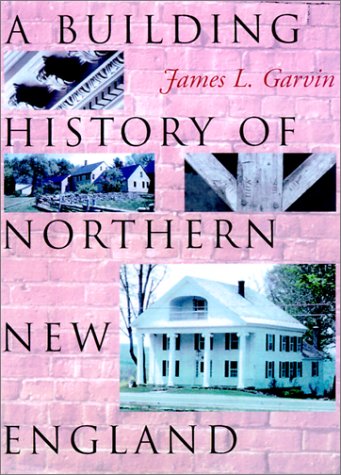



This is a book about understanding old buildings. In an era in which much of the US landscape has been littered by unimaginative, prefabricated structures, James L. Garvin tells owners and would-be owners of old buildings in Maine, New Hampshire, and Vermont what they need to know before they begin the restoration process. In wonderfully lucid prose, Garvin describes the production of the materials from which the buildings of northern New England were built, outlines the stylistic evolution of the region's structures from the early 1700s to World War II, and offers guidelines for dating old buildings. Focusing on domestic architecture, but including examples of public, commercial, religious, and industrial buildings, he offers custodians of buildings an understanding of the technologies embodied in these structures, answers questions about stylistic changes, and allows the architecture of northern New England to be understood for the first time with a technical depth that is already available for buildings in better-studied parts of the US. Written for both homeowners and those responsible for public and museum structures, this volume provides an understanding of the region's building history even as it specifically answers questions that most often perplex architects and preservationists. By offering all custodians of northern New England buildings a richer understanding of architectural style and structure, the book encourages the use of appropriate methods and materials in building conservation and rehabilitation. Generously illustrated throughout, the book is also an essential resource for anyone who is interested in American and New England architecture and the building trades, and for anyone who has ever wondered about the secrets and stories of old buildings. 8 1/2 x 11 trim. 150 illus. 45 figs. LC 00-010536 From the book Whether you love or merely tolerate your old house, it is well to approach the building with one truth firmly in mind. Human life is short. The life of a house is potentially limitless. Even in the youthful US, we have houses that have been sheltering families for three hundred years or more. Barring disaster or imprudent neglect, your house is destined to outlive you. You are but one in a long line of custodians of the property a line that extends backward through the decades or centuries and forward to an indefinite future. That being the case, let the changes you make to your property be additive rather than subtractive in nature. If you need a new kitchen or bathroom or furnace, install it. But wherever possible, install it in such a way as to preserve original features or fabric . . . Try to make your work add to the legacy of the past so that you can pass a dwelling of even greater value and comfort to the future. Remember that the number of old houses is finite, and diminishes each year. It is a privilege and responsiblity to own a piece of the past. JAMES L. GARVIN has served as the State Architectural Historian, New Hampshire Division of Historical Resources, since 1987. His familiarity with the region's buildings derives from over 20 years of curatorship, from writing or editing almost 200 National Register nominations, and from preparing over 150 reports on historic buildings. He has supervised the restoration of several 18th-century structures. Used Book in Good Condition