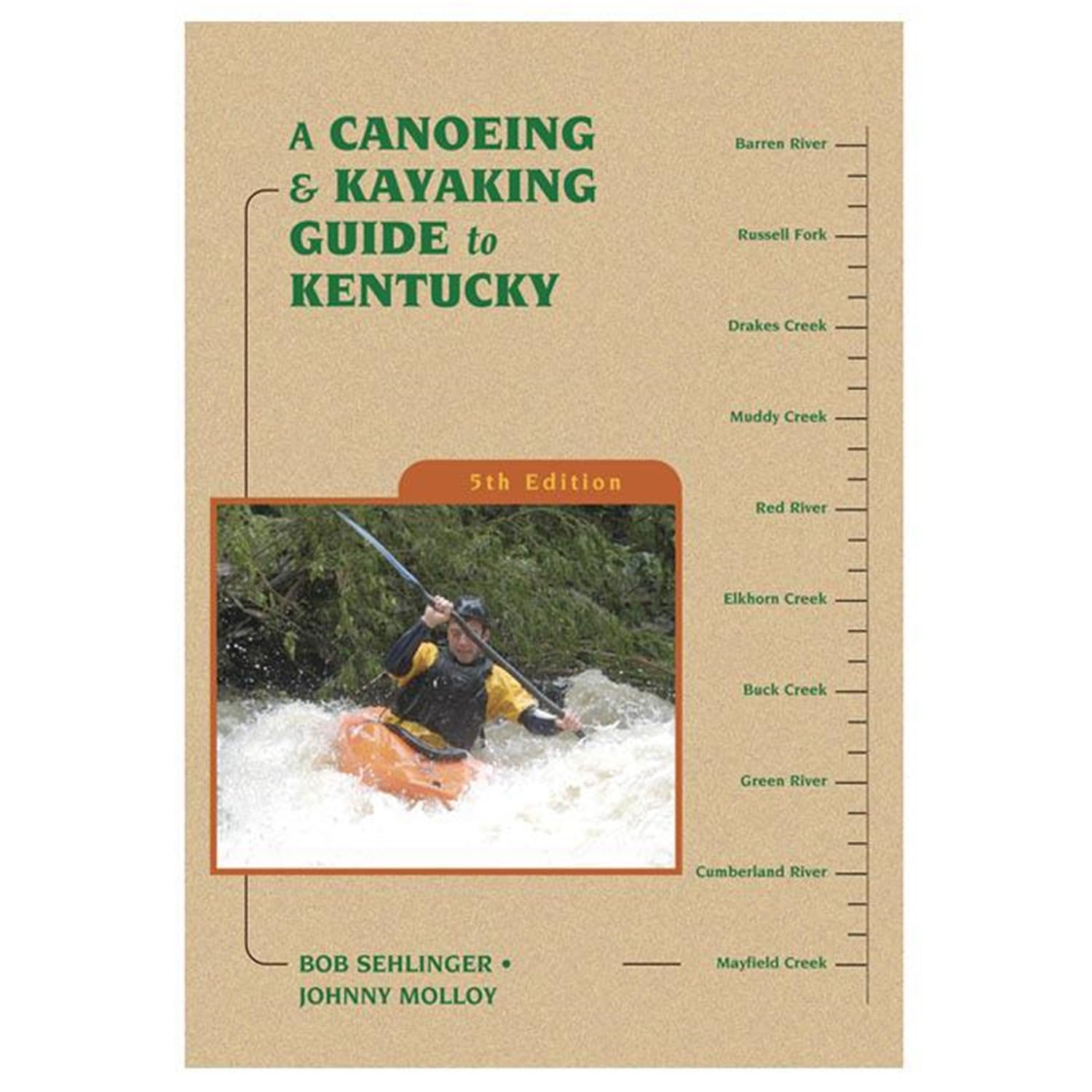



With approximately 54,000 miles of streams and rivers, Kentucky has more miles of running water than any state except Alaska. Wet your paddling blade and whet your paddling appetite with the authority on paddling the waterways of KentuckyA Canoeing & Kayaking Guide to Kentucky. Researched and written by veteran outdoor writers and paddlers Bob Sehlinger and Johnny Molloy, A Canoeing & Kayaking Guide to Kentucky is as vital to enjoying Kentucky’s waterways as the boat itself. From the coal fields of Eastern Kentucky to Kentucky’s western border along the Mighty Mississippi, this redesigned and completely updated guide to paddling the creeks, rivers, and coastal waterways of the Bluegrass State covers thousands of miles of paddling that range in difficulty from scenic floats down the Cumberland to whitewater runs of the Russell Fork. New maps, new river profiles, completely updated contact information, at-a-glance data that includes class, length, time, gauge, level, gradient, volume, and ratings for solitude and scenery make this guide an indispensable river companion. ...classic resource...packed with updated maps...descriptions of each of the 77 waterways outlined in the book...invaluable. -- The Courier-Journal, July 8, 2004 ...great book...extensive revision...reference guide that outdoor enthusiasts should own if they travel in search of backwoods adventure. -- Lexington Herald-Leader, July 18, 2004 Wet your paddle and whet your paddling appetite with the authority on paddling the waterways of Kentucky - A Canoeing & Kayaking Guide to Kentucky. From the coalfields of eastern Kentucky to Kentucky's western border along the Mighty Mississippi, this redesigned and completely updated guide to paddling the creeks, rivers, and coastal waterways of the Bluegrass State covers thousands of miles of paddling, which ranges in difficulty from scenic floats down the Green to whitewater runs on the Russell Fork. New maps, new river profiles, new at-a-glance data box on river description, shuttle, and gauge and updated contact information make A Canoeing & Kayaking Guide to Kentucky an indispensable aid to enjoying Kentucky's waterways. A native of Kentucky, Bob Sehlinger has led canoeing trips throughout eastern North America and is the former president of the Eastern Professional River Outfitters Association. He is the creator of the Unofficial Guide travel series and a recipient of the Lowell Thomas Gold Award for journalistic excellence. Founder and publisher of Menasha Ridge Press, Sehlinger lives in Birmingham, Alabama, where he enjoys mountain biking and playing the drums. Johnny Molloy is an outdoor writer based in Johnson City, Tennessee. He has averaged over 100 nights in the wild per year since the early 1980's, backpacking and canoe camping throughout the country. He has written numerous hiking and tent camping guides for the southeastern states, Wisconsin and Colorado. This section of the river flows through the Daniel Boone National Forest. It is extremely remote and makes a good canoe-camping run at moderate water levels (500-1100 cfs) and a fair whitewater run at higher levels (1100-1900). This section has been designated as a Kentucky Wild and Scenic River. As the river passes Williamsburg, rock replaces the muddy bottom found in upper sections of the river, and it continues to widen in places to almost 200-feet across. The gradient also increases, creating some mild whitewater (Class II), with boulders in the stream and some shoals spanning the entire width of the river. The current runs swift and continuously, with very few pools. Boulders line the banks in increasing numbers and some flat, accessible terraces have been carved along the streamside. As the Cumberland begins to enter the deep gorge that will carry it over the falls and beyond to lake Cumberland, exposed rock palisades become visible on the right. About one mile upstream of the falls, the river curves sharply to the left and the KY 90 bridge becomes visible downstream. Move to the right of the river for the take-out on the upstream side of the bridge (at the picnic ground and parking lot). Failure to move promptly to the right can have tragic consequences for the unlucky or inexperienced. One of the larger shoals (Class II) of this section is situated across the entire river just upstream of the take-out. If you run the shoals on the left, and fill up or capsize, you will find yourself in the main current heading for the entrance rapids to Cumberland Falls several hundred yards downstream. If you run the shoals on the right and take water or turn over, you will be in much slower current. Except at excessive levels (1900 cfs or higher), you will be washed into the bank as the river narrows near the bridge, or alternately, swept downstream past the bridge into a huge eddy that forms along the bank near the visitor's parking lot. CAN/KAY GD TO KENTUCKY