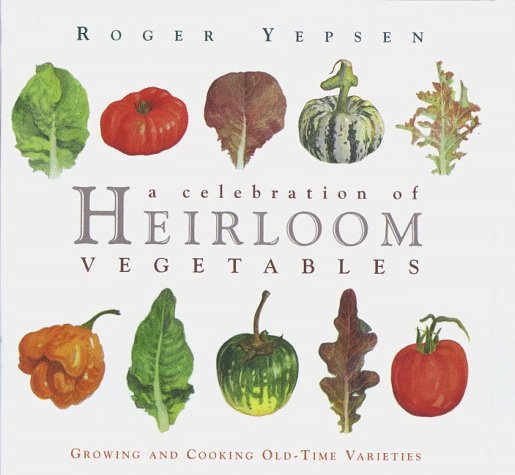
A Celebration of Heirloom Vegetables: Growing and Cooking Old-Time Varieties
$27.93
by Roger Yepsen



Tiny dried beans with the grand name of Cherokee Trail of Tears, melons with a fanciful moniker like Moon and Stars. Parsnips, raised underground in Wisconsin, with the tropical scent of coconut. Green tomatoes that taste ripe and wonderful. They're all heirloom vegetables--old-time varieties that nature alone has produced, untouched by genetic scientists and modern technology. In A Celebration of Heirloom Vegetables they're showcased brilliantly. Author Roger Yespen observed scores of these living antiques as they grew in his garden and has painted a picture, in words and watercolors, of each of them in all their glorious color and form. Nearly fifty full-color, full-size illustrations make it clear that these varieties have survived on the strength of their personality--distinctive flavor, scent, and texture--and their looks, from strange and exotic and even ugly to startlingly beautiful. Heirloom gardening and cooking is a wonderful way to rediscover the diversity and richness of our grandparents' favorites and put them back on our table. Tiny dry beans with the grand name of Cherokee Trail of Tears. Melons fancifully called Moon and Stars. Humble parsnips, raised underground in Wisconsin, that take on the tropical scent of coconut. They're all heirloom vegetables--old-time varieties that nature alone has produced, untouched by genetic scientists and modern technology. And in A Celebration of Heirloom Vegetables, hundreds of them are showcased brilliantly. Author Roger Yepsen observed these much-loved living antiques as they grew in his garden, and has painted a picture, in words and watercolors, of each of them in all their glorious color and form. More than 50 full-color illustrations make it abundantly clear that these varieties have survived on the strength of their distinctive flavor, scent, texture, and looks--from strange, mysterious, exotic, and even ugly to startingly beautiful. There's a Swiss chard that sprouts forth in a crayon box of colors, a lustrous purple kohlrabi, cherry tomatoes shaped like tiny golden pears, string beans streaked with magenta, and many other old gems too glorious to hide behind a row of corn! Most are easy to grow, whether in beds or just by sticking seeds in a big flower pot. They can even be tucked in flower beds to take advantage of their good looks. Descriptions of each variety offer gardening, shopping, and cooking tips, and seed-saving instructions. Sixty simple, healthful recipes--many of them heirlooms themselves--allow the vegetables' individual personalities to shine. Heirloom gardening is a delight to the eye as well as a wonderful way to bring a bit of our grandparents' living legacy to our table today. A friendly guide to more than 200 classic heirloom varieties: Tips on growing, harvesting, and saving seeds Dozens of healthful, innovative recipes Profiles of such traditional favorites as Speckled Blue Tepary beans and Russian Banana potatoes Ethnic favorites, from northern Italian chicories and Southwestern peppers, to French salad greens and East European tomatoes Mail-order seed sources Help in tracking down varieties from backyard gardens around the world Roger Yepsen is an artist, writer, gardener, and editor. He is author and illustrator of Apples and is currently at work on a book about berries. Most of the vegetables captured in Heirloom's watercolors are grown on his colonial-era Pennsylvania farm, where he lives with his wife and children. BEAN COMPANIONS While you're preparing to plant beans, consider buying seed for two easily grown herbs that have long been associated with them, summer savory and epazote. Summer savory can be used fresh or dried in bean dishes, and its presence in the garden has been credited with encouraging the growth of nearby beans. In acknowledgement of the association of these two plants, German markets offer green beans tied in bundles with a few sprigs of Bohnenkraut, or bean-leaf, as summer savory is known. Epazote is a curiously scented herb used in Mexican bean cuisine, for both flavor and its reputed powers as a digestive. In India, asafetida and ginger are used to spice bean dishes for the same seasons. BLUE TEPARY BEAN SALAD Small, colorfully speckled tepary beans look like tiny bird egs. Their distinctive, nutty flavor is best shown off in simple dishes in which they can shine. 2 cups tepary beans 3 tablespoons olive oil 1 tablespoon tamari Juice of 1 lemon 1 tablespoon wine vinegar 3 tablespoons chopped parsley 6 cherry tomatoes, cut into thin wedges Soak the beans overnight. Drain, cover with fresh water, and simmer until tender but not mushy. Drain the cooked beans and put them in a bowl with the remaining ingredients, stirring well to distribute them. Let stand for at least 1 hour before serving. Refrigerate for longer periods, but allow the salad to come back to room temperature. Excerpted from A Celebration of Heirloom Vegetables. Copyright c 1998 by Roger Yepsen. Reprinted by perm