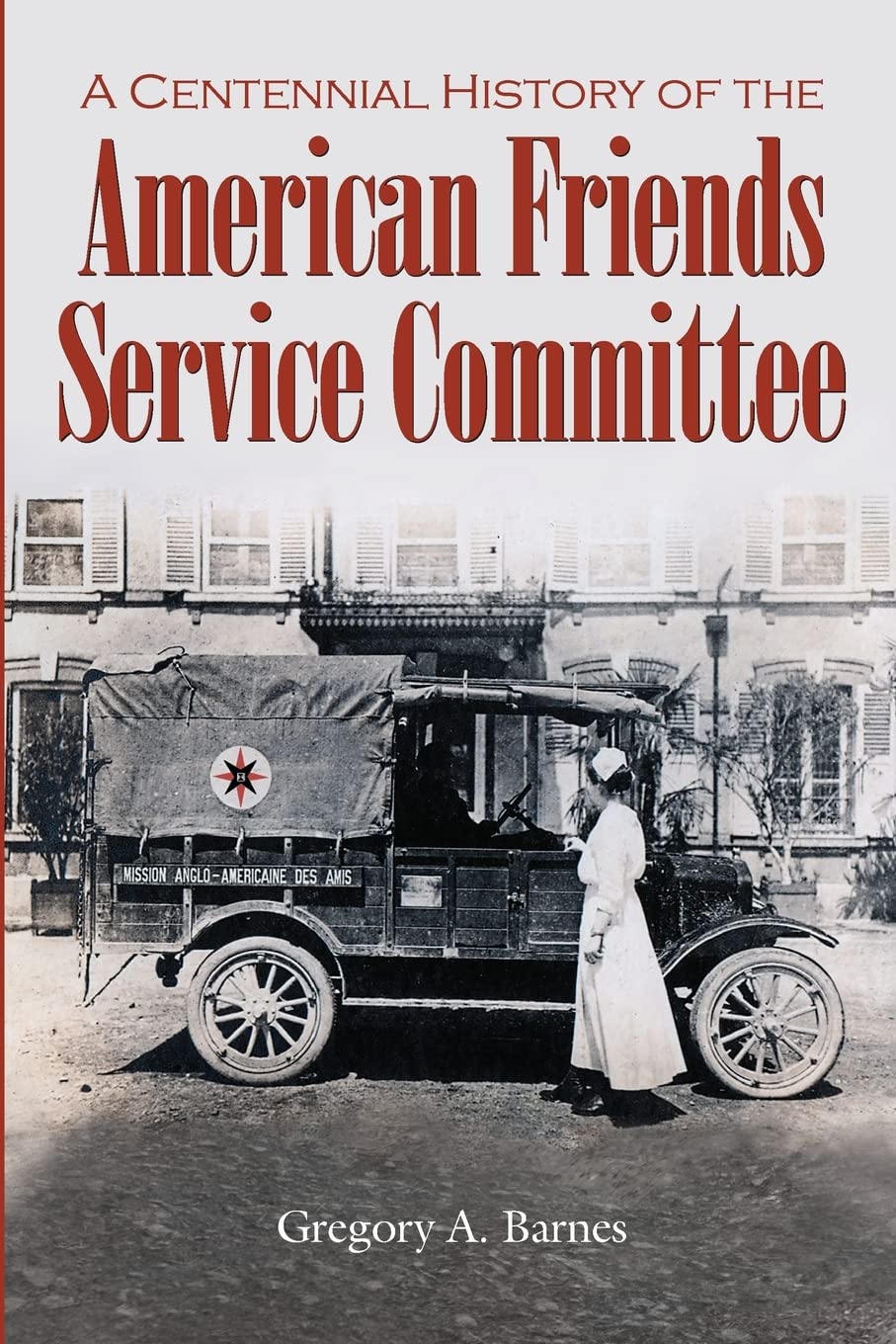



Devised in 1917 as a means of providing young Quaker males and other pacifists alternate wartime service, the American Friends Service Committee has gone on to become, in the 21st century, a major peace-building and community-building organization. Part 1 of this centennial history explores its early and occasionally heroic service in rebuilding France and feeding German and Russian children at the climax of World War I, followed by its unprecedented feeding in Spain of refugees on both sides of that country's civil war and similar relief efforts in Depression-torn Appalachia; it concludes with a description of renewed feeding programs across Europe in the aftermath of World War II and more significantly for its future work, attempts to build good relations with Japan. Part II explores the AFSC’s often-controversial efforts in the period 1950-1990 to bring justice to the underserved both overseas and in domestic arenas, with special reference to work with Martin Luther King in matters of civil rights. The concluding Part III focuses on the modern organization's shift in focus to work behind the scenes in lessening ethnic and other tensions, such as work on immigrants’ rights at home, alternative-to-violence projects in Africa, youth exchanges between Cuba or Puerto Rico and the United States, and service in "unlikely places" such as North Korea in an effort to defuse political animosities. Pervasive themes in the book have to do with the AFSC's standing in the larger, sometimes impatient community of the Religious Society of Friends and the organization's own growing sensitization to the power of diversity in its ranks--such that today it may be considered a model of Affirmative Action. The major activities of the book are complemented by maps, photos, and a bibliography. A thorough index appears in the published copy. Barnes' CentennialHistory of the AFSC provides a long-awaited and ambitious overview of thehumanitarian work of the AFSC at home and abroad. Drawing on extensiveorganisational archives, the extended chronological scope enables the author totrace the development of the organisation and its relationship with the broaderQuaker community over the course of a century. Barnes characterises theorganisation's evolution as falling into three distinct phases, which providethe structure of the book: 'Ahead of its Time' (1917-1950), 'Catching up withthe Times' (1951-1990) and 'New Times' (1991-2016). [T]he author is to be congratulated on producing a comprehensive, coherentand very readable account that should provide an excellent stimulus for futureresearch. Quaker Studies, Vol.22, Issue 2 (2017) Gregory A. Barnes's most recent book is "Philadelphia's Arch Street Meeting House: a Biography." The holder of a Ph.D in English from the University of Wisconsin, he is the author of other works of interest to Quakers and historians, including "A Biography of Lillian and George Willoughby: 20th-century Quaker Peace Activists," as well as of fiction set in Africa, where he served in the Peace Corps as both volunteer and staff member. He is a member of Central Philadelphia Monthly Meeting.