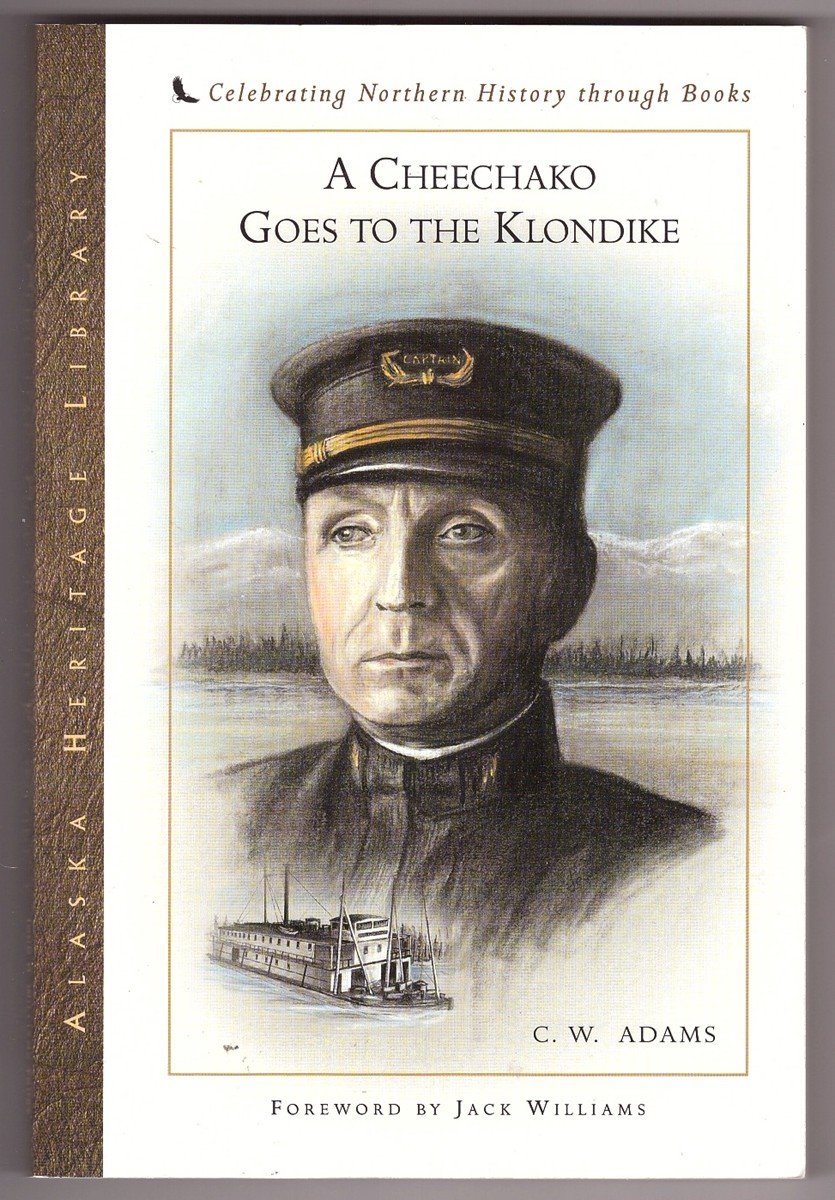
A Cheechako Goes to the Klondike: The Personal Story of a Famous River Boat Captain (Alaska Book Adventures (Epicenter Press))
$14.20
by Charles W Adams



The Klondike Stampede caused a transportation boom in the north, where in its thrilling heyday about 250 wooden steamboats operated in the Yukon River drainage of Alaska and the Yukon. The sternwheelers became gold rush icons. But the hardy, pragmatic entrepreneurs who ran the boats were lured by profits, not romance. In 1901, a passenger's fare from St. Michael to Dawson (about 1,800 miles) was $125, and cargo was moved upriver at $100 a ton. Yet it was a tough, risky business. The season was short, good crews were hard to find, and a navigation error could sink or strand an investment worth tens of thousands of dollars--huge sums at the turn of the century. Mechanical problems were occupational hazards. The steamboats consumed enormous amounts of firewood for their boilers. And if a riverboat didn't find a safe berth or drydock before freezeup, it risked being crushed by ice the following spring. Charles W. Adams was an able, smart business college graduate who bought a share of the Lavelle Young in his mid-20s. He became one of the North's great riverboat captains, lived enough adventure in the north to fill several lifetimes, and played a crucial role in the founding of Fairbanks, Alaska. This first book in the Alaska Heritage Library series preserves the captain's richly detailed and historically important journal. The year is 1901. trader E.T. Barnette's Riverboat, the Arctic Bay, has urn into a rock and sunk and St. Michaels near the mouth of the Yukon River. Barnette hires C.W. (Charles) Adams for $6,000 to carry Barnette and his party, plus 130 tons of trading goods up the Yukon and Tanana rivers aboard the Lavelle Young to a crossing on the Valdez-to-Eagle Trail. There, Barneete plans to open a trading post hoping ot profit from the needs of gold stampeders headed for the Klondike. The deal struck between Barnette and Adams contains a fateful clause. If, on teh way to the upper Tanana, river conditions prevent passage by the Lavelle Young, Adams has the option to unload Barnette and his supplies on the spot. The sternwheeler has no steam winch or "walking legs" to pull herself out of tight spots, and Adams is afraid his steamboat will become stuck and not be able to return downrive before the onset of winter. As feared, teh Lavelle Young becomes high-centered in the Chena Slough while attempting a side passage around an impassable stretch of the Tanana. Shortly thereafter, Adams leaves an angry Barnette and his sobbing wife on a high bank where Barnette builds a trading post that becomes Fairbanks, Alaska. The rest, as they say, is history. Barely in his mid-20s and owning a majority interest in the Lavelle Young, but not yet its captain, C.W. Adams plays a crucial role in the founding of what today is Alaska's second-largest city and indirectly influenced the economic, political, and demographic transformation of the territory. Capt. Adams left a book manuscript, "A Cheechako Goes to the Klondike," which adds new details about the settlement of Fairbanks and fascinating insight into the business of river boating in the North. The Klondike Stampede caused a transportation boom in the north, where in its thrilling heyday about 250 wooden steamboats operated in the Yukon River drainage of Alaska and the Yukon. The sternwheelers became gold rush icons. But the hardy, pragmatic entrepreneurs who ran the boats were lured by profits, not romance. In 1901, a passenger's fare from St. Michael to Dawson (about 1,800 miles) was $125, and cargo was moved upriver at $100 a ton. Yet it was a tough, risky business. The season was short, good crews were hard to find, and a navigation error could sink or strand an investment worth tens of thousands of dollars -- huge sums at the turn of the century. Mechanical problems were occupational hazards. The steamboats consumed enormous amounts of firewood for their boilers. And if a riverboat didn't find a safe berth or drydock before freezeup, it risked being crushed by ice the following spring. Charles W. Adams was an able, smart business college graduate who bought a share of the Lavelle Young in his mid-20s. He became one of the North's great riverboat captains, lived enough adventure in the north to fill several lifetimes, and played a crucial role in the founding of Fairbanks, Alaska. This first book in the Alaska Heritage Library series preserves the captain's richly detailed and historically important journal. The Alaska Heritage Library Series is a project of the John D. Williams Trust and Epicenter Press. Charles W. Adams was an able, smart business college graduate who bought a share of the Lavelle Young in his mid-20s. He became one of the North's great riverboat captains, lived enough adventure in the north to fill several lifetimes, and played a crucial role in the founding of Fairbanks, Alaska. Used Book in Good Condition