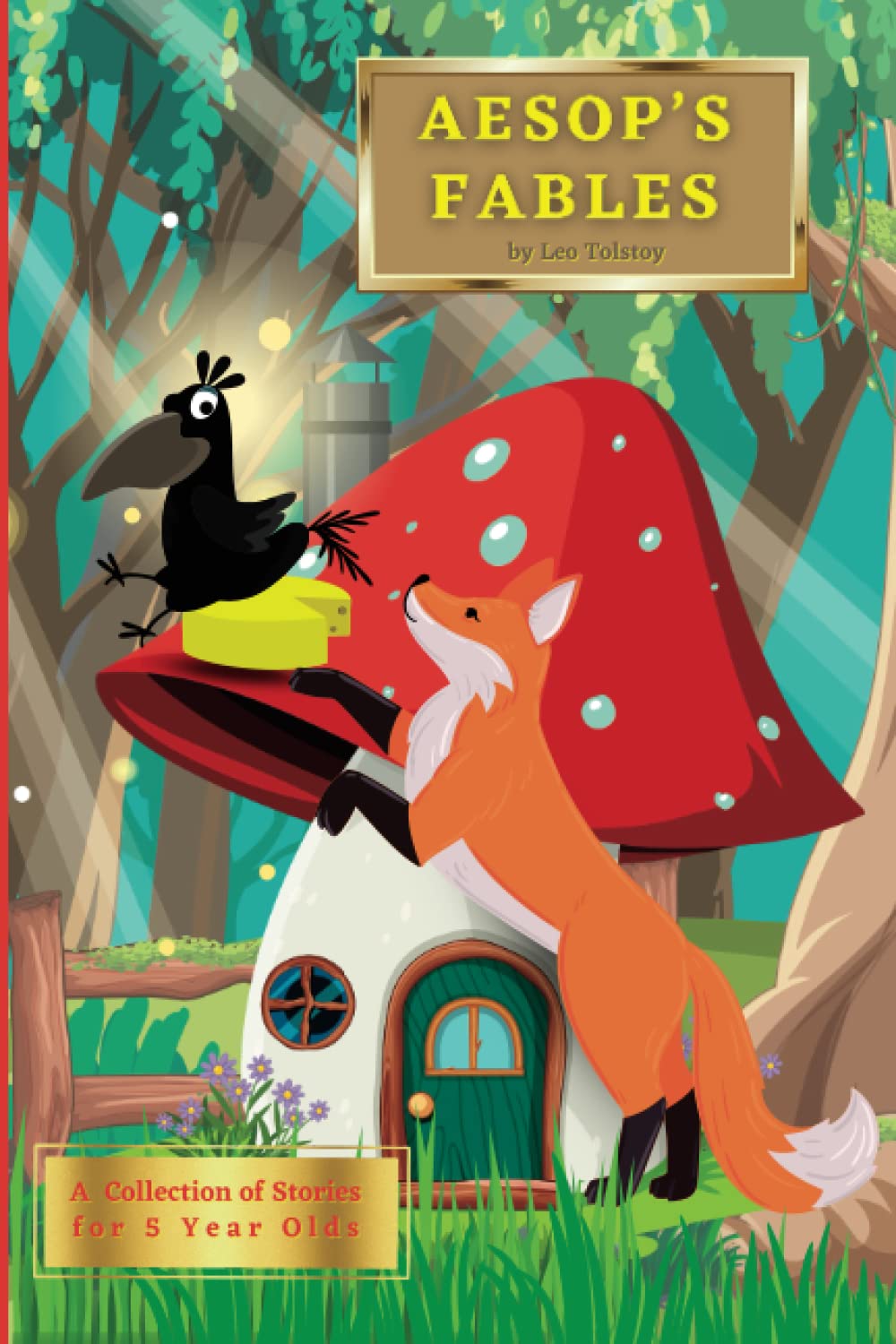



“A Collection of Stories for 5 Year Olds: Aesop’s Fables [illustrated]” is a selection of fanciful short works collected or written by Leo Tolstoy in 1869, translated by Leo Wiener, and illustrated with 42 unique drawings. “A Collection of Stories for 5 Year Olds: Aesop’s Fables [illustrated]” is a book of short little stories with powerful lessons behind them.Tolstoy's fables are one of the best transcriptions of Aesop's fables. They perfectly reflect the meaning and the spirit of the great Aesop's fables. Tolstoy had his own view of how they should be translated. Aesop was not a poet, his fables were written in prose. They are concise, clear and convey morality understandable to children through natural images. This is a brilliant example of the purity of word and thought. The great Russian writer Lev Nikolayevich Tolstoy was born on September 9, 1821, in the Yasnaya Polyana estate near Tula. He had many brothers and sisters. Tolstoy's parents died early, and the aunt, Alexandra Ilyinichna, cared for the children. The writer recalled his childhood in Yasnaya Polyana with love throughout his life. With his brother Nikolai, he came up with the secret of the "green stick," which was how to make everyone happy. The brothers buried the wand in one of the corners of the garden as a memory of their secret. When Alexandra Ilyinichna passed away, Tolstoy moved to Kazan. In 1844, Lev Nikolaevich entered Kazan University. After Lev Nikolaevich returned to Yasnaya Polyana, he became the estate owner. Tolstoy forever connected his life with the place: he wrote many works in Yasnaya Polyana. He opened a peasant school for which he wrote the ABC. A few years later, he brought his young wife, and his children were born there. To better understand the country and the world, Tolstoy traveled very often. The writer spent several years in St. Petersburg. Traveling abroad helped Tolstoy to see how people live in other countries. These trips, meetings with people inspired Tolstoy. He wrote three great novels: "War and Peace," "Anna Karenina," and "Sunday," in which he depicted Russian life. His wife, Sofya Andreevna, became an assistant in literary works for the writer. The Tolstoys had 13 children. Hundreds of people from all over Russia came to Yasnaya Polyana to see the great writer. The whole world learned about Leo Tolstoy. Several times they wanted to award him the Nobel Prize, but the writer refused. His dream, as in childhood, was happiness for all people. Tolstoy died in 1910. His body was buried in Yasnaya Polyana.