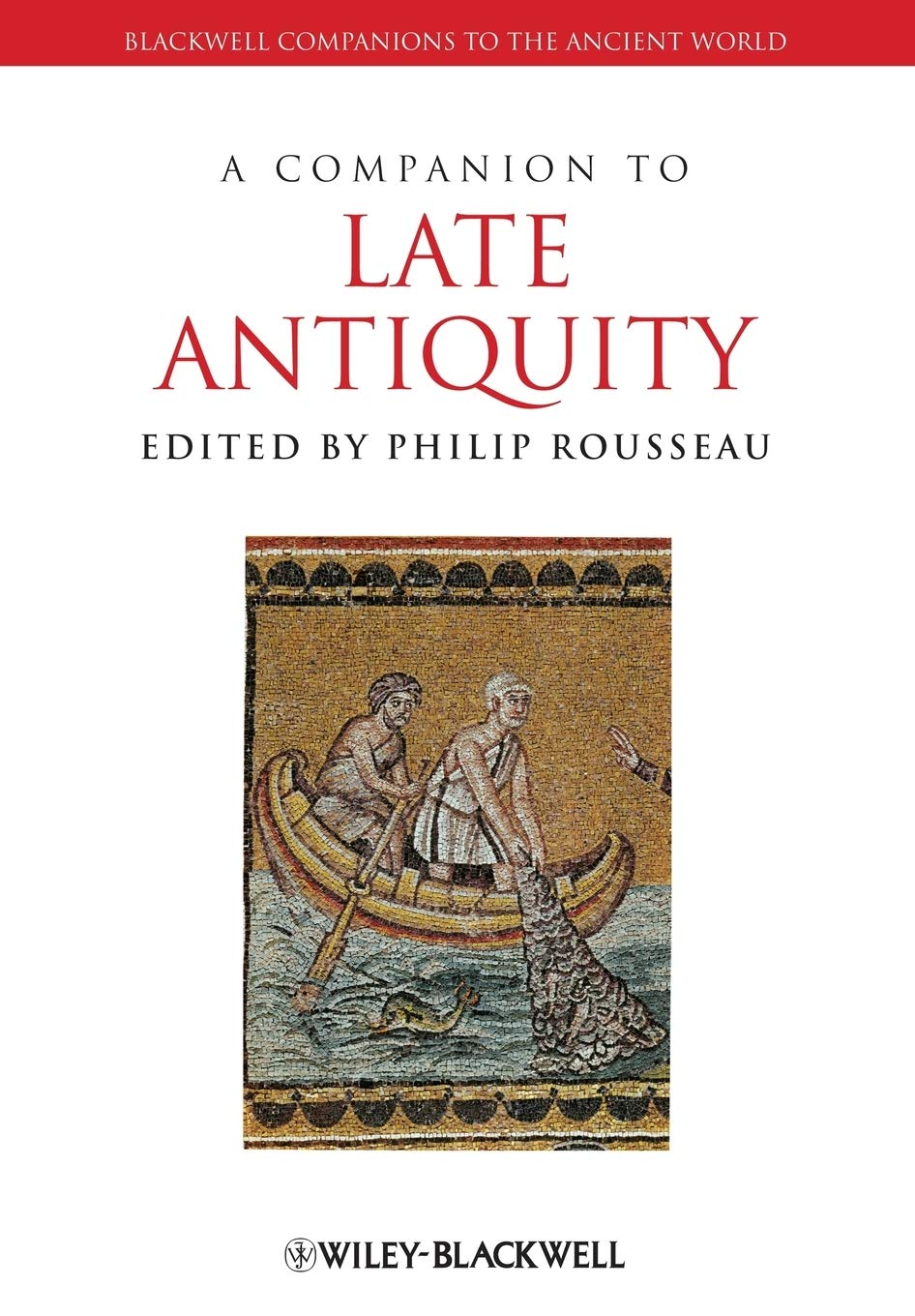
A Companion to Late Antiquity (Blackwell Companions to the Ancient World)
$52.81
by Philip Rousseau



An accessible and authoritative overview capturing the vitality and diversity of scholarship that exists on the transformative time period known as late antiquity. Provides an essential overview of current scholarship on late antiquity – from between the accession of Diocletian in AD 284 and the end of Roman rule in the Mediterranean - Comprises 39 essays from some of the world's foremost scholars of the era - Presents this once-neglected period as an age of powerful transformation that shaped the modern world - Emphasizes the central importance of religion and its connection with economic, social, and political life - Winner of the 2009 Single Volume Reference/Humanities & Social Sciences PROSE award granted by the Association of American Publishers The essays collected in this authoritative Companion capture the vitality and diversity of scholarship that exists on the transformative time period known as late antiquity. For the last generation, late antiquity – the time between the accession of Diocletian in AD 284 and the end of Roman rule in the Mediterranean – has come to be regarded as one of the most dynamic periods of ancient history. Once seen as a time of decline and fall, late antiquity is now viewed as an era of powerful transformation, in which the peoples and institutions that profoundly influenced the modern world took shape. In providing a useful overview of current scholarship on late antiquity, the essays emphasize the central importance of religion in this period. Theology and belief are situated in historical context as the book highlights the interconnectedness of religious life with economic, social, and political realms. The essays collected in this authoritative Companion capture the vitality and diversity of scholarship that exists on the transformative time period known as late antiquity. For the last generation, late antiquity – the time between the accession of Diocletian in AD 284 and the end of Roman rule in the Mediterranean – has come to be regarded as one of the most dynamic periods of ancient history. Once seen as a time of decline and fall, late antiquity is now viewed as an era of powerful transformation, in which the peoples and institutions that profoundly influenced the modern world took shape. In providing a useful overview of current scholarship on late antiquity, the essays emphasize the central importance of religion in this period. Theology and belief are situated in historical context as the book highlights the interconnectedness of religious life with economic, social, and political realms. Philip Rousseau is Andrew W. Mellon Professor of Early Christian Studies and Director of the Center for the Study of Early Christianity at the Catholic University of America. He is the author of The Early Christian Centuries (2002), Basil of Caesarea (1994), Pachomius : The Making of a Community in Fourth-Century Egypt (1985), and Ascetics, Authority and the Church in the Age of Jerome (1978). He is the joint editor (with Tomas Hägg) of Greek Biography and Panegyric in Late Antiquity (2000).