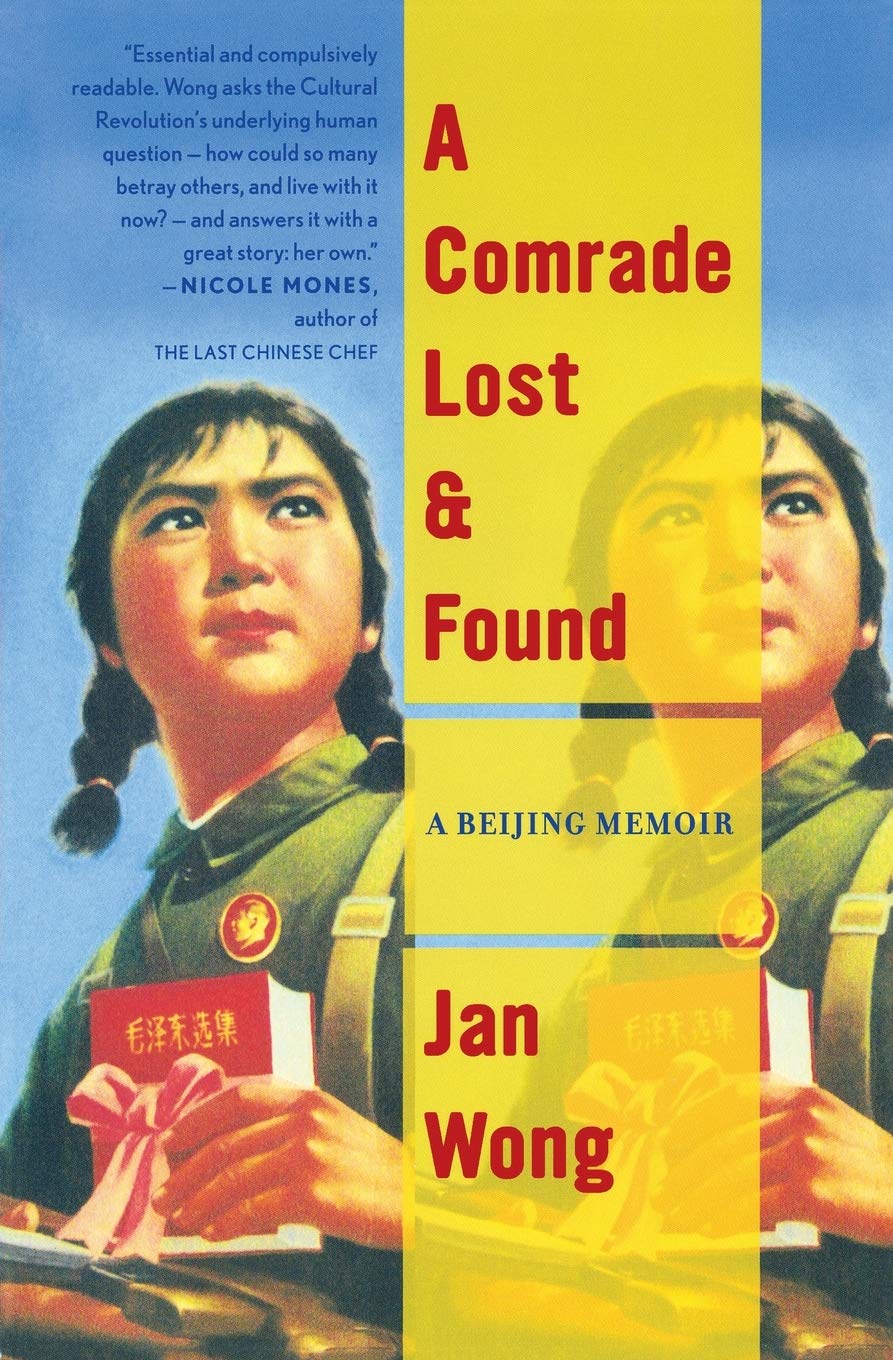



In the early 1970s, at the height of the Cultural Revolution, Jan Wong traveled from Canada to become one of only two Westerners permitted to study at Beijing University. One day a fellow student, Yin Luoyi, asked for help getting to the United States. Wong, then a starry-eyed Maoist from Montreal, immediately reported her to the authorities, and shortly thereafter Yin disappeared. Thirty-three years later, hoping to make amends, Wong revisits the Chinese capital to search for the person who has haunted her conscience. At the very least, she wants to discover whether Yin survived. But Wong finds the new Beijing bewildering. Phone numbers, addresses, and even names change with startling frequency. In a society determined to bury the past, Yin Luoyi will be hard to find. As she traces her way from one former comrade to the next, Wong unearths not only the fate of the woman she betrayed but a web that mirrors the strange and dramatic journey of contemporary China and rekindles all of her love for—and disillusionment with—her ancestral land. PRAISE FOR RED CHINA BLUES “This deft intertwining of personal and historical perspectives makes for a riveting, human-scaled look at a nation so ambiguous to the West. A. ”— Entertainment Weekly In the early 1970s, at the height of the Cultural Revolution, JanWong traveled from Canada to become one of only two Westerners permitted to study at Beijing University.One day a fellow student, Yin Luoyi, asked for help getting to the United States.Wong, then a starry-eyed Maoist, immediately reported her to the authorities, and shortly thereafter Yin disappeared. Thirty-three years later, hoping to make amends,Wong revisits the Chinese capital, with her husband and teenage sons in tow, to search for the person who has haunted her conscience. At the very least, she wants to discover whether Yin survived. But Wong finds the city bewildering - ancient landmarks have made way for luxury condominiums, state-owned factories for luxury boutiques. In the new Beijing, phone numbers, addresses, and even names change with startling frequency. In a society determined to bury the past, Yin Luoyi will be hard to find. As Wong traces her way from one former comrade to the next, she uncovers not only the fate of the woman she betrayed but a web of fates that mirrors the strange and dramatic journey of contemporary China and rekindles all of her love for?and disillusionment with?her ancestral land. In the early 1970s, at the height of the Cultural Revolution, JanWong traveled from Canada to become one of only two Westerners permitted to study at Beijing University.One day a fellow student, Yin Luoyi, asked for help getting to the United States.Wong, then a starry-eyed Maoist, immediately reported her to the authorities, and shortly thereafter Yin disappeared. Thirty-three years later, hoping to make amends,Wong revisits the Chinese capital, with her husband and teenage sons in tow, to search for the person who has haunted her conscience. At the very least, she wants to discover whether Yin survived. But Wong finds the city bewildering - ancient landmarks have made way for luxury condominiums, state-owned factories for luxury boutiques. In the new Beijing, phone numbers, addresses, and even names change with startling frequency. In a society determined to bury the past, Yin Luoyi will be hard to find. As Wong traces her way from one former comrade to the next, she uncovers not only the fate of the woman she betrayed but a web of fates that mirrors the strange and dramatic journey of contemporary China and rekindles all of her love for?and disillusionment with?her ancestral land. JAN WONG was the Beijing correspondent for the Toronto Globe and Mail from 1988 to 1994 and received a George Polk Award and other honors for her reporting. Wong has written for the New York Times and the Wall Street Journal, among other publications, and is the author of three books, including Red China Blues. 1 Mission Impossible On the tarmac at Newark International Airport, a heat wave makes the August air dance. Inside our Boeing 777, a black flight attendant sings out the standard Chinese greeting. "Ni hao," she chimes, mangling the tones. Nevertheless the passengers, mostly mainland Chinese, seem pleased. When even this American female is trying to speak their language, it reinforces their view that the Middle Kingdom is, once again, the center of the world. My husband, Norman, and I lived in Beijing for years during the 1970s, 1980s and 1990s. On this trip back, we are bringing two reluctant fellow travelers, our teenaged sons, Ben, sixteen, and Sam, thirteen. As usual these days on flights to Beijing, every seat is taken. The Chinese passengers in their knock-off Burberry outfits are more self-assured than the handful who left the mainland during Chairman Mao’s Great Proletarian Cultural Revolution. In the 1970s, the Chinese who traveled abroad were members of official delegations, kept on short leashe