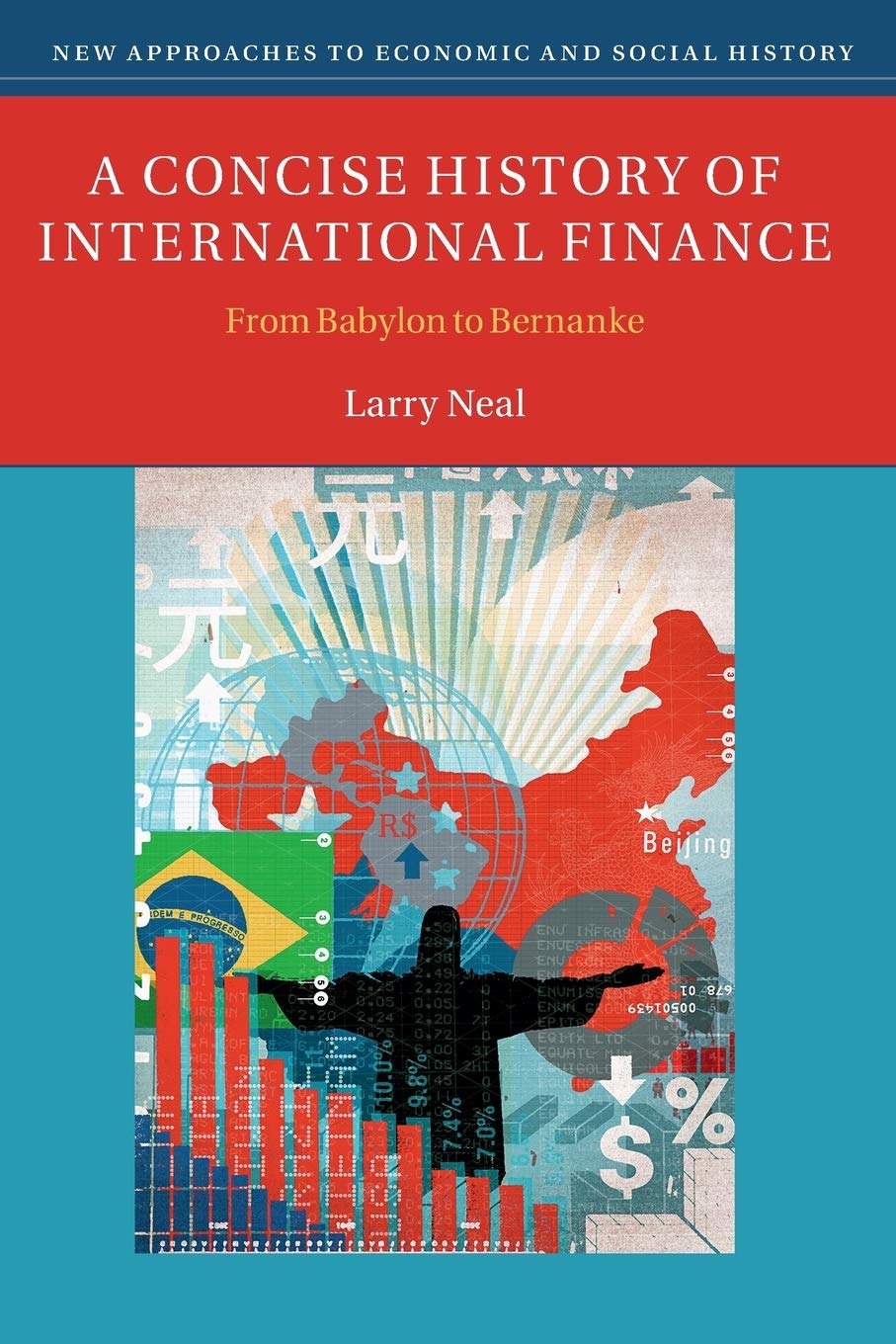
A Concise History of International Finance: From Babylon to Bernanke (New Approaches to Economic and Social History)
$29.38
by Larry Neal



Ever since the financial crisis of 2008, doubts have been raised about the future of capitalism. In this broad-ranging survey of financial capitalism from antiquity to the present, Larry Neal reveals the ways in which the financial innovations throughout history have increased trade and prosperity as well as improving standards of living. These innovations have, however, all too often led to financial crises as a result of the failure of effective coordination among banks, capital markets and governments. The book examines this key interrelationship between financial innovation, government regulation and financial crises across three thousand years, showing through past successes and failures the key factors that underpin any successful recovery and sustain economic growth. The result is both an essential introduction to financial capitalism and also a series of workable solutions that will help both to preserve the gains we have already achieved and to mitigate the dangers of future crises. "This is the most impressive, most comprehensive, and most up-to-date single volume history of finance there is. Its central argument about the beneficial effects of financial innovation - along with the many cautionary tales of how and why things go sour, of the consequences of adequate mechanisms for ensuring commitment and responsibility - make it at once a classic, whose influence will endure a long time." Harold James, author of The End of Globalization: Lessons from the Great Depression "This is an outstanding concise history of international finance. It documents the path of finance from the personal to the impersonal, from ancient to modern times. This is not merely a summary of what others have done, but soundly based on Larry Neal's own careful research. As Neal writes in chapter one, he wants to look historically at where there were effective solutions to financial difficulties and how these 'solutions' played out through time. The book is a splendid introduction to the history of international finance." Mira Wilkins, co-author of Global Electrification: Multinational Enterprise and International Finance in the History of Light and Power, 1878–2007 "A rich mix of wide-ranging, keenly known historical specifics, conceptual constructions, broad long-term horizons, and narrative unfolding. An erudite and thoughtful gem, reflecting a lifetime of scholarship and reflection." Richard Roberts, author of Saving the City: The Great Financial Crisis of 1914 "Did you know that modern international finance had its origin in financing the Crusades? Larry Neal reveals interconnections between international finance and wars, trade, governments and even religion in his concise history. [He] vividly chronicles a thousand years of financial innovations, demonstrating that financial crises gradually emerged as more potent stimuli to financial innovation than religion." Peter Temin, co-author of Keynes: Useful Economics for the World Economy "As economists and policy makers are drawn to history for a deeper understanding of the wonders and dangers of financial innovation, Neal's outstanding scholarship provides the much-needed introduction to financial development from the Assyrian times to the present. It will remain the standard reference for years to come." Gianni Toniolo, co-author of The World Economy Between the Wars A comprehensive survey of international financial history across three thousand years that reveals how previous crises were successfully overcome. Larry Neal is Emeritus Professor of Economics at the University of Illinois, Urbana-Champaign and Research Associate of the National Bureau of Economic Research, and was Visiting Professor at the London School of Economics and Political Science from 2006 to 2014. Specialising in financial history and European economies, he is author of The Rise of Financial Capitalism: International Capital Markets in the Age of Reason (Cambridge, 1991). His recent work includes editing the two Cambridge History of Capitalism volumes - The Rise of Capitalism: From Ancient Origins to 1848 and The Spread of Capitalism: From 1848 to the Present (Cambridge, 2014), and authoring 'I Am Not Master of Events': The Speculations of John Law and Lord Londonderry in the Mississippi and South Sea Bubbles (2012). For many years he was editor of the journal Explorations in Economic History, which now awards an annual prize in his name for the best article published each year. He is past President of the Economic History Association and the Business History Conference and was the Founding Director of the European Union Center at the University of Illinois in 1998, which awards an annual prize in his name for an outstanding book on the European Union. He has been the recipient of fellowships from the Alexander von Humboldt Stiftung (1982), when he visited the University of Paderborn in Germany, as well as the John Simon Guggenheim Foundation and the Fulbright Commission (1996–7), when he vi