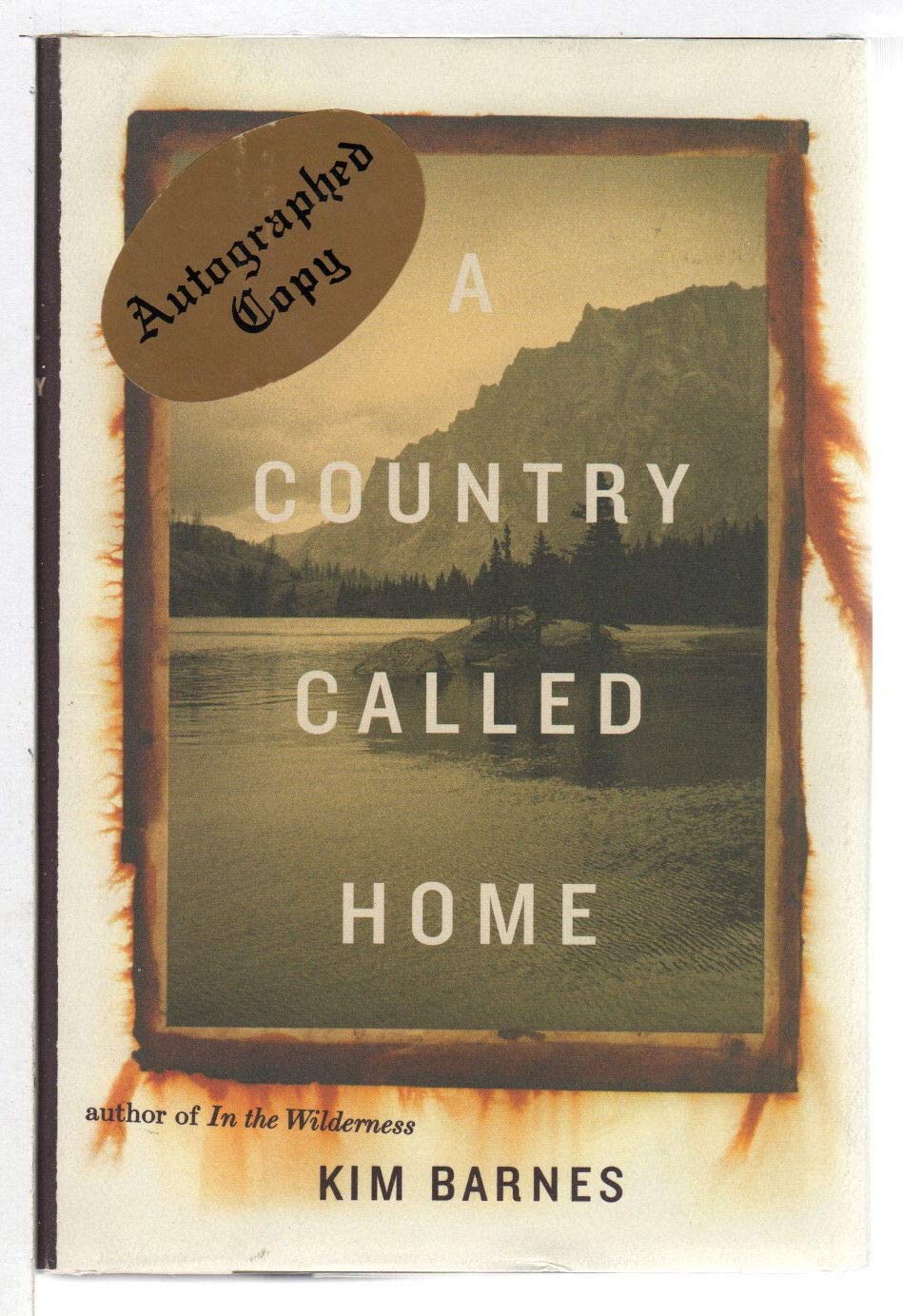



With her acclaimed memoir In the Wilderness Kim Barnes brought us to the great forests of Idaho, where geography and isolation shape love and family. Now, in her luminous new novel, she returns to this territory, offering a powerful tale of hope and idealism, faith and madness. It is 1960 when Thomas Deracotte and his pregnant wife, Helen, abandon a guaranteed future in upper-crust Connecticut and take off for a utopian adventure in the Idaho wilderness. They buy a farm sight unseen and find the buildings collapsed, the fields in ruins. But they have a tent, a river full of fish, and acres overgrown with edible berries and dandelion greens. Helen learns to make coffee over a fire as they set about rebuilding the house. Though Thomas discovers he can’t wield a hammer or an ax, there is a local boy, Manny—a sweet soul of eighteen without a family of his own—who agrees to manage the fields in exchange for room and board. Their optimism and desire carry them through the early days. But the sudden, frightening birth of Thomas and Helen’s daughter, Elise, changes something deep inside their marriage. And then, in the aftermath of a tragic accident to which only Manny bears witness, suspicion, anger, and regret come to haunt this shattered family. It is a legacy Elise will inherit and struggle with, until she ultimately finds a hope of her own. In this extraordinary novel, Kim Barnes reminds us of what it means to be young and in love, to what lengths people will go to escape loneliness, and the redemption found in family. *Starred Review* Even more than in her superb first novel, Finding Caruso (2003), Barnes channels the experiences chronicled in her indelible memoir, In the Wilderness (1996), into fiction latticed with mystery, animated by myth, spiked with menace, and rooted in the raw poetry of the Idaho landscape. This archetypal tale of paradise lost begins when Thomas Deracotte, a newly minted doctor, and his new wife, Helen, leave Connecticut for Idaho to start a rural practice and farm. The only smart thing they do is hire Manny, a self-reliant orphan of many trades. Deracotte has also had a rough life, unlike wealthy Helen, who defied her family to marry him. They are abysmally ignorant about farming, and Deracotte is no doctor. A daughter, Elise, is born. Bewitched by the land, Deracotte turns feral, and Helen despairs. It’s up to Manny to run the show. The potential for tragedy is so intense, one seems to sense the approach of a stalking predator in dense woods. Then, as Elise comes of age and struggles to understand her strange, haunted household and painful legacy, the great wheel of life turns and new sorrows are sown. Barnes ascends in this incandescent novel of sacrifice and devotion, wildness and civilization. Such anguish, such beauty. --Donna Seaman A Kansas City Star Best Book of the Year A Washington Post Best Book of the Year An Oregonian Top Ten Northwest Book of the Year “Gorgeously written . . . lush and memorable. . . . A Country Called Home contains whispers of its literary ancestors but issues its own rich-throated cry into the wilderness.” – Kansas City Star “In the literature of the American frontier, few setups are as fertile and reliable as the Easterner come West. . . . Because [Barnes] knows the territory so intimately, A Country Called Home is filled with exquisitely etched landscapes. The novel brims with the smell of brambles and berries along an Idaho riverbank, the gritty feel of the dust in an abandoned homesteader’s shack, the sounds of grouse and quail in the fields.” – The New York Times Book Review “Casts light on the yearning, restless human heart. . . . Powerful.” – San Francisco Chronicle “In the tradition of the great Western writer Willa Cather, Kim Barnes has written a novel as deeply rooted in the soil of her native Idaho.”– The Oregonian “Quietly haunting…. [Barnes’s] descriptions of the rugged landscape quiver with stark beauty, wisdom and redemptive grace, much as her characters do.” – The Washington Post “The idealistic dreams and careless attitudes of the 1960s echo through this powerful novel…. Barnes captures Northwest country with a poet’s eye.” – Seattle Post-Intelligencer “Brilliant. . . . One of three epigraphs, from master writer John Gardner, reads ‘The fall from grace is endless.’ And so it is with Manny, Thomas, Helen and Elise, who are always and slowly losing the battle not just with nature, but with themselves.” – St. Louis Post Dispatch “ A Country Called Home , like many Western works of its kind, is a story of perseverance. Barnes’s characters, all carrying their own secret pain, barely keep their heads above the waters that rage around them, literally and figuratively. . . . An elegy of sorts, to the power of the natural world, the lives it so indifferently claims and the grace with which those affected respond to its blows.” – The Oregonian “ A Country Called Home is poetically written. The vivid d