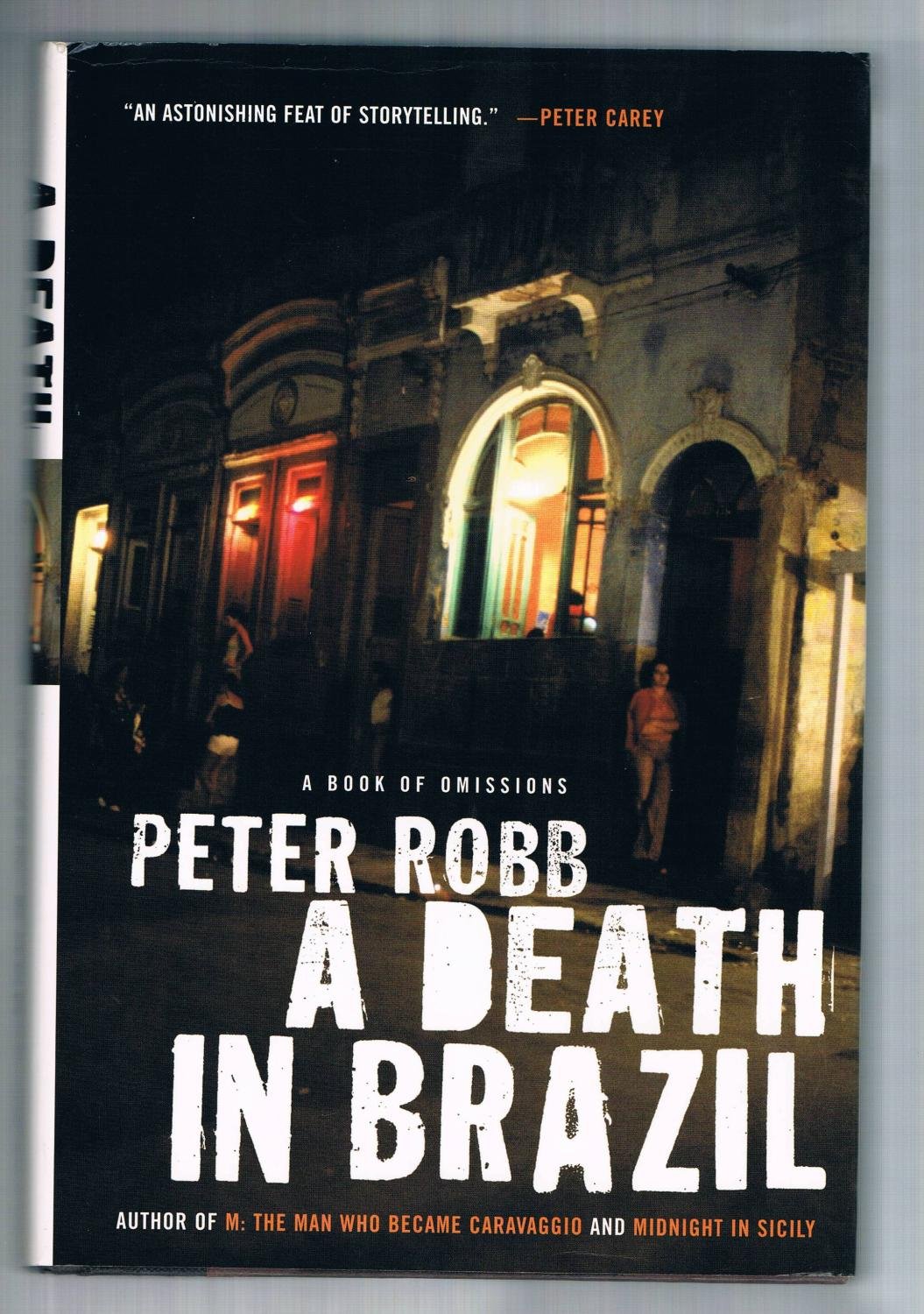



Combining travel, history, culture, and his own memories of twenty years of Brazilian life, the author of Midnight in Sicily delves into the past and present of a country that affects our imagination like few other places on earth From his own near murder in Rio at the hands of an intruder twenty years ago and continuing through the recent slaying of a former president's bagman who looted the country of more than a billion dollars, violent death poses a steady threat in Peter Robb's brilliant travelogue through modern-day Brazil. It's not death, however, that leaves a lasting impression but the exuberant life force that emanates from the country and its people. Seeking to understand how extreme danger and passion can coexist in a nation for centuries, Robb travels from the cobalt blue shores of southern Brazil to the arid mountains of the northeast recounting four centuries of Brazilian history from the days of slavery to the recent election of the country's first working-class president. Much more than a journey through history, Robb renders in vivid detail the intoxicating pleasures of the food, music, and climate of the country and references the work of Brazil's greatest writers to depict a culture unlike any other. With a stunning prose style and an endlessly inquisitive intellect, Robb builds layer upon layer of history, culture, and personal reminiscence into a deeply personal, impressionistic portrait of a nation. The reader emerges from A Death in Brazil not just with more knowledge about the country but with a sense of having experienced it and with a deep understanding of its turbulent soul. Brazil is a country so vast and varied that the Sao Paolo banker and the Amazonian tribesman live centuries apart, acquainted with each other, perhaps, only through television. Making sense of it may only be possible through a subjective approach. In this fascinating work, Robb draws on firsthand observation and literary research to explore Brazil's history, politics, and culture, focusing in particular on the manipulations and massacres that shaped events far from its sunny beaches. Beauty and ugliness are inextricably intertwined in what he calls "the oddest and most thrilling country in the Western hemisphere." Following the threads of stories and ideas, Robb shuttles back and forth in time: colonization, slavery, military rule, general strikes, the crippling Collor presidency, and the rise of Lula unfold, not as dry chronology, but as cause, effect, and definition of a national character. Running ruminations on food, literature, and sexuality add even more color to a tapestry that's beautiful from a distance and motley up close. Similar in approach to At the Tomb of the Inflatable Pig [BKL Ja 1 & 15 04], about Paraguay, but with considerably more art and decorum. Keir Graff Copyright © American Library Association. All rights reserved Peter Robb has divided his time between Brazil, southern Italy, and Australia during the past quarter century. He is the author of Midnight in Sicily and M: The Man Who Became Caravaggio (0-312-27474-2), a Publishers Weekly Best Book of the Year. He writes for The Times Literary Supplement and the London Review of Books . From A Death in Brazil: Murders happen anywhere and mine most nearly happened in Rio. Twenty years later only the scar of a small knife wound on my arm reminds me this is a memory and not a dream. The night went on and on like a dream, with a dream's ungraspable logic, or a Brazilian soap's. Details become wonderfully vivid, like the old carving knife with a long curved and darkened blade carelessly left earlier on the kitchen bench of the Copacabana flat, in the moment it was being held at my throat. My Portuguese lost its rudimentary awkwardness and became unreally fluent very fast. Words I never knew that I knew came pouring from my throat. Things flowed with a dream's weightless speed. The danger lay in the speed. A flailing knife blade moves faster than thought. Movement had to be slowed, the heat lowered. It was the one thing I understood. Let nothing happen. Respond to violence, not with violence, speed, and noise, but with ponderous torpidity, envelop each new threat in slowness. The beautiful Portuguese periods began to roll, slowly, slowly, but with what baroque grace, from my amazing tongue. Obtuse fearlessness stayed the hand with the knife, impassive calm put a little wobble in the spin of violence. Used Book in Good Condition