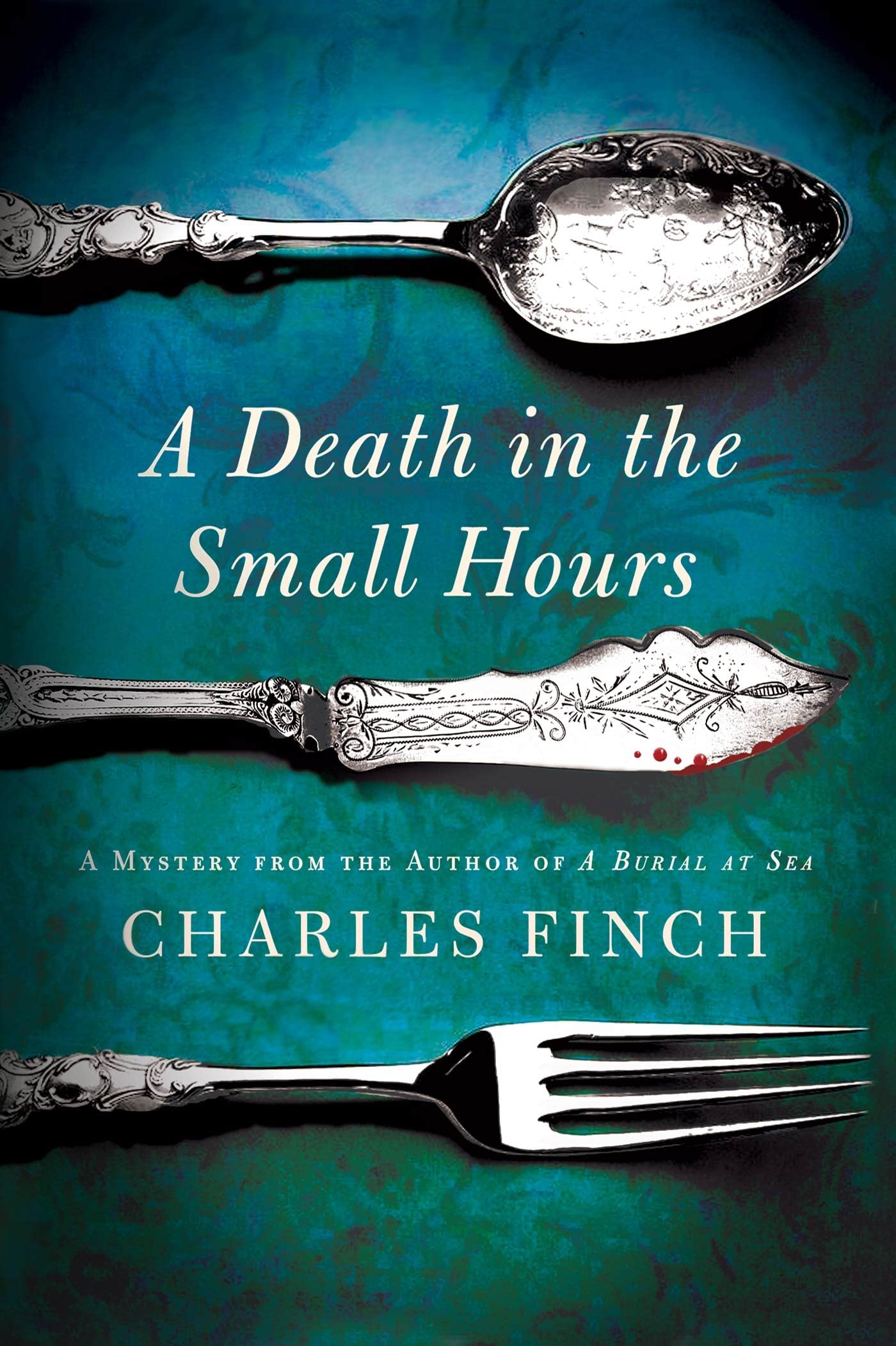



From Charles Finch, the critically acclaimed author of A Beautiful Blue Death and A Burial at Sea, comes A Death in the Small Hours --an intriguing installment in the Charles Lenox Mysteries, deemed "a beguiling series" by The New York Times . Charles Lenox is at the pinnacle of his political career and is a delighted new father. His days of regularly investigating the crimes of Victorian London now some years behind him, he plans a trip to his uncle's estate, Somerset, in the expectation of a few calm weeks to write an important speech. When he arrives in the quiet village of Plumley, however, what greets him is a series of strange vandalisms upon the local shops: broken windows, minor thefts, threatening scrawls. Only when a far more serious crime is committed does he begin to understand the great stakes of those events, and the complex and sinister mind that is wreaking fear and suspicion in Plumley. Now, with his protege, John Dallington, at his side, the race is on for Lenox to find the culprit before he strikes again. And this time his victim may be someone that Lenox loves. "There are echoes of Holmes and Watson here, but Lenox is his own man: a humanist, even a kind of feminist, with a deep curiosity and compassion for others that belies his class." ― The New Yorker on the Charles Lenox Mysteries “Superb . . . Boasting one of Finch's tightest and trickiest plots, this installment further establishes Lenox as a worthy heir to the aristocratic mantle of Lord Peter Wimsey.” ― Publishers Weekly (starred) “The murder mystery that Finch weaves keeps readers guessing.” ― Mary Foster, The Associated Press on A Burial at Sea “Finch vividly brings 1860s London to life [and] effortlessly inhabits his compassionate hero.” ― USA Today on A Stranger in Mayfair “Beguiling. . . . Character is very much at the core of these whodunits.” ― Marilyn Stasio, New York Times Book Review on The Fleet Street Murders Charles Finch is a novelist and literary critic, author of the beloved Charles Lenox mysteries, following one of the earliest private detectives in Victorian London. The books have appeared multiple times on the USA Today bestseller list. He has written numerous essays, articles, and reviews for The New York Times , The Chicago Tribune , Slate , New York , and The Guardian , and was honored with the 2017 Nona Balakian Citation for Excellence in Reviewing by the National Book Critics Circle. He subsequently served on the NBCC’s board, and has also been a board member of the arts colony Ragdale and was one of three judges for the 2021 Pen-Faulkner Prize. He lives in Los Angeles with his family. A Death in the Small Hours By Charles Finch Minotaur Books Copyright © 2013 Charles Finch All right reserved. ISBN: 9781250031495 CHAPTER ONE Charles Lenox sat in the study of his town house in Hampden Lane—that small, shop-lined street just off Grosvenor Place where he had passed most of his adult life—and sifted through the papers that had accumulated upon his desk, as they would, inevitably, when one became a member of Parliament. In fact now they were like a kind of second soul that inhabited the room with him, always longing for attention. There were outraged letters about the beer tax from his constituents in Durham; confidential notes from members of the other party, inviting his support of their bills; reports on India, anarchism, and the poor laws; and oh, any number of things beside. It hadn’t been an easy year so far, 1874. As his stature within the House increased, as he progressed from the backbenches to the front—aided, in part, by the knowledge of international affairs he had gained on a trip to Egypt that spring—the amount of work increased commensurately. While he organized his correspondence, Lenox’s mind worked over each problem the papers presented in turn, going a little ways on one, then turning back to the start, then going slightly farther, like a farmer plowing a furrow, setting out to break still newer ground. If he could get Cholesey and Gover, of the Tories, to agree to vote for the Ireland bill, then he might just permit Gover and Mawer to let it be known that he would stand behind the military bill, in which case Mawer might—so his thoughts ran on and on, ceaselessly formulating and analyzing. Eventually he sighed, sat back, and turned his gaze to the thin rain that fell upon the window. Whether he knew it or not he had changed in the past few years, perhaps since his election, and would have looked to someone who hadn’t seen him since then indefinably different. His hazel eyes were the same, kind but sharp, and he was still thin, if not positively ascetic, in build. His short brown beard had been clipped only the evening before to its customary length. Perhaps what was different was that he had developed the air of someone with responsibility—of multiple responsibilities, even. Thinking of one of them now, however, his face changed from discon