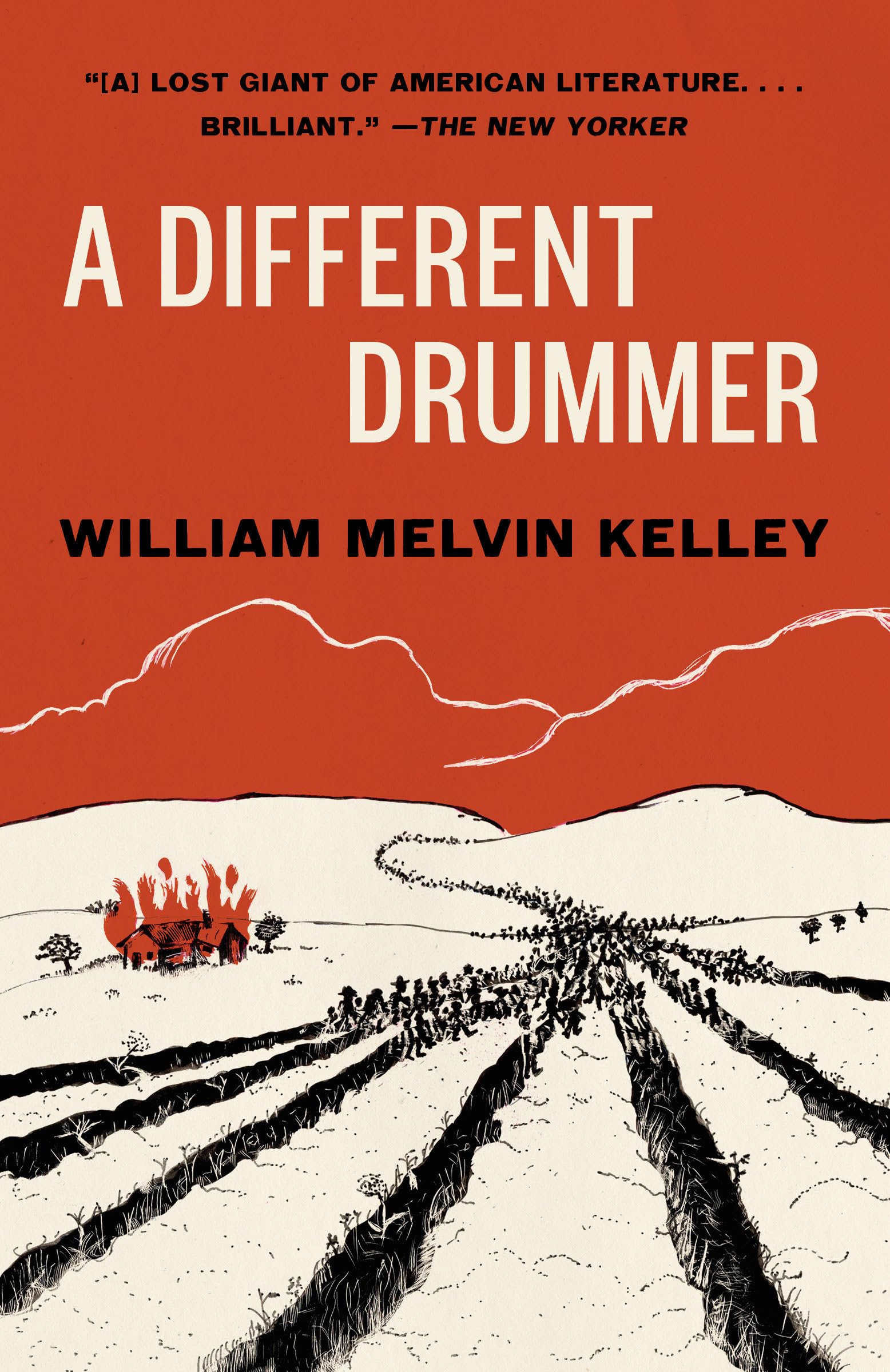



The stunning, thought-provoking first novel by a "lost giant of American literature" ( The New Yorker ) June, 1957. One hot afternoon in the backwaters of the Deep South, a young black farmer named Tucker Caliban salts his fields, shoots his horse, burns his house, and heads north with his wife and child. His departure sets off an exodus of the state’s entire black population, throwing the established order into brilliant disarray. Told from the points of view of the white residents who remained, A Different Drummer stands, decades after its first publication in 1962, as an extraordinary and prescient triumph of satire and spirit. “[A] lost giant of American literature. . . . Brilliant.” — The New Yorker "A work of deep originality and superior craftsmanship whose treatment of racial politics resists ideological classification. . . . A potent brew of mythology, gossip, history, political argument and family drama. . . . A Different Drummer is animated by a force so immense, and fed by so much history, that it transcends encapsulation." — The Wall Street Journal “This fierce and brilliant novel is written with sympathy as well as sorrow. It’s a myth packed with real-world resonance.” — The Guardian “Radical and important.” — Financial Times “Kelley blended fantasy and fact to construct an alternative world whose sweep and complexity drew comparisons to James Joyce and William Faulkner.” — The New York Times “A rare first novel; dynamic, imaginative, and accomplished.” — Chicago Sunday Tribune “Powerful. . . . Unflinching. . . . A gift to literature.” — The Observer “So brilliant is this initial novel that one must consider Mr. Kelley for tentative future placement among the paragons of American letters.” — Boston Sunday Herald “Beautifully written and thought-provoking.” — Baltimore Evening Sun “This first novel just perhaps could play a part in changing our history.” — Kansas City Star “An astounding achievement . . . Timeless, mythic. . . . Still relevant and powerful today.” — The Sunday Times (London) “Breathtakingly good. . . . Must be one of the most assured debuts of all time.” —Sjón, author of CoDex 1962 “An imaginative, brilliantly observed world of the 20th-century Deep South in turmoil. . . . Kelley delivers his observations with caustic humour and surprising compassion. The comparisons of his debut to the books of James Baldwin and Faulkner are justified.” — The Irish Times “A rediscovered classic of African American literature. . . . A powerful novel that weaves intricate themes like racism, systemized oppression and identity together.” — Bookriot Nearly three decades offer its first publication, A Different Drummer remains one of the most trenchant, imaginative, and hard-hitting works of fiction to come out of the bitter struggle for African-American civil rights. decades offer its first publication, A Different Drummer remains one of the most trenchant, imaginative, and hard-hitting works of fiction to come out of the bitter struggle for African-American civil rights. Nearly three decades offer its first publication, "A Different Drummer remains one of the most trenchant, imaginative, and hard-hitting works of fiction to come out of the bitter struggle for African-American civil rights. William Melvin Kelley was born in New York City in 1937 and attended the Fieldston School and Harvard. The author of four novels and a short story collection, he was a writer in residence at the State University of New York at Geneseo and also taught at the New School and Sarah Lawrence College. He was awarded the Anisfield-Wolf Book Award for lifetime achievement and the Dana Reed Prize for creative writing. He died in 2017. The State AN EXCERPT FROM THE THUMB-NAIL ALMANAC, 1961 . . . page 643: An East South Central state in the Deep South, it is bounded on the north by Tennessee; east by Alabama; south by the Gulf of Mexico; west by Mississippi. CAPITAL: Willson City. AREA: 50,163 square miles. POPULATION: (1960 Census, preliminary) 1,802,268. MOTTO: With Honor and Arms We Dare Defend Our Rights. ADMITTED TO UNION: 1818 EARLY HISTORY—DEWEY WILLSON: Although the state’s history is a rich and varied one, it is known predominately as the home of Confederate General Dewey Willson, who, in 1825, was born in Sutton, a small town 27 miles north of the Gulfport city of New Marsails. Willson matriculated at the United States Military Academy at West Point (class of 1842), rose to the rank of colonel in the Federal Army before the outbreak of the Civil War. Upon the state’s secession in 1861, he resigned his commission and was given the rank of General of the Confederate Army. He was the chief architect of the two well-known southern victories at Bull’s Horn Creek and at Harmon’s Draw, the latter fought less than 3 miles from his birthplace. His victory at Harmon’s Draw permanently frustrated northern attempts to reach and capture