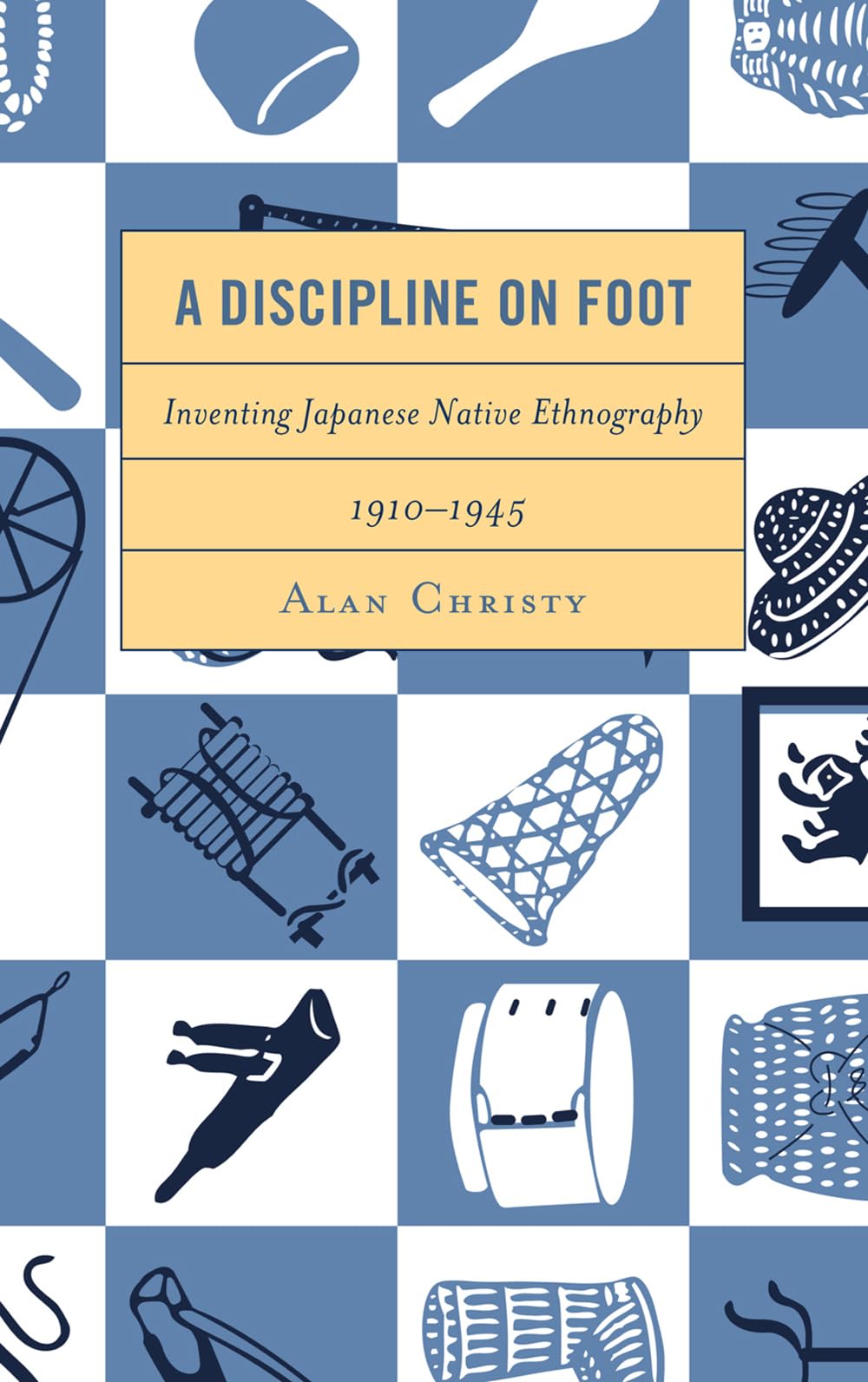
A Discipline on Foot: Inventing Japanese Native Ethnography, 1910–1945
$122.27
by Alan Christy



Exploring the fundamental question of how a new discipline comes into being, this groundbreaking book tells the story of the emergence of native ethnology in Imperial Japan, a “one nation” social science devoted to the study of the Japanese people. Roughly corresponding to folklore studies or ethnography in the West, this social science was developed outside the academy over the first half of the twentieth century by a diverse group of intellectuals, local dignitaries, and hobbyists. Alan Christy traces the paths of the distinctive individuals who founded minzokugaku, how theory and practice developed, and how many previously unknown figures contributed to the growth of the discipline. Despite its humble beginnings, native ethnology today is a fixture in Japanese intellectual life, offering arguments and evidence about the popular, as opposed to elite, foundations of Japanese culture. Speaking directly to fundamental questions in anthropology, this authoritative and engaging book will become a standard not only for the field of native ethnology but also as a major work in broader modern Japanese cultural and intellectual history. “This book is a major contribution on a number of levels. For starters, it presents for the first time in English the big-picture view of the early years of minzokugaku as well as accounts of a number of relatively unheralded scholars who were present at its creation. ... The book also provides brief biographies of a number of 'middle-tier native ethnologists' such as Hayakawa Kotaro and Hashiura Yasuo. . . . Christy's valuable introduction of other scholars expands our understanding of minzokugaku but also highlights the fact that, ultimately, all roads lead back to Yanagita. ... The discussions are intricately intertwined, thoughtful, and insightful. ... A Discipline on Food is a significant achievement. By introducing a number of important (and interesting) thinkers, it will. . . inspire future research on scholars other than Yanagita. . . It helps bring earl minzokugaku into a global discourse on questions of representation, epistemology, and discipline creation. It should become standard reading in graduate courses on modern Japanese history, folkloristics, anthropology, and hopefully, ethnographic theory.” ― The Journal of Japanese Studies “A Discipline on Foot is an erudite, well-written, and engaging book that weaves together a variety of themes, from the fascinating personalities of its protagonists, and the personal quirks, qualities, and flaws that made them human, contentious, and driven, to the debates and questions that fired them.” ― Monumenta Nipponica “No other scholar has gone as wide and deep as Alan Christy does to examine the foundations and formation of Japanese native ethnology. As Christy brilliantly portrays it, the field’s sense of multidimensional embeddedness, of its lived and lived-through aspects in the fits and starts that marked its formation, is a great strength of the book. This unprecedented accomplishment could have only been achieved by thorough research on several fronts and a masterful weaving together of the most pertinent threads.” ―Gerald Figal, Vanderbilt University “A Discipline on Foot is a luminous contribution to twentieth-century Japanese history. It should also be required reading for anyone who relies upon fieldwork as a technology of knowledge. Minzokugaku researchers anticipated contemporary debates about the limitations of documents as evidence, the transformative potential of travel, the recovery of an imagined authentic past, the researcher as excavator of lost community memories, the role of the ethnographer in altering what s/he sees, the limits to an insider’s interiority and an outsider’s objectivity, and the hidden workings of power in the extraction and dissemination of knowledge. It is sobering, even eerie, to find contemporary crises of epistemology so thoroughly prefigured in the 1920s and 1930s writings of Yanagita, Shibusawa, Orikuchi, and others. Christy shows us the contributions of these Japanese scholars to the intellectual landscape we now inhabit.” ―Gail Hershatter, University of California, Santa Cruz “In the fertile borderlands of history and anthropology, Alan Christy tells a riveting tale of Japanese ethnographers and folklorists inventing a field of study. What might everyday life signify? How does professional knowledge coalesce from what once seemed incidental? All of us who care about the ordinary―from professional ethnographers to those with ordinary curiosity―will benefit from reading this engrossing history.” ―Anna Tsing, author of Friction: An Ethnography of Global Connection Alan Christy is associate professor of history and director of East Asian Studies at the University of California, Santa Cruz. Used Book in Good Condition