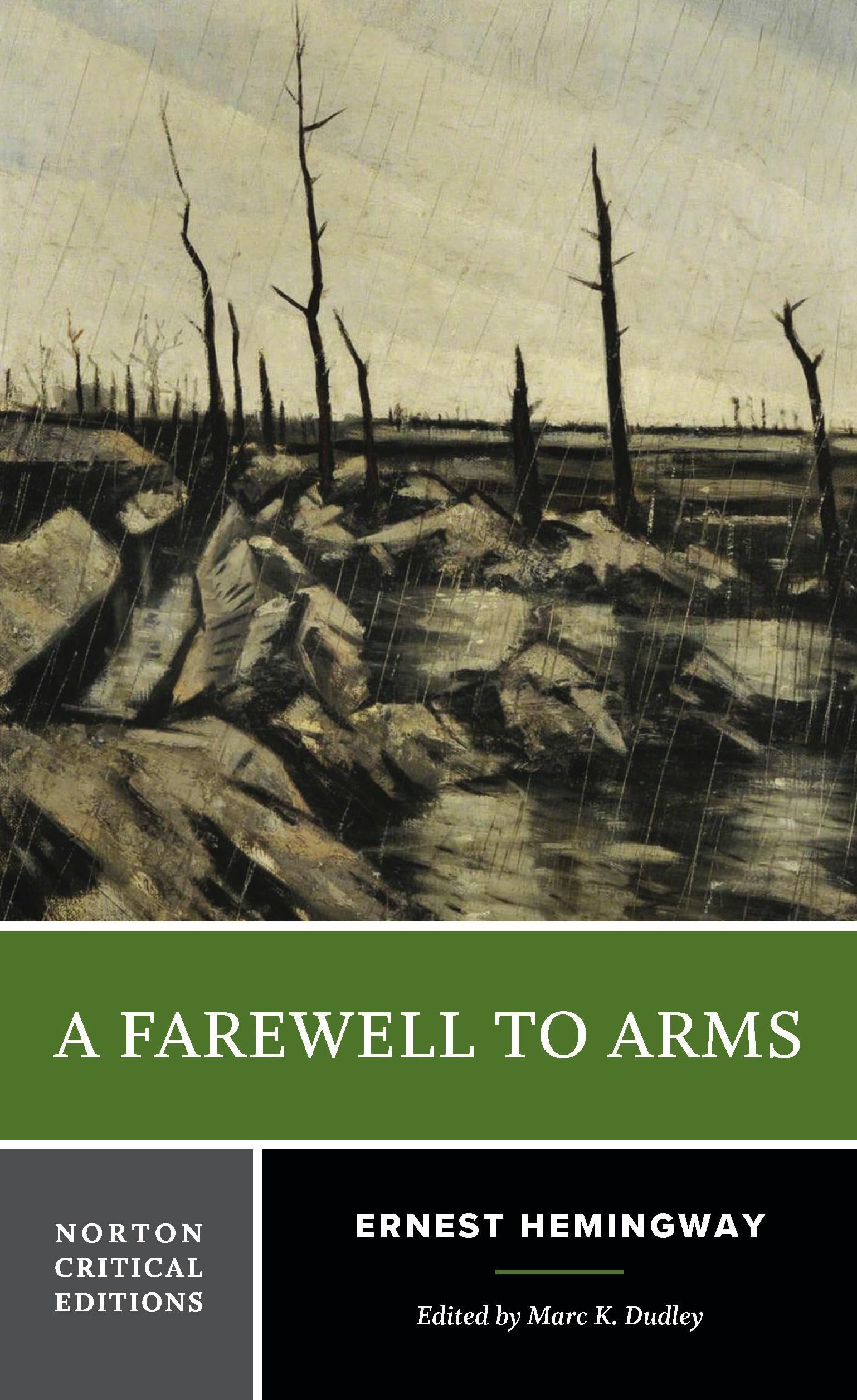



This Norton Critical Edition includes:The first edition of the novel (1929), accompanied by the alternative endings and list of titles.Marc K. Dudley’s engaging introduction and note on the text, as well as expert annotations to the novel.Two maps of the Italian front.Wide-ranging contextual selections, which include excerpts from Hemingway’s personal correspondence, his early writings, his literary and historical influences, and contemporary reviews.Modern critical essays that explore the novel’s central themes.A chronology of Hemingway’s life and a selected bibliography. ERNEST HEMINGWAY was born in 1899 in Oak Park, Illinois. He worked as a reporter for the Kansas City Star for six months before volunteering in 1918 for the American Red Cross ambulance service in Italy during World War I. Wounded by an Austrian trench mortar, he spent months in the hospital in Milan recovering from his injuries. After a brief return to the United States, he moved to Paris in December 1921 and quickly made a name for himself in expatriate literary circles there. His first major novel, The Sun Also Rises (1926), established him as a mainstream writer and was followed by the bestselling A Farewell to Arms (1929). Married four times and the father of three children, he was a celebrity known for his masculine ethos and interest in blood sports such as hunting, boxing, and bullfighting. He made frequent deep sea fishing excursions aboard his cabin cruiser Pilar from his home in Key West, Florida, where he had settled in 1928. He later made his home in Cuba in the village of San Francisco de Paula, outside Havana. He worked as a war correspondent during the Spanish Civil War and World War II, and his novel For Whom The Bell Tolls (1940) solidified his reputation as one of the most important writers of the twentieth century. His novella The Old Man and the Sea (1952) won the Pulitzer Prize, and in 1954 he was awarded the Nobel Prize in Literature. Unable to remain in post-revolutionary Cuba, Hemingway spent his final years in Ketchum, Idaho. Following unsuccessful treatment at the Mayo Clinic for physical and mental health problems, he died from suicide at his home in Ketchum in 1961. Marc K. Dudley is a professor of American literature and Africana Studies at North Carolina State University. He has spoken widely on such authors as Charles Chesnutt, Ernest Hemingway, James Baldwin, F. Scott Fitzgerald, and Cormac McCarthy. He has contributed to the collections The New Hemingway Studies (Twenty-First Century Critical Revisions), Hemingway’s Short Stories: Reflections on Teaching, Reading, and Understanding , and Teaching Hemingway and Race . Additionally, he has published in The Hemingway Review and is the author of Hemingway, Race, and Art: Bloodlines and the Color Line and Understanding James Baldwin .