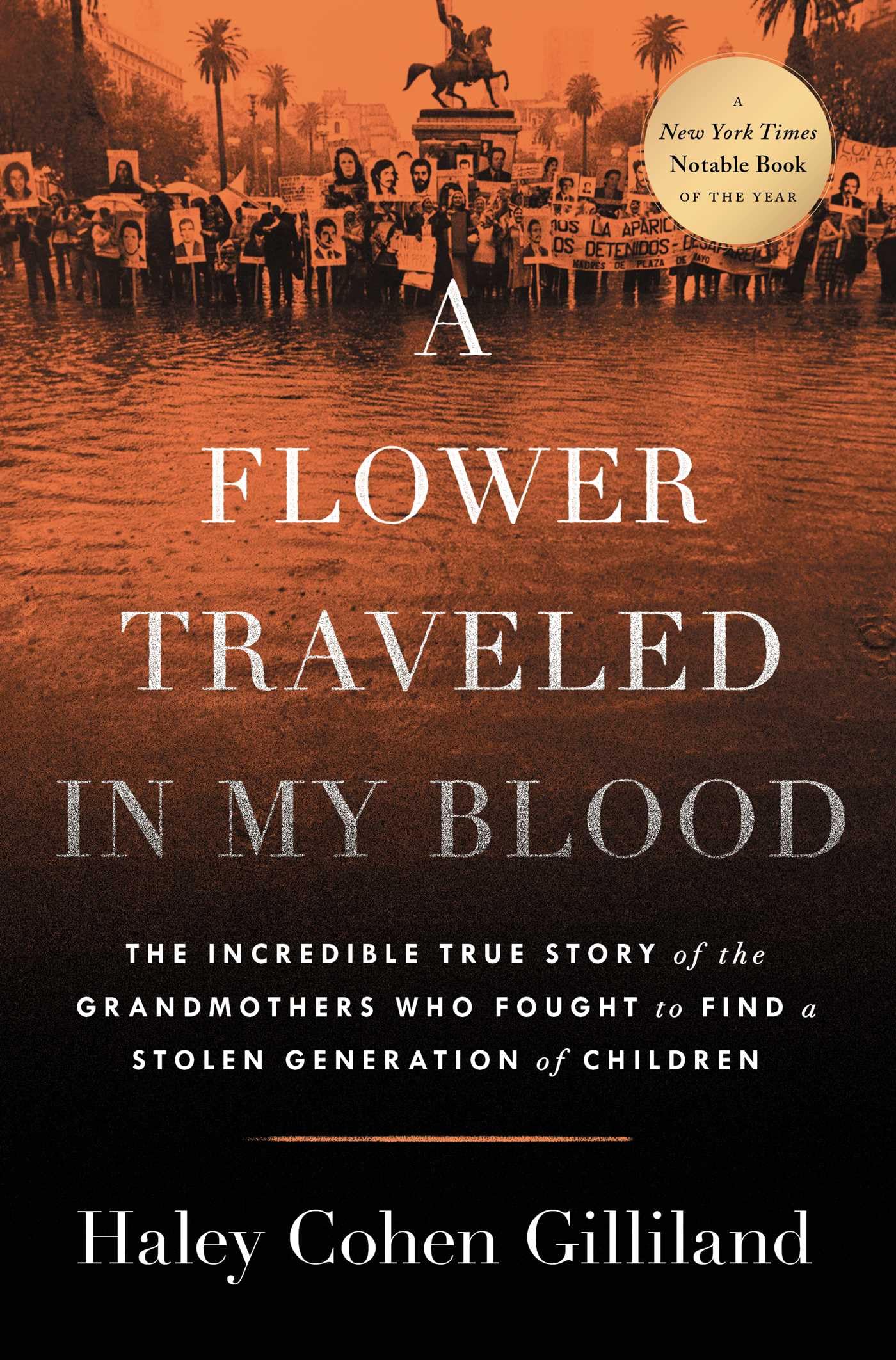
A Flower Traveled in My Blood: The Incredible True Story of the Grandmothers Who Fought to Find a Stolen Generation of Children
$14.50
by Haley Cohen Gilliland



NATIONAL BESTSELLER • A NEW YORK TIMES NOTABLE BOOK OF 2025 • THE WASHINGTON POST ’S 5 BEST NONFICTION BOOKS OF 2025 • THE ATLANTIC ’S 10 BEST BOOKS OF 2025 • THE NEW YORK PUBLIC LIBRARY'S BEST BOOKS OF 2025 • TIME MAGAZINE’S BEST BOOKS OF 2025 • NPR’S BEST BOOKS OF 2025 “[An] astonishing story…Powerful…Harrowing…Absorbing and lucid…You would have to harden your heart to be unmoved by the Abuelas’ quest.” —Jennifer Szalai, The New York Times Book Review (front-cover review) “Inspiring…A triumphant saga of ordinary people doing extraordinary things in the face of pure malevolence.” —Hampton Sides • “Enthralling…Written with the nail-biting verve of a thriller.” — Publishers Weekly (starred review) • “Extraordinary...A harrowing and timely reminder of what happens when democracy succumbs to despotism.” —Adam Higginbotham • “[A] cinematically detailed, deeply researched narrative.” — The Washington Post • “Piercing, emotional...Will resonate for generations.” — Kirkus Reviews (starred review) A remarkable new talent in narrative nonfiction delivers the epic true story of a group of courageous grandmothers who fought to find their grandchildren who were stolen. In the early hours of March 24, 1976, the streets of Buenos Aires rumble with tanks as soldiers seize the presidential palace and topple Argentina’s leader. The country is now under the control of a military junta, with army chief Jorge Rafael Videla at the helm. With quiet support from the United States and tacit approval from much of Argentina’s people, who are tired of constant bombings and gunfights, the junta swiftly launches the National Reorganization Process or El Proceso —a bland name masking their ruthless campaign to crush the political left and instill the country with “Western, Christian” values. The junta holds power until 1983 and decimates a generation. One of the military’s most diabolical acts is kidnapping hundreds of pregnant women. After giving birth in captivity, the women are “disappeared,” and their babies secretly given to other families—many of them headed by police or military officers. For mothers of pregnant daughters and daughters-in-law, the source of their grief is twofold—the disappearances of their children, and the theft of their grandchildren. A group of fierce grandmothers forms the Abuelas de Plaza de Mayo, dedicated to finding the stolen infants and seeking justice from a nation that betrayed them. At a time when speaking out could mean death, the Abuelas confront military officers and launch protests to reach international diplomats and journalists. They become detectives, adopting disguises to observe suspected grandchildren, and even work alongside a renowned American scientist to pioneer groundbreaking genetic tests. A Flower Traveled in My Blood is the rarest of nonfiction that reads like a novel and puts your heart in your throat. It is the product of years of extensive archival research and meticulous, original reporting. It marks the arrival of a blazing new talent in narrative journalism. In these pages, a regime tries to terrorize a country, but love prevails. The grandmothers’ stunning stories reveal new truths about memory, identity, and family. The New York Times 100 Notable Books of 2025 The Washington Post Top 5 Nonfiction Books of 2025 The Atlantic Best 10 Books of 2025 New York Public Library Best Books of 2025 The New Yorker Best Books of the Year So Far TIME 100 Must-Read Books of 2025 BookPage Best 10 Books of 2025 Kirkus Reviews Best Nonfiction Books of the Year “[An] astonishing story . . . Powerful . . . Harrowing . . . Absorbing and lucid . . . You would have to harden your heart to be unmoved by the Abuelas’ quest.” —Jennifer Szalai, The New York Times Book Review (front-cover review) “An enthralling history of a human rights movement whose mission remains as urgent as ever . . . A Flower Traveled in My Blood reads like a Cold War thriller. . . . Gilliland interrogates what it means to pursue—and ultimately find—justice for the victims of these crimes against humanity.” — The Nation “Immaculately researched and endlessly readable, this unforgettable debut is a testament to ruthless and unchecked far-right military control and the power of collective strength, courage, and protest to overcome it.” — Ms. Magazine “ A Flower Traveled in My Blood is an unflinching playbook of what happens when a government’s tyrannical impulses are fed as well as a heartbreaking, immersive account of what it means to stand up against injustice and demand that those who allow it move out of the way.” — Booklist (starred review) “[A] deeply researched and cinematically told work of history.” — The Washington Post “Gilliland’s first book (of many, we should hope) tells the remarkable story of the Abuelas de Plaza de Mayo. . . . Grandmothers came together across social divides to fight for their families, sometimes discoveri