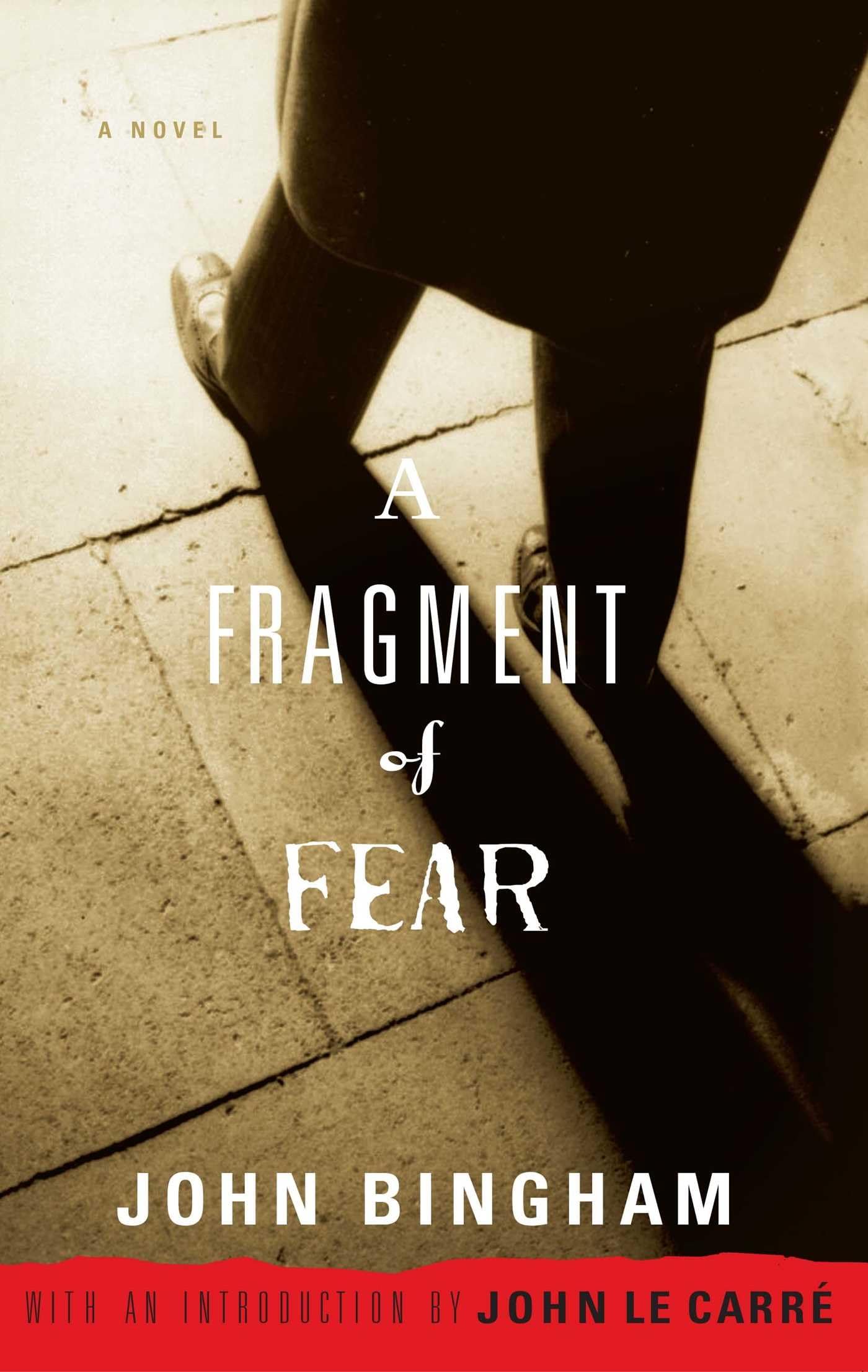



FROM THE INTRODUCTION BY JOHN LE CARRÉ "This novel comprises some of the best work of an extremely gifted and perhaps under-regarded British crime novelist.... What gave John Bingham his magic was something we look for in every writer, too often in vain: an absolute command of the internal landscape of his characters, acutely observed by a humane but wonderfully corrosive eye." "On a recuperative trip in Italy after a car accident, reporter and novelist James Compton is witness to the discovery of a murder victim, a woman who had been vacationing at the same hotel. Lucy Dawson seemed like a gentle old lady, and so the motive for her death appeared to be unmeditated assault. But when he returns to England and makes a benign inquiry into her background, Compton receives a note warning him to leave the past alone -- a note clearly written on his own typewriter, though his apartment shows no sign of a break-in. Unable to resist pursuing the unfinished story, Compton's own investigation reveals a sinister side to Lucy Dawson and a cold-blooded conspiracy she may have helped to perpetrate while alive. Suddenly Compton finds a dangerous net closing in around him: threatening phone calls, terrifying invasions of privacy, and no way of proving to the police that anyone is responsible but himself. In the tradition of Agatha Christie and Patricia Highsmith, John Bingham's writing has earned him a place amongst the great suspense writers of the twentieth century. With taut, compelling prose, A Fragment of Fear is a captivating thriller by a master storyteller at the height of his powers. John Bingham -- aka Lord Clanmorris, aka Michael Ward -- was a British intelligence officer and novelist. Over the course of thirty years, he served MI5 in various high-ranking capacities, including undercover agent, and pseudonymously published more than fifteen extraordinary novels, including My Name Is Michael Sibley, A Fragment of Fear , and I Love, I Kill . Bingham died in 1988. Chapter One We live in a dangerous age, and this is not only because of the hydrogen bomb and high taxation. Man has always been stalked by terror, such as medieval plagues, Mongol invasions, racial persecutions, or individual rapacity; and one might add, in passing, that to blame modern juvenile crime waves upon the uncertainty of the times is the finest piece of buck passing since Judas Iscariot's insignificant act of recognition drew limelight from the power politics of his era. As in the past, so today, the ordinary citizen must keep his eyes skinned if he is not to go under, a victim either of the dangers he recognises daily, or of other dangers which come upon him suddenly, of which he can have little inkling until, bewildered and off guard, he is called upon to defend himself as best he can. And a very poor best it can be on occasions. The world is still a jungle, though the settlements are larger and the linking paths, though they vary, are mostly well made and seem deceptively safe. By day and even by night, the peasant can normally go about his lawful avocations in safety. Yet now and again, as he struggles along the more difficult trails, he may catch a momentary glimpse of eyes in the undergrowth on either side, and hear soft movements and the snapping of twigs. If he is an optimist, he will shrug his shoulders and take little notice, as I reacted at first. But now I say this: the dangers change in some measure but the predators are still there, a little more subtle than in former times, though fundamentally not much -- fundamentally, not much -- and liable suddenly to be just as red in tooth and claw. There is no need to take notice of these words. Better, in some ways, to be an optimist. Better to hope for the best, as the ill-equipped peasant has been compelled to do through the ages, if life was not to become intolerable. And if, now and again, the peasant is clawed to the ground, what of it? There are plenty more of us. The first part of this story is simple, as such affairs go. I am a writer of crime stories, which means that the characters in my stories are mostly fictional, but occasionally the victim bears a resemblance to somebody I detest, and why not indeed? Every job has its perks. Notionally to kill one's current pet aversion is some recompense for the rest of the toil involved. But I did not really know Lucy Dawson, and I certainly did not detest her. Yet there she was, a victim served up, as it were, upon a plate, for although I did not know her to speak to, I had seen her several times. She was a tall, thin woman in her seventies, with a high bridged nose, a gentle smile, and a soft cultured voice. I imagine that in England she mostly wore black, but in deference to the heat of September, south of Naples, she wore grey or pale blue dresses. I think of her mostly in grey, sitting at a table by herself, dining by herself under the trees in the outdoor restaurant, where the ho