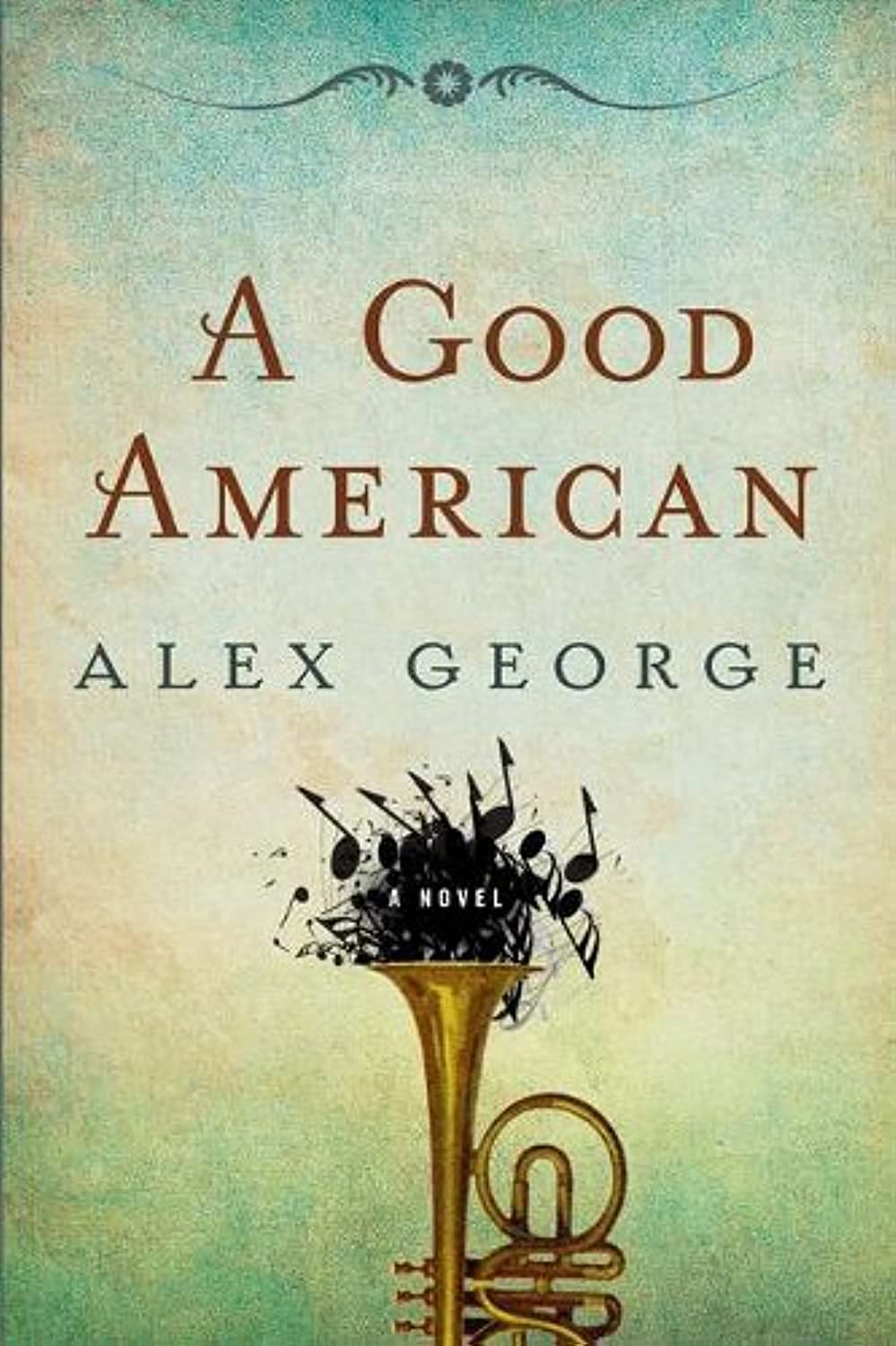



An uplifting novel about the families we create and the places we call home. It is 1904. When Frederick and Jette must flee her disapproving mother, where better to go than America, the land of the new? Originally set to board a boat to New York, at the last minute, they take one destined for New Orleans instead (" What's the difference? They're both new "), and later find themselves, more by chance than by design, in the small town of Beatrice, Missouri. Not speaking a word of English, they embark on their new life together. Beatrice is populated with unforgettable characters: a jazz trumpeter from the Big Easy who cooks a mean gumbo, a teenage boy trapped in the body of a giant, a pretty schoolteacher who helps the young men in town learn about a lot more than just music, a minister who believes he has witnessed the Second Coming of Christ, and a malevolent, bicycle-riding dwarf. A Good American is narrated by Frederick and Jette's grandson, James, who, in telling his ancestors' story, comes to realize he doesn't know his own story at all. From bare-knuckle prizefighting and Prohibition to sweet barbershop harmonies, the Kennedy assassination, and beyond, James's family is caught up in the sweep of history. Each new generation discovers afresh what it means to be an American. And, in the process, Frederick and Jette's progeny sometimes discover more about themselves than they had bargained for. Poignant, funny, and heartbreaking, A Good American is a novel about being an outsider-in your country, in your hometown, and sometimes even in your own family. It is a universal story about our search for home. Eleanor Brown , best-selling author of The Weird Sisters , interviews Alex George about A Good American Eleanor Brown: My crack investigative skills (and your charming British accent) tell me you’re not from the United States. How does an Englishman living in Missouri come to write a book titled A Good American ? Alex George: So it’s true what they say about novelists and their highly developed observational skills! The title comes from a conversation that takes place early in the book, just after the grandparents of the immigrant family, Frederick and Jette Meisenheimer, arrive in America, when one of the first people they meet encourages them to be “good Americans.” I decided to tell an immigration tale soon after I moved to the United States myself. Writers are often told, “Write what you know.” It struck me that the experience of packing up my life and moving to another country, with no expectation that I would ever return home, was something worth writing about. And almost all people in America have a story similar to this one somewhere in their past. Brown: In a case of life imitating art, I understand you’re in the process of becoming a U.S. citizen. Are your feelings about that similar to your characters’? George: Frederick and Jette react to life in America in diametrically opposite ways. Frederick adores his new country immediately, and embraces it wholeheartedly. Jette, on the other hand, is constantly longing for home. I find myself caught somewhere between the two. I love living in the United States, but I miss England every day. This is the paradox of the immigrant existence: one wants to adapt to one’s new home without forgetting where one came from. And yes, I am in the process of acquiring U.S. citizenship. In the novel, when Frederick and Jette take their oaths, Jette’s eyes are filled with tears as she does so. I hope I won’t be crying, but I’m sure that there will be a little bit of sadness, together with the excitement. I wrote that scene years ago. It’s strange that I’ll be in the same ceremony within weeks of the novel’s being published. Brown: Both of our books are concerned with finding a place to call home. Why is that important to you? George: I’ve lived in the States for almost nine years now, and I’m still trying to work out where home is for me. If you subscribe to the maxim that “home is where the heart is,” then I suppose it’s easy enough: home is in Missouri, where my children are. But the actuality can often be more complicated than an old adage would have you believe. Whenever I go back to England, the past rushes up and ambushes me, and I find myself overwhelmed by a strong sense of belonging. There’s no escaping your roots. Brown: What are the challenges, and the advantages, of writing a story that follows one family over the course of an entire century? George: The biggest challenge was to fit the story I wanted to tell into the framework of history that was already there. I didn’t have the freedom to decide when certain events happened. That was occasionally frustrating, but it was a challenge I relished. The fun part was to incorporate real people into the book--two presidents make an appearance, for example--and in fact, the twentieth century was so eventful that at certain points the book almost wrote itself. The only downside was the am