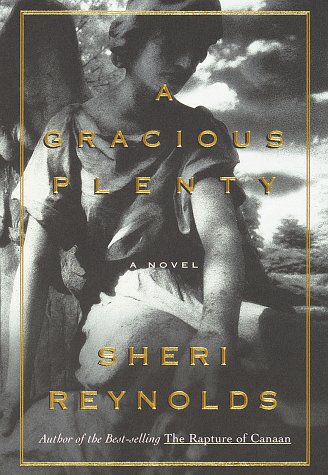



In the lush and isolated cemetery of a small Southern town, Finch Nobles, the narrator of this brilliantly inventive novel, tends to the flowers and shrubs that surround the monuments of people who were not known to her while they lived but who in death have become her lifeline. Badly burned in a household accident when she was just four, Finch grows into a courageous and feisty loner. She eschews the pity and awkward stares of the people of her hometown and discovers that if she listens closely enough, she can hear the voices of those who have gone before. Finally, when she speaks, they answer back, telling their stories in a remarkable chorus of regrets, explanations, and insights. But the infant Marcus, son of the town's mayor, died before he learned to speak and can only wail away the hours. The roots of his anguish are revealed in a crescendo of lasting resonance that ties together the outcast Finch, her dead friends, and the living community outside the cemetery's gates. With prose that is spare, yet richly poetic, Sheri Reynolds creates a vision of a world that is at once fantastic and palpably real. She teaches us that neither our capacity to suffer nor our ability to be healed ends with the grave--and that love is all we have. A Gracious Plenty is a reading experience you will not soon forget. "A triumph of story, voice, and character. The afflicted and unforgettable Finch, whose longings inspire in equal measure love and awe and pity, who seeks to understand the difference between the kind of suffering brought upon us and the kind we bring upon ourselves, defies mortality. Stunning and authentic . . . this is a beautiful book." --Janet Peery, author of The River Beyond the World There's no way this quirky novel about a disfigured woman who tends a cemetery in a small southern town would ever have a first printing as gargantuan as this (300,000) if Reynolds' previous book, The Rapture of Canaan , hadn't been chosen as an Oprah Book Club title. Reynolds has a warm-and-sweet-as-pudding storytelling voice, and her down-home characters are endearing, but her plot is harder to swallow than needles and pins. Her heroine, Finch Nobles, the beloved only child of her cemetery caretaker parents, pulled a pot of boiling water down on herself, scalding her face, neck, and one arm, an accident that caused her terrible physical and psychic pain and drove her poor mother to an early grave. Considered monstrously ugly, Finch has been a recluse ever since, except for her communion with "The Dead." Yes, Finch talks to the residents of her graveyard and is privy to the work of The Mediator, a ghostly being who helps the dead get used to their new form of existence. In Reynolds' imagined cosmos, the dead do the work of nature; they "control the seasons" and "everything depends on them," from snakes shedding their skins to rain showers. But there is much unfinished business associated with the dead--particularly William Blott, a cross-dresser, and a beauty queen turned stripper who has renamed herself Lucy Armageddon--and Finch becomes instrumental in resolving various tragedies, efforts that finally break the spell of her terrible loneliness. A gawky, well-intentioned fantasy, full of some charm and too much silliness. Donna Seaman Reynolds again hits pay dirt with a third novel, after Bitterroot Landing (1995) and The Rapture of Canaan (1996)--the latter, as everyone knows, a recent selection of Oprah's Book Club and now enjoying its fifth week at the top of the bestseller lists. As a four-year-old, Finch Nobles pulled boiling water off the stove onto herself; as a result, she's badly scarred, and her appearance makes her a kind of outcast in her small southern town. Her father tended the graveyard, and following his death and her mother's, Finch has inherited the job of gravekeeper, with all its solemn duties. Unsurprisingly, the wise Finch begins welcoming and chatting with the newly planted, whose spirits rise and respond. There's beauty queen Lucy Armour, who escapes the confines of the town but dies mysteriously and is shipped home. Did she commit suicide? There's also William Parker Blott, who left his family, became a filthy, sore-ridden street-bum, but later returned home to money and a mausoleum. As Finch sees it, in a passage that resounds with Francis Phelan's view into his dead son's grave in Ironweed, The Dead possess unique powers and knowledge: ``The Dead control the seasons. Everything depends on them. In June, The Dead tunnel earthworms, crack the shells of bird eggs, poke the croaks from frogs. The ones who died children make play of their work, blowing bugs from weed to weed, aerating fields with their cartwheels. They thump the bees and send them out to pollinate gardenias.'' When The Dead lighten up enough, by learning to let the past go, The Mediator allows them to rise to a level past Finch's knowing. But Marcus, the Mayor's baby, who died of ``failure to thrive,'' can't st