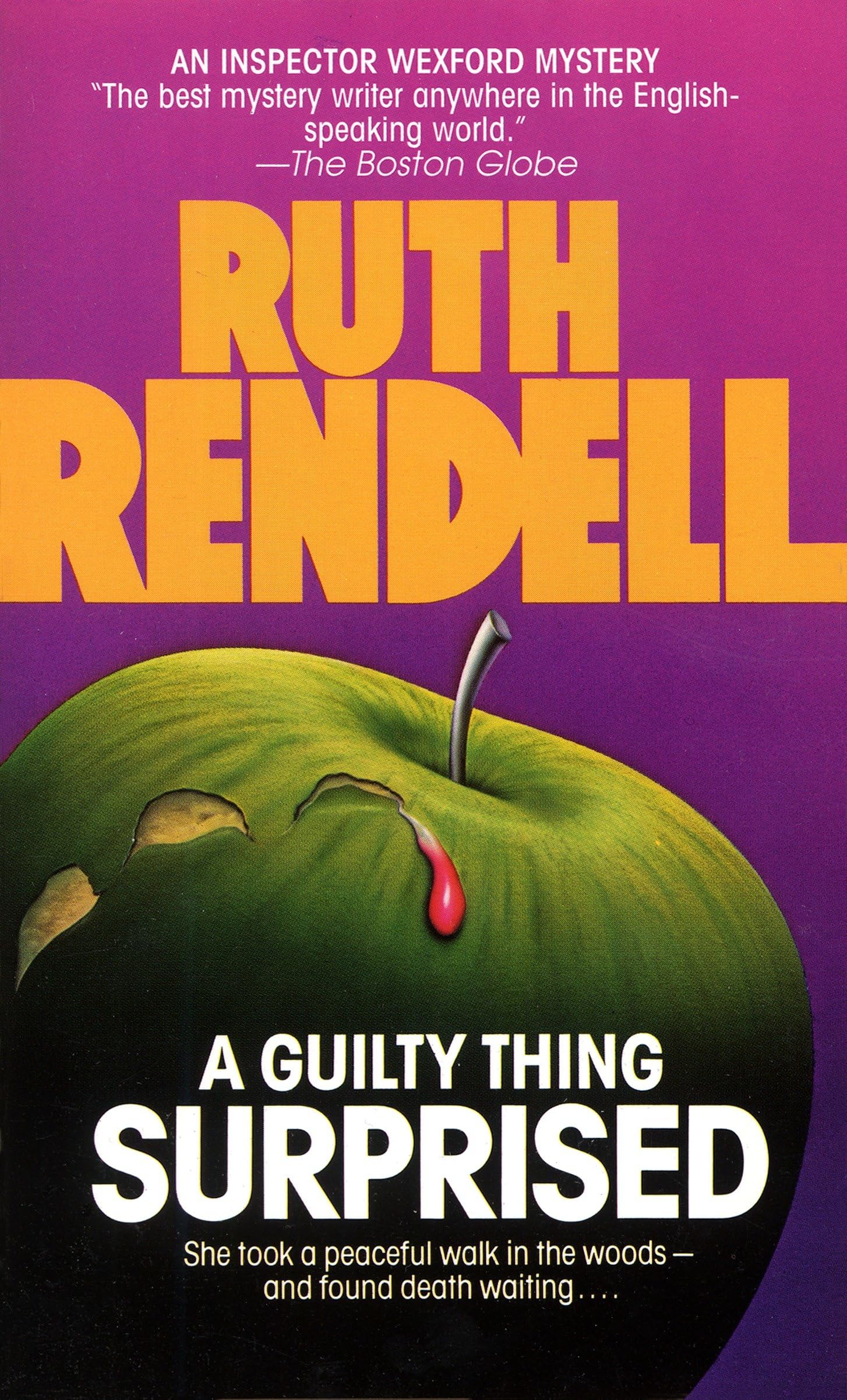



She took a peaceful walk in the woods—and found death waiting. . . . “The best mystery writer anywhere in the English-speaking world.”— The Boston Globe Elizabeth and Quentin Nightingale. A happy couple who lived quite graciously at Myfleet Manor in the gentle English countryside. Elizabeth Nightingale found peace and tranquility on her nightly walks through the rich, dense forests surrounding Myfleet Manor. But the peace she treasured was shattered one night when she found death waiting in the woods. Chief Inspector Wexford and his colleague Inspector Burden find a most unsavory case on their hands—and must use all their wit and wisdom to solve it . . . “Undoubtedly one of the best writers of English mysteries and chiller-killer plots.” — Los Angeles Times “You cannot afford to miss Ruth Rendell.” — The New York Times Book Review “For readers who have almost given up mysteries . . . Rendell may be just the woman to get them started again.” — Ellery Queen's Mystery Magazine “The best mystery writer anywhere in the English-speaking world.” — The Boston Globe “Undoubtedly one of the best writers of English mysteries and chiller-killer plots.” — Los Angeles Times “You cannot afford to miss Ruth Rendell.” — The New York Times Book Review “For readers who have almost given up mysteries . . . Rendell may be just the woman to get them started again.” — Ellery Queen's Mystery Magazine Elizabeth Nightingale found peace and tranquility on her nightly walks through the rich, dense forests surrounding Myfleet Manor. But the peace she treasured was shattered one night when she found death waiting in the woods. Chief Inspector Wexford and his colleague Inspector Burden find a most unsavory case on their hands -- and must use all their wit and wisdom to solve it . . . Elizabeth Nightingale found peace and tranquility on her nightly walks through the rich, dense forests surrounding Myfleet Manor. But the peace she treasured was shattered one night when she found death waiting in the woods. Chief Inspector Wexford and his colleague Inspector Burden find a most unsavory case on their hands -- and must use all their wit and wisdom to solve it . . . Ruth Rendell is the author of Road Rage, The Keys to the Street, Bloodlines, Simisola , and The Crocodile Bird . She is the winner of the Mystery Writers of America Grand Master Award. She is also the recipient of three Edgars from the Mystery Writers of America and four Gold Daggers from Great Britain’s Crime Writers Association. In 1997, she was named a life peer in the House of Lords. Rendell also writes mysteries under the name of Barbara Vine, of which A Dark-Adapted Eye is the most famous. She lives in England. 1 When Quentin Nightingale left home for London each morning his wife was always still asleep. His housekeeper served him with breakfast, opened the front door for him and handed him his hat and his umbrella, while the au pair girl fetched his newspaper. Next to speed him on his way were the two gardeners, saluting him with a respectful ‘Good morning, sir’, then perhaps his brother-in-law, hurrying to the sequestered peace of his writer’s haven in the Old House. Only Elizabeth was missing, but if Quentin minded he never showed it. He walked briskly and confidently towards his car like a happy man. On this particular morning in early September everything was just as usual except that Quentin didn’t need his umbrella. The gardens of Myfleet Manor lay half-veiled by a golden mist which promised a beautiful day. Quentin came down the stone steps from the front door and paused briefly in the shrubbery to remind Will Palmer that the incurved chrysanthemums they were nursing for Kingsmarkham flower show were due for a dose of liquid fertiliser. “Then he followed the path to the courtyard between the old coachhouses, where his car, its windscreen newly polished by Sean Lovell, stood waiting. Quentin was a little early. Instead of getting into his car, he strolled to the low wall and looked down over the Kingsbrook Valley. The view never ceased to delight him. Hardly another house was visible, only the meadows, green, and, those that had been newly shorn, pale gold; the river winding through its thin sleeve of willows; the low round hills each topped with its ring of trees, and there, to his left, on the other side of the road, the great fir forest. It covered a whole range of hills and this morning in the mist it looked like a dark velvet cloak flung carelessly across the landscape. Quentin was always thinking of metaphors for the forest, comparing it to something, romanticising it. Sometimes he thought of it not as a forest or a velvet cloak but as a recumbent animal, guarding the fields while it slept, and of those irradiating plantations as spread, powerful and protective paws. He turned his gaze to his own parkland, then to the nearer grounds, the sleek misted lawns and the massed roses whose colours were made pallid by haze, and he