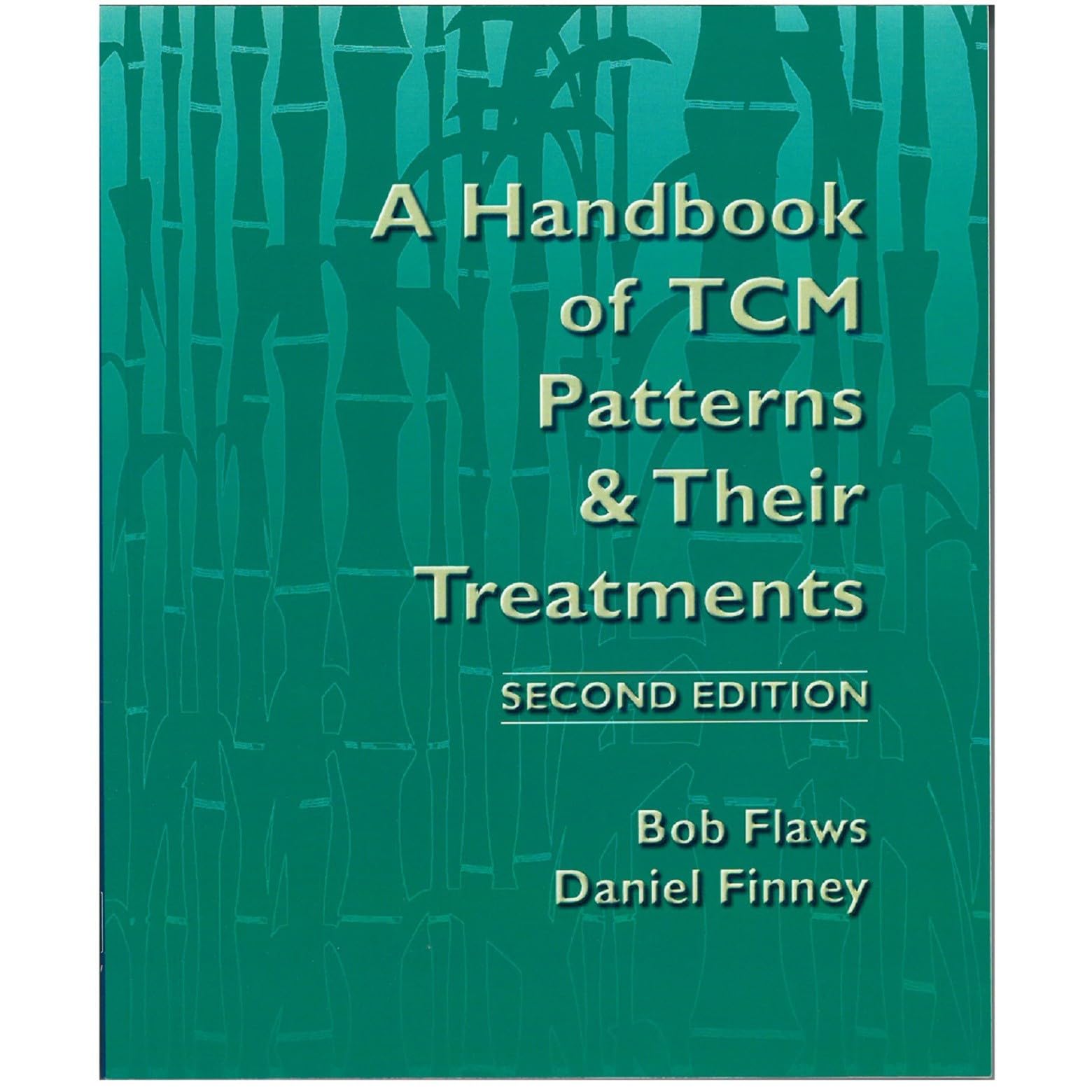



This book is the second, revised edition of a practical handbook of Chinese medical patterns with their disease causes and mechanisms, signs and symptoms, treatment principles, guiding formulas, main modifications, and acupuncture treatments. It is meant for both the student and the clinical practitioner. The authors have included numerous patterns previously not described in the English language literature as well as many complex patterns which are commonly seen in real-life practice in the West. It also includes a symptom-sign index and a formula index for easy reference. All medicinal names in this new edition conform to Bensky et al.'s Chinese Herbal Medicine: Materia Medica 3rd edition, and all Chinese medical terminology corresponds to Wiseman and Feng's A Practical Dictionary of Chinese Medicine. Ingredients in Chinese medicinal formulas begin with their pinyin names and are listed down for easier reference. In addition, this new edition contains a number of case histories for use in problem-based learning (PBL) along with suggested answers, thus making it even more useful in the classroom. The purpose of this book is to give the practitioner a detailed worling list of patterns which more closely resembles the cases seen in clinical practice, to complement the use of the primary TCM patterns. Each pattern is well-presented with cause, symptoms, tongue, pulse, treatment principles, suggested herbal formulae and acupuncture point, and comments or key advice. I especially like the key advice sections. It draws on the author's experience and makes some useful suggestions on pattern differentiation. This book could serve as a useful starting point for the new acupuncture/herbal student as a first or second year textbook. Alan Trenarne, The European Journal of Oriental Medicine -- Alan Trenarne, The European Journal of Oriental Medicine I compiled this book partly to help a friend of mine who was in Chinese medicine/acupuncture school. Talking with my friend, it was clear that there was a need for a book which A) included all the patterns of Chinese medicine, not just the best known ones, and B) which explained how these patterns actually manifest in real-life Western patients. Most Western patients exhibit the signs and symptoms of 35 patterns concurrently. When this happens, the disease mechanisms underlying these different patterns alter the signs and symptoms from those given in most beginner's textbooks. For instance, when cold and heat exist simultaneously, the tongue and pulse will typically only exhibit the signs of heat, while one must infer the presence of cold from other indicators. This book is a practical compendium of TCM patterns with their disease causes and mechanisms, signs and symptoms, treatment principles, guiding formulas, main modifications, and acupuncture treatments. It is meant both for the student and the clinical practitioner. The authors have included numerous patterns previously not described in the English language literature as well as many complex patterns which are commonly seen in real-life practice in the West. It also includes a symptom- sign index and a formula index for easy reference. Bob Flaws has practice clinical Chinese medicine since 1980 and has written, translated, or edited over 100 English language books and scores of journal articles on Chinese medicine. He is considered one of the premier American authors and lecturers on this subject. As a student in an American school of tcm, when moving from the classroom to the student clinic, it quickly became apparent to me that Western patients seldom fit the exact mold of a single pattern as described in introductory English language textbooks on tcm. Furthermore, Western patients commonly present a myriad of signs and symptoms that can leave the student overwhelmed when trying to discriminate just one or even a two part pattern. Many times when I first started in student clinic, I would use liver depression, qi stagnation and spleen qi vacuity as a security blanket in complex cases instead of really trying to decipher what was truly going on. And at that time I really did not find a single English language book that could guide me in making more complex pattern discriminations. Happily, after helping Bob Flaws work on this book for several months and also using it in the classroom and student clinic, it has become much easier for me to recognize which patterns and pattern combinations are the most prevalent in Western clinical practice. In addition, this book has helped make complicated cases clearer. For example, it is not uncommon to see liver depression, qi stagnation with depressive heat, spleen qi vacuity, blood vacuity, and blood stasis coupled with damp heat in the lower burner causing or at least accompanying kidney yang vacuity. This complex pattern is not discussed as such in any other English language texts, but does present in Western clinical practice on a regular basis. If one only sees and therefor