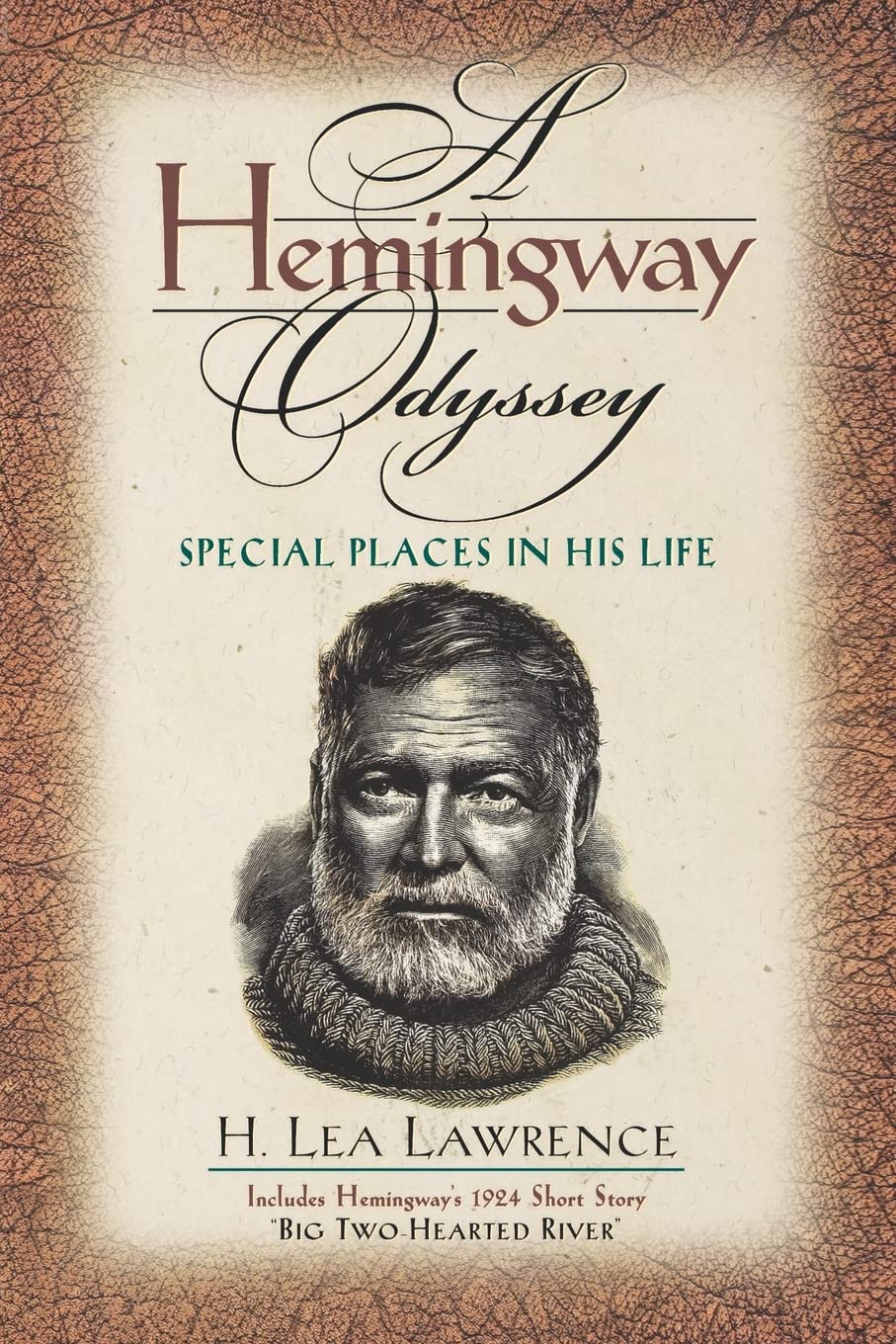



A must-read for Hemingway enthusiasts in the centennial year of his birth, A Hemingway Odyssey contains never-before-published interviews with people who knew him and observations of the special places he frequented, thus revealing how powerfully the waters Hemingway loved influenced his writing from his earliest days to his last novels. Wherever Hemingway went—in Michigan, Italy, France, Spain, Germany, Key West, Cuba, or Kenya—he managed to find special places that he plumbed both emotionally and with a hook and line. In this fascinating narrative, H. Lea Lawrence retraces the great writer's footsteps to these special places and records the recollections and insights offered by some of the people who recalled when Hemingway visited their town or fished with one of their relatives. Beginning with one of the writer's first short stories, "Big Two-Hearted River," which is reproduced in its entirety, an unmistakable relationship is established between Hemingway's angling experiences and various stages of his writing. This unique approach to Hemingway's life sets it apart from the work of other biographers. Numerous photographs put readers in touch with his life, particularly with the waters where he loved to fish, from rushing trout streams to the Gulf Stream. Making a connection between his fishing exploits and some of what many consider to be the deceased author's best writing, H. Lea Lawrence in "A Hemingway Odyssey" offers a sort of biographical travelogue in which he retraces Hemingway's footsteps to some of the special places in his life. -- Myrtle Beach, S.C. Sun News [Lawrence's] descriptions of Hemingway's old stomping grounds could make any reader want to take up fly fishing....You don't have to be an outdoorsman to appreciate this biography, but it may inspire you to become one. -- Bookpage H. Lea Lawrence is a freelance writer whose articles have appeared in more than fifty magazines, including Audubon, Field & Stream, and Natural Wildlife. His other writings include The Fly Fisherman's Guide to the Great Smoky Mountains National Park. He lives in Franklin, Tennessee. No one knows what thoughts were going through Ernest Hemingway's mind on the July morning in 1961 when he ended his life. However, ironic as it may seem, they may have been more about living than dying. The act itself was possibly premeditated. Over the years he had often talked about suicide. If it was deliberate, the sequence from the moment he awoke until the last second may have been virtually mechanical. Quite obviously, the motive would have been preservation of his dignity, the quality in life he considered to be the most important of all. With body and mind failing, it is logical to assume that he wanted to close the final chapter before this too was taken away. He did not fear death. As a child, he claimed to be "'fraid of nothing," and he displayed this characteristic throughout his life. It was also an attribute he gave to many of the characters in his books and short stories. An example from one of his best-known works comes to mind. In For Whom the Bell Tolls, El Sordo, the rebel leader, is wounded and trapped on a hillside from which there is no escape. He looks up at the bright, high, blue early summer sky and knows it is the last time he will see it. But he is not afraid: Dying was nothing and he had no picture of it nor fear of it in his mind. But living was a field of grain blowing in the wind on the side of a hill. Living was a hawk in the sky. Living was an earthen jar of water in the dust of the threshing with the grain flailed out and the chaff blowing. Living was a horse between your legs and a carbine under one leg and a hill and a valley and a stream with trees along it and the far side of the valley and the hills beyond. That was Hemingway's philosophy via El Sordo, but as anyone familiar with his life and works knows, living was also dropping a kicking grasshopper into the clear, cold water of the Fox River and feeling the sudden tug on the line as a trout took it; standing hip-deep in the swirling waters of the Clarks Fork of the Yellowstone with the jagged peaks of Pilot and Index as a backdrop; hiking through the beech forests of the Pyrenees to the headwaters of the Irati River; or watching a marlin make its slow majestic rise from the electric blue waters of the Gulf Stream. Of the many sporting activities he enjoyed, none was more satisfying or enduring than fishing. As a child, after having been dressed and treated as a daughter by his mother since birth, fishing provided Hemingway with the first opportunity to display his maleness. By conducting one-on-one contests with trout, he was able to get away from those things that bothered him. The angling adventures of his youth also served as an inspiration for some of his early stories and forged an enduring bond between fishing and his writing. Later in life, fishing became even more important when it served as a release from the pressures