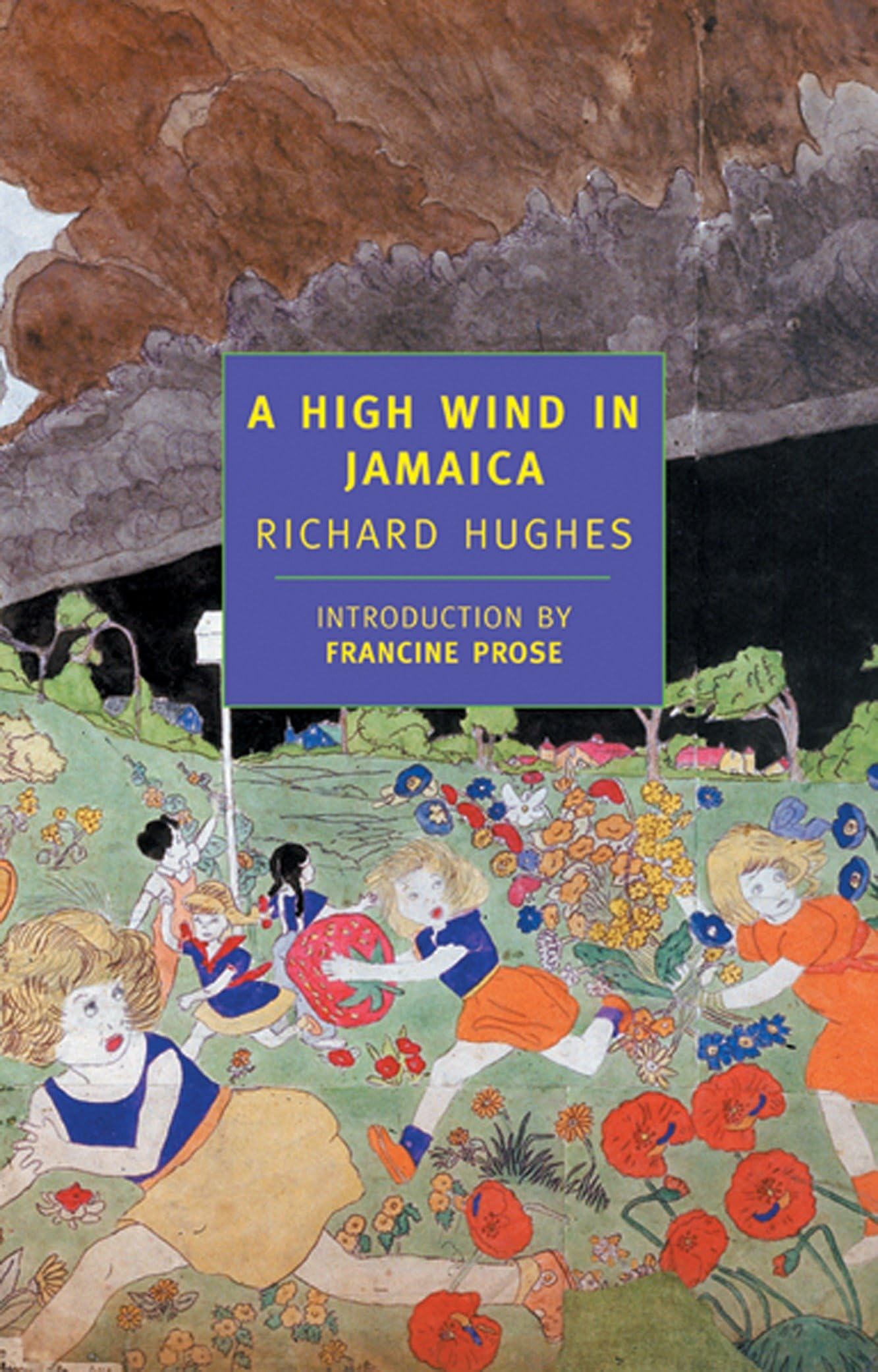



Richard Hughes's celebrated short novel is a masterpiece of concentrated narrative. Its dreamlike action begins among the decayed plantation houses and overwhelming natural abundance of late nineteenth-century Jamaica, before moving out onto the high seas, as Hughes tells the story of a group of children thrown upon the mercy of a crew of down-at-the-heel pirates. A tale of seduction and betrayal, of accommodation and manipulation, of weird humor and unforeseen violence, this classic of twentieth-century literature is above all an extraordinary reckoning with the secret reasons and otherworldly realities of childhood. A High Wind in Jamaica is not so much a book as a curious object, like a piece of driftwood torqued into an alarming shape from years at sea. And like driftwood, it seems not to have been made, exactly, but simply to have come into being, so perfectly is its form married to its content. The five Bas-Thornton children must leave their parents in Jamaica after a terrible hurricane blows down their family home. Accompanied by their Creole friends, the Fernandez children, they board a ship that is almost immediately set upon by pirates. The children take to corsair life coolly and matter-of-factly; just as coolly do they commit horrible deeds, and have horrible deeds visited upon them. First published in 1929, A High Wind in Jamaica has been compared to Lord of the Flies in its unflinching portrayal of innocence corrupted, but Richard Hughes is the supreme ironist William Golding never was. He possesses the ability to be one moment thoroughly inside a character's head, and the next outside of it altogether, hilariously commenting. Irony finds a happy home indeed in the book's mixture of the macabre and the adorable. The baby girl, Rachel, "could even sum up maternal feelings for a marline-spike, and would sit up aloft rocking it in her arms and crooning. The sailors avoided walking underneath: for such an infant, if dropped from a height, will find its way through the thickest skull (an accident which sometimes befalls unpopular captains)." In that "such an infant" lies a world of mordant wit. In fact, throughout, Hughes's wildly eccentric punctuation and startling syntax make just the right verbal vehicle for this dark-hearted pirate story for grownups. Hughes enjoys some coy riffing on the child mind, as with this description of the way Emily handles an uncomfortable social situation: "Much the best way of escaping from an embarrassing rencontre, when to walk away would be an impossible strain on the nerves, is to retire in a series of somersaults. Emily immediately started turning head over heels up the deck." Even so, Hughes never sentimentalizes his subject: "Babies of course are not human--they are animals, and have a very ancient and ramified culture, as cats have, and fishes, and even snakes." Children, as a race, are given rough treatment: "their minds are not just more ignorant and stupider than ours, but differ in kind of thinking (are mad , in fact)." That madness is here isolated, prodded, and poked to chilling effect. But Hughes never loses sight of his ultimate objective: A High Wind in Jamaica is, above all, a cracking good yarn. --Claire Dederer "This brilliant, gorgeously written, highly entertaining, and apparently light-hearted idyll quickly reveals its true nature as a powerful and profoundly disquieting meditation on the meaning of loyalty and betrayal, innocence and corruption, truth and deception." — Francine Prose, Elle "During one snowy day, I read the whole book in one gulp. It was remarkable, tiny, crazy. I felt just like I did as a kid." — Andrew Sean Greer, All Things Considered, NPR “A surprisingly terrifying short novel about children kidnapped by pirates, elevated from its silliness by surprising moments of violence and introspection, as well as repeated flourishes of literary brilliance. Also, it’s funny .” —Emily Temple, Lit Hub , "20 Short Novels to Stay Up All Night Reading" " A High Wind in Jamaica by Richard Hughes is like those books you used to read under the covers with a flashlight, only infinitely more delicious and macabre." — Andrew Sean Greer, All Things Considered, NPR “Cross a wacky seafaring adventure--Conrad gone awry via inept piracy--with an exploration of the consciousness of a child as radical and insightful as that provided by Henry James in What Maisie Knew , and you have A High Wind In Jamaica by Richard Hughes....By turns funny, ironic, and brutally sad, this is a complex and astonishing novel."—Sue Miller, Barnes and Noble Review Richard Hughes (1900-1976) was born in Surrey, England, but his ancestors came from Wales and he considered himself a Welshman. After an early childhood marked by the deaths of two older siblings and his father (his mother then went to work as a magazine journalist), Hughes attended boarding school and, with every expectation of being sent to fight in the First World War, enrolled in the milit