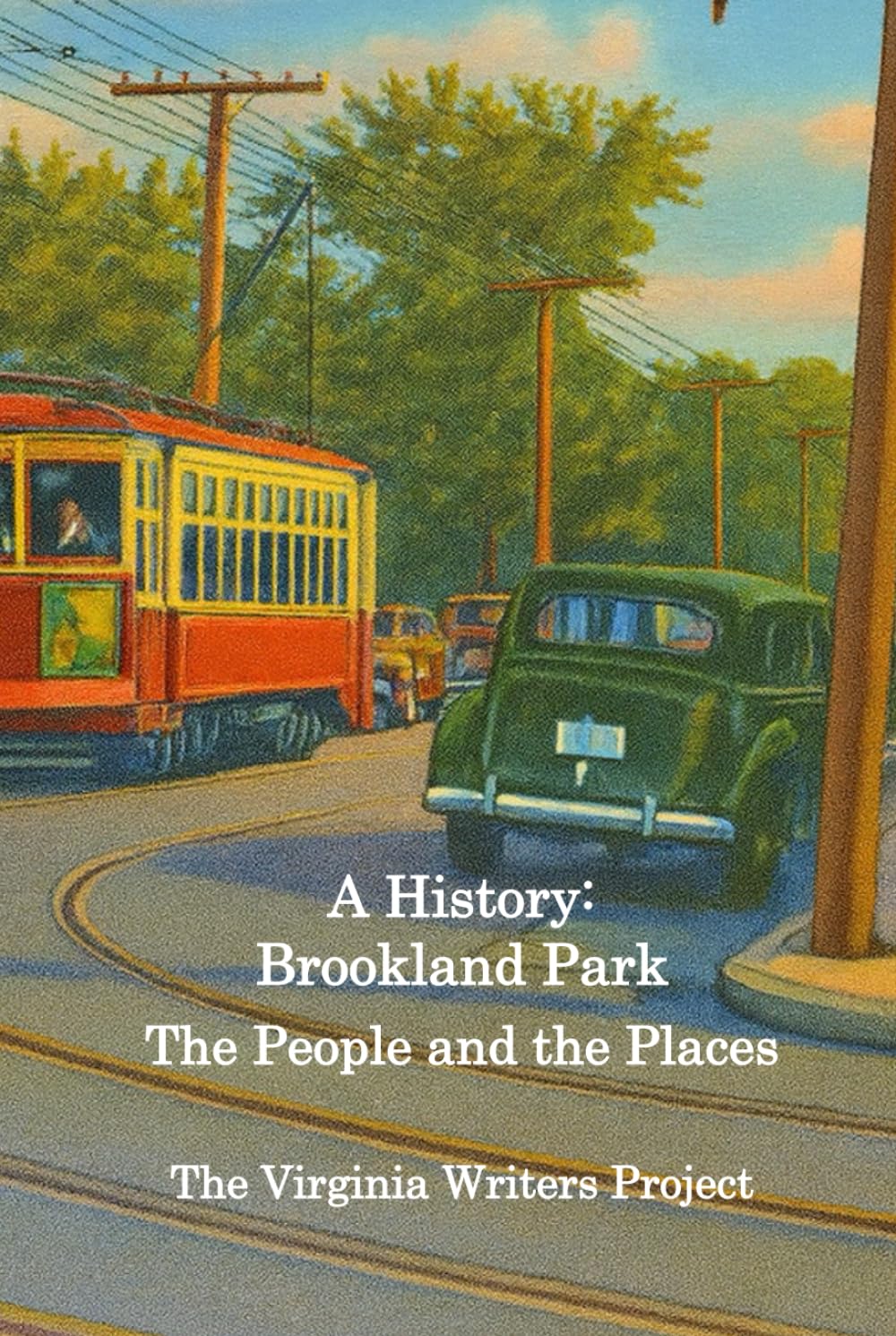



A History of Brookland Park: The People and the Places John Nicolay, PhD, Editor At the turn of the twentieth century, Richmond, Virginia was poised for transformation. Electric streetcars hummed across new bridges, farmland gave way to tree-lined boulevards, and a visionary generation of builders, ministers, and merchants created a community that would define the city’s northern horizon. A History of Brookland Park: The People and the Places tells that story — the rise of one of Richmond’s earliest and most distinctive streetcar suburbs, where architecture, faith, and civic pride shaped a neighborhood that endures to this day. This richly illustrated narrative traces the growth of Brookland Park from its earliest real-estate promotions in the 1890s to its heyday as a bustling mid-century shopping district. Drawing on hundreds of primary sources — newspaper archives, city directories, church records, and family papers — historian John Nicolay reconstructs the human tapestry behind the streets and landmarks: Barton Avenue and North Avenue, Brookland Park Boulevard and the First Street Viaduct. Each chapter introduces the people who made those places matter: developer James H. Barton , who dreamed of a new kind of suburban living; Rev. W. Asbury Christian , who built Barton Heights Methodist Church into a civic anchor; educators like Jesse Hinton Binford and Dr. Robert Healy Pitt , who linked faith with public service; and the homeowners, shopkeepers, and congregations whose daily lives defined Richmond’s North Side. The book explores a city on the move — a place where technology met aspiration. From the 1893 Bacon’s Quarter Branch Viaduct to the 1930s rise of neighborhood banks and groceries, from the ornate Queen Anne and Colonial Revival homes to the simple frame houses of working families, Brookland Park embodied the promise and contradictions of modern urban life. Chapters on Barton Heights, Battery Park, and Chestnut Hill reveal how streetcar access and real-estate speculation intertwined with social change, race, and class in early twentieth-century Virginia. Through more than a hundred archival images, restored newspaper illustrations, and new color postcard renderings, Nicolay captures the textures of everyday life — the church picnics, the trolley bells, the porch conversations at twilight. This is not merely a local history but a portrait of a living landscape: one that witnessed prosperity, decline, and revival, yet never lost its sense of place. The People and the Places honors those who built the North Side’s identity — from the civic pioneers who laid its foundations to the generations who kept its faith and architecture alive. Readers will find in these pages the story of how a Richmond suburb became a microcosm of the American city: hopeful, divided, resilient, and beautifully human. Meticulously researched and elegantly written, this volume is both a work of scholarship and a visual celebration — ideal for historians, preservationists, genealogists, educators, and anyone who has ever called Richmond home. Whether you walk its streets today or remember it as it was, A History of Brookland Park invites you to rediscover the neighborhood that helped make Richmond modern. The book is a collection of short, 2-3 page stories on the historic district, its people and its places.