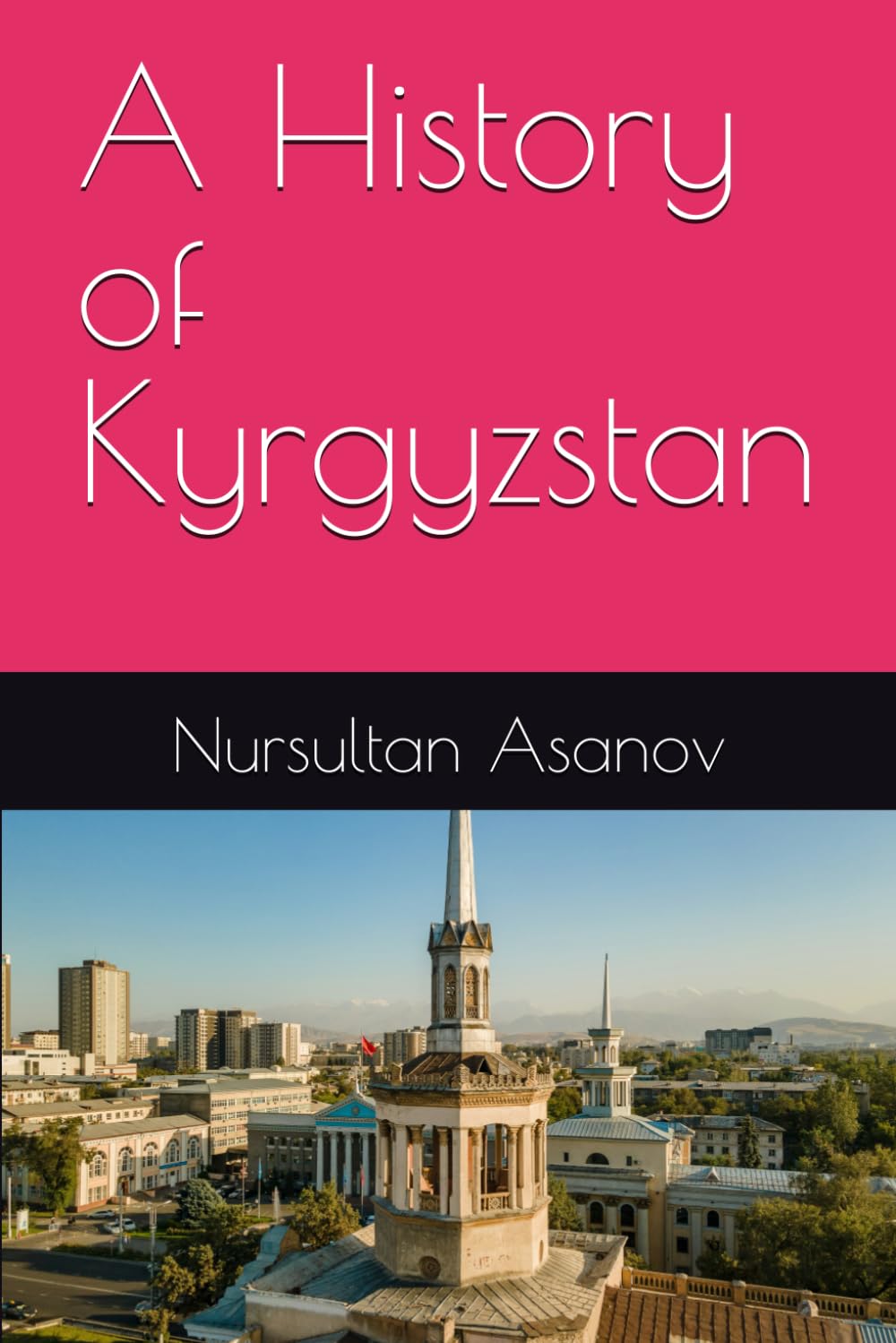



This sweeping history chronicles the epic journey of the Kyrgyz people, a story as rugged and dramatic as their mountain homeland. Forged not in the Tian Shan but in the distant forests of Siberia, the early Kyrgyz tribes established a powerful khaganate before undertaking a centuries-long migration southward. This narrative delves into the ancient world of the "Celestial Mountains," a vital crossroads of the Silk Road inhabited by Saka horsemen, Wusun confederations, and Sogdian merchants. It explores the rise of the Karakhanid Empire, which introduced Islam to the region, and traces the profound impact of the Mongol conquest under Genghis Khan, which irrevocably altered the political landscape and set the stage for the Kyrgyz to find their ultimate home amidst the high peaks. The modern era unfolds as a relentless struggle against encroaching empires. The book provides a detailed account of the Kyrgyz tribes caught between the aggressive Khanate of Kokand and the distant power of China's Qing Dynasty, a period that gave rise to legendary figures like the Alay queen, Kurmanjan Datka. This precarious independence is brought to an end by the inexorable southward expansion of the Russian Empire. The narrative unflinchingly examines the realities of Tsarist colonization, the dispossession of native lands for Slavic settlers, and the simmering resentments that culminated in the tragic 1916 uprising, or Urkun, a catastrophic event of massacre and exodus that remains a deep wound in the national memory. The narrative then plunges into the seismic transformations of the twentieth century. It details the chaos of the Bolshevik Revolution and the brutal Civil War, followed by the paradoxical Soviet project of nation-building that created a Kirghiz Soviet Socialist Republic with defined borders, a literary language, and national institutions. This came at a terrible cost: the forced collectivization that shattered the nomadic economy, a devastating famine, and Stalin's Great Purge, which physically eliminated the nation's founding generation of leaders. The book also explores the republic's vital role during World War II, the subsequent decades of industrialization and urbanization, and the flourishing of a unique Soviet Kyrgyz culture, embodied by the great writer Chingiz Aitmatov. From the heady optimism of independence in 1991 to the turbulent present, the final chapters analyze the challenges of forging a modern state. This history examines Kyrgyzstan's reputation as an "island of democracy," a promise that soured under the weight of corruption and nepotism, leading to the Tulip Revolution of 2005 and the bloody 2010 Revolution. It recounts the nation's bold but chaotic decade-long experiment with parliamentary democracy and its dramatic collapse in the upheaval of 2020. The book concludes by exploring the complex realities of contemporary Kyrgyzstan as it navigates a new constitutional order, a deep economic reliance on labor migration and the controversial Kumtor gold mine, a complex foreign policy balancing Russia and China, and the existential threat of climate change to the glaciers that are the nation's lifeblood.