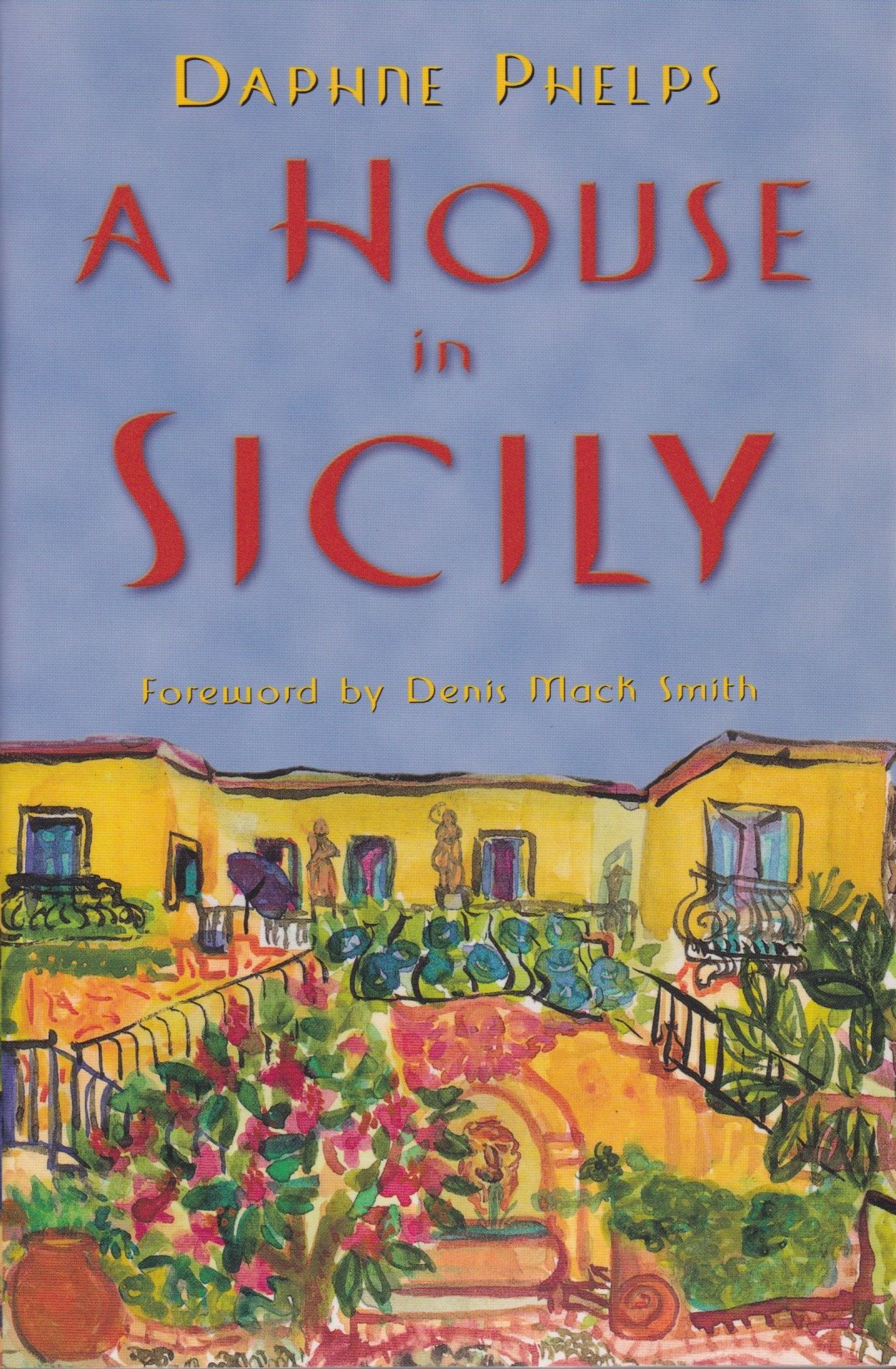



An American woman who inherited a house in Sicily in 1947 tells the enchanting story of why she decided to stay, and the four decades of good living she has had in a small Italian village--the goodwill of her neighbors and her numerous guests, who included Tennessee Williams and Henry Faulkner. "I had always been a bit of a maverick," writes Daphne Phelps, looking back on why--at the age of 34--when she unexpectedly inherited a grand house in Taormina, Sicily, she gave up her profession in London, left behind her ordered life with its museums, theater, family and friends, and embarked on a life-long adventure. Reading her intriguing memoir, one is glad Phelps chose the unconventional path: after inheriting her uncle's Casa Cuseni with its terraced gardens and staggering views of Mt. Etna, she struggles to make ends meet, but instead of selling the estate, opens its doors to a steady stream of paying guests and visitors--many of them artists, writers, and intellectuals. Inheriting an estate in Italy in 1947 isn't quite like winning the lottery, it turns out. In short sketches, Phelps reminisces about stepping into small-town Sicilian life, war-weary, speaking very little Italian, and even more scandalous, being unmarried. With her no-nonsense British humor, she recounts the typical conversation with men, young and old: "Are you married?" "No." "When are you going to get married?" " Chi lo sa --who knows?'" And then, "Why aren't you married?" Settling into daily life at Casa Cuseni, Phelps dons boots and digs into the garden, rolls up her sleeves and cleans the baroque carvings over the salon fireplace, and learns to manage the property and its full-time staff. As she points out in the book's conclusion, for more than 50 years now, house-related problems have kept her on her toes--those, and her amazingly devoted servant, cook, and even the local Mafia don, whom she all describes with more than a little condescension in a series of deft portraits. While Phelps's cynicism can be a bit hard to take when she's serving up her servants, she is, perhaps, at her best when telling stories about her famous houseguests: Bertrand Russell, Henry Faulkner, Tennessee Williams, even Roald Dahl. Some were charming, some were horrid. But the visitors came from 26 countries, with friends introducing their friends. Around the dining room table and in this volume Phelps has mixed people who in "normal life would be unlikely to meet." It is this Sicilian menagerie--anchored to a singular place and time, and viewed through a British prism--that makes Phelps's life story so worth the telling. --Kimberly Brown In 1947, when 34-year-old Englishwoman Phelps inherited her uncle's beautiful stone house in Taormina, Sicily, her first intention was to sell it. She, an Englishwoman in 1947, had neither the inclination nor the means to move to Sicily and take care of Casa CuseniAbut that was before she made her first visit and fell in love with the house and the Italian way of life. In this memoir, Phelps, a psychiatric social worker, tells how she managed to keep her uncle's house by opening it to foreign visitorsAwriters, painters, and those as enchanted as she was by the view of the snow-covered Mount EtnaAdespite having little money and difficulties with the Italian officials. Like Frances Mayes in Under the Tuscan Sun (LJ 9/1/96), Phelps describes not only the beauty of the area but the local people who were always willing to help her, from Don Ciccio, the town's Mafia don, to loyal cook Concetta. Unlike Mayes, though, Phelps has had such notables as Bertrand Russell, Tennessee Williams, Roald Dahl, and Henry Faulkner stay with her, and she includes engaging stories about each. Particularly amusing is the account of Faulkner's visit, accompanied by six cats, three dogs, a duck, and a baby goat. A delightful, humorous book; strongly recommended for all public libraries.ANancy R. Ives, SUNY at Geneseo Copyright 1999 Reed Business Information, Inc. Events led Phelps to leave England in 1948 to care for her uncle's house and gardens in Sicily. In this appealing memoir, she recalls getting stranded in the U.S. during World War II, then shortly afterwards finding herself responsible for the lovely Casa Cuseni. Phelps turned the house into a pensione so it would not fall into the hands of tax collectors. After living for half a century in the shadow of Mt. Etna, Phelps has stories to tell about her Sicilian friends, staff, and colorful characters with whom she crossed paths at one time or another. Over the years, Casa Cuseni was visited by all sorts of aristocrats and literati: Bertrand Russell, Roald Dahl, Tennessee Williams, and other notables were known to stop over for relaxed sojourns in the beautiful setting. The town of Taormina and its townspeople come alive in Phelps' deftly rendered portrayals, while in one of the book's most captivating reminiscences, she renders an effervescent portrait of Henry Faulkner. His visits to