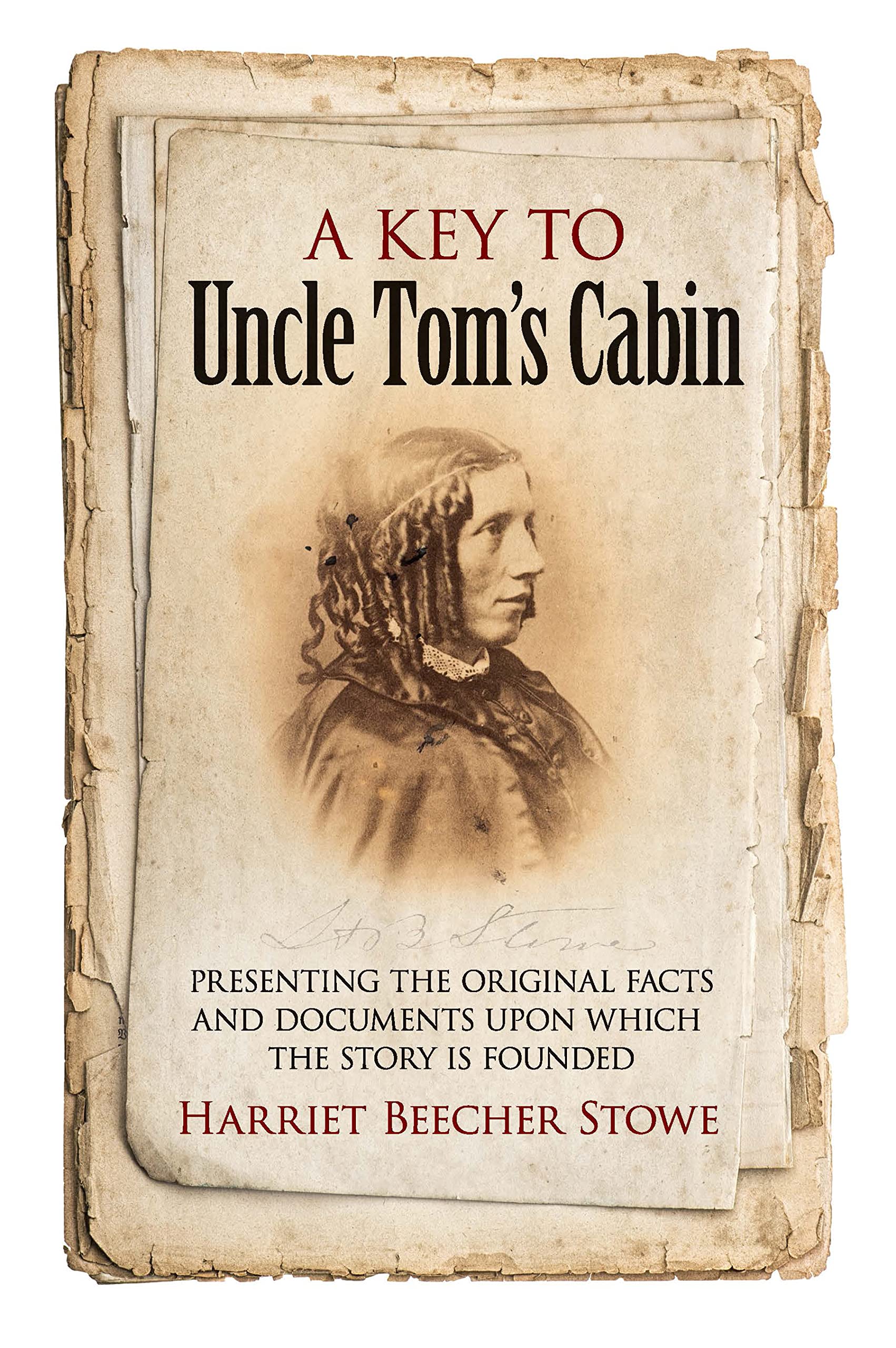
A Key to Uncle Tom's Cabin: Presenting the Original Facts and Documents Upon Which the Story Is Founded
$15.50
by Harriet Beecher Stowe



"I highly recommend reading this supplement in conjunction with Ms. Stowe's novel to gain a better understanding of the history of our nation." — The Literary South In 1852 Harriet Beecher Stowe published Uncle Tom's Cabin, an instant classic that received overwhelming acclaim by Northerners and other abolitionist readers. Southerners, conversely, strongly denied the novel's accuracy. The following year Stowe answered pro-slavery critics with this unique bestseller, a meticulous and thoughtful defense of her work, which cites real-life equivalents to her characters. Southern readers were further incensed by this follow-up volume, their wrath in no small part inflamed by a Yankee woman's presuming to tell men what to think. A critical aspect of Stowe's Key is her critique of the law's support of not only the institution of slavery but also the mistreatment of individual slaves. As in the original novel, her challenge extends beyond slavery to the law itself. American society's first widely read political novel, Uncle Tom's Cabin influenced the development of the nation's literature, particularly in terms of protest writing. This supplement to the novel offers valuable insights into a historical and literary landmark. American abolitionist Harriet Beecher Stowe (1811–1896) wrote more than 20 books, including novels, travel memoirs, and collections of articles and letters. Her 1852 publication of Uncle Tom's Cabin created a sensation throughout the United States and Great Britain. A Key to Uncle Tom's Cabin Presenting the Original Facts and Documents Upon Which the Story Is Founded By Harriet Beecher Stowe Dover Publications, Inc. Copyright © 2015 Dover Publications, Inc. All rights reserved. ISBN: 978-0-486-79482-2 CHAPTER 1 At different times, doubt has been expressed whether the representations of "Uncle Tom's Cabin" are a fair representation of slavery as it at present exists. This work, more, perhaps, than any other work of fiction that ever was written, has been a collection and arrangement of real incidents, — of actions really performed, of words and expressions really uttered, — grouped together with reference to a general result, in the same manner that the mosaic artist groups his fragments of various stones into one general picture. His is a mosaic of gems, — this is a mosaic of facts. Artistically considered, it might not be best to point out in which quarry and from which region each fragment of the mosaic picture had its origin; and it is equally unartistic to disentangle the glittering web of fiction, and show out of what real warp and woof it is woven, and with what real coloring dyed. But the book had a purpose entirely transcending the artistic one, and accordingly encounters, at the hands of the public, demands not usually made on fictitious works. It is treated as a reality, — sifted, tried and tested, as a reality; and therefore as a reality it may be proper that it should be defended. The writer acknowledges that the book is a very inadequate representation of slavery; and it is so, necessarily, for this reason, — that slavery, in some of its workings, is too dreadful for the purposes of art. A work which should represent it strictly as it is would be a work which could not be read. And all works which ever mean to give pleasure must draw a veil somewhere, or they cannot succeed. The author will now proceed along the course of the story, from the first page onward, and develop, as far as possible, the incidents by which different parts were suggested. CHAPTER 2 MR. HALEY. In the very first chapter of the book we encounter the character of the negro-trader, Mr. Haley. His name stands at the head of this chapter as the representative of all the different characters introduced in the work which exhibit the trader, the kidnapper, the negro-catcher, the negro-whipper, and all the other inevitable auxiliaries and indispensable appendages of what is often called the "divinely-instituted relation" of slavery. The author's first personal observation of this class of beings was somewhat as follows: Several years ago, while one morning employed in the duties of the nursery, a colored woman was announced. She was ushered into the nursery, and the author thought, on first survey, that a more surly, unpromising face she had never seen. The woman was thoroughly black, thick-set, firmly built, and with strongly-marked African features. Those who have been accustomed to read the expressions of the African face know what a peculiar effect is produced by a lowering, desponding expression upon its dark features. It is like the shadow of a thunder-cloud. Unlike her race generally, the woman did not smile when smiled upon, nor utter any pleasant remark in reply to such as were addressed to her. The youngest pet of the nursery, a boy about three years old, walked up, and laid his little hand on her knee, and seemed astonished not to meet the quick smile which the negro almost always