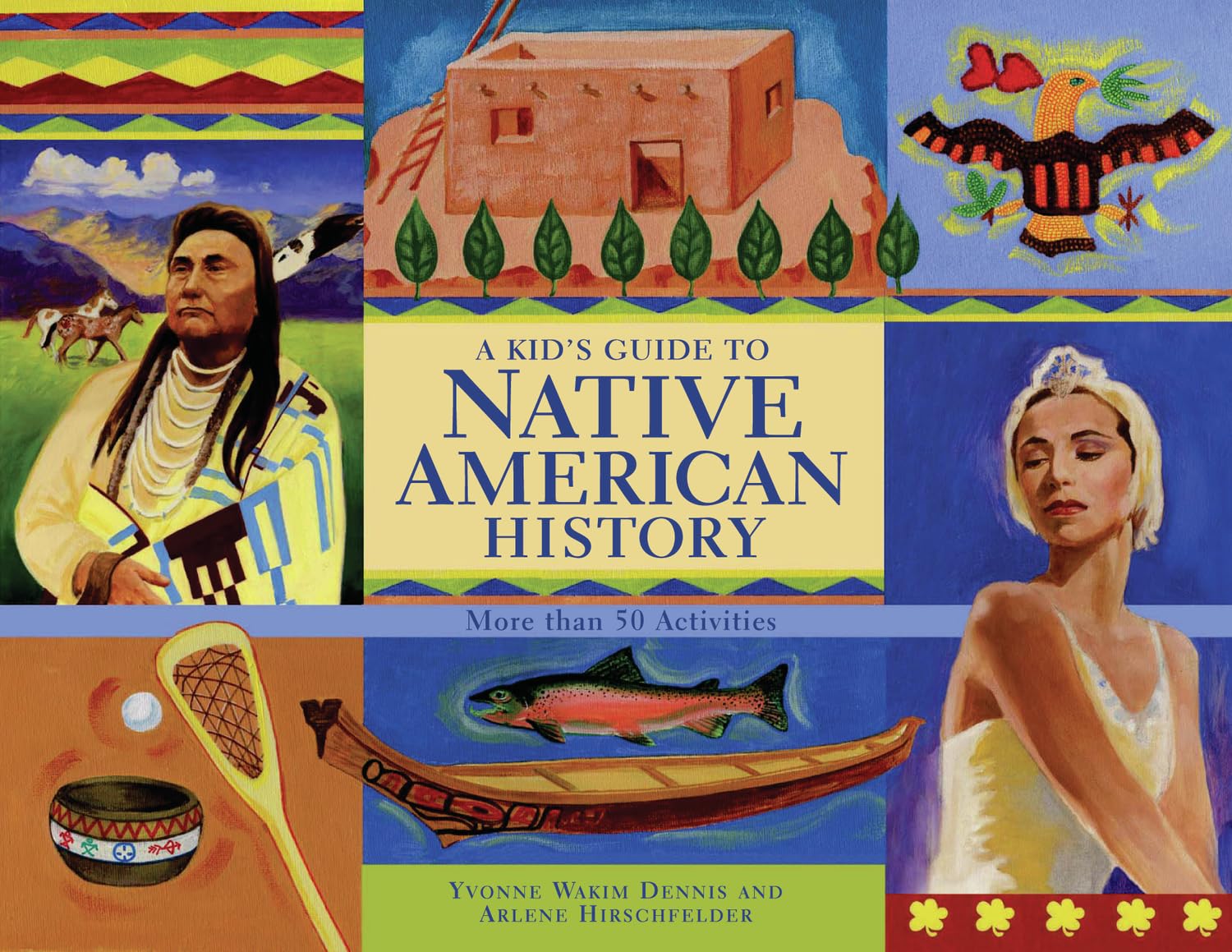
A Kid's Guide to Native American History: More than 50 Activities (A Kid's Guide series)
$16.11
by Yvonne Wakim Dennis



Hands-on activities, games, and crafts introduce children to the diversity of Native American cultures and teach them about the people, experiences, and events that have helped shape America, past and present. Nine geographical areas cover a variety of communities like the Mohawk in the Northeast, Ojibway in the Midwest, Shoshone in the Great Basin, Apache in the Southwest, Yupik in Alaska, and Native Hawaiians, among others. Lives of historical and contemporary notable individuals like Chief Joseph and Maria Tallchief are featured, and the book is packed with a variety of topics like first encounters with Europeans, Indian removal, Mohawk sky walkers, and Navajo code talkers. Readers travel Native America through activities that highlight the arts, games, food, clothing, and unique celebrations, language, and life ways of various nations. Kids can make Haudensaunee corn husk dolls, play Washoe stone jacks, design Inupiat sun goggles, or create a Hawaiian Ma’o-hauhele bag. A time line, glossary, and recommendations for Web sites, books, movies, and museums round out this multicultural guide. Complementing the authors’ excellent Native Americans Today: Resources and Activities for Educators, Grades 4–8 (2000), this child-centered gathering of history, crafts, and activities opens with a chapter of stereotype-dispelling information, then goes on in regionally arranged chapters to present brief accounts of the past and (especially) present lives and customs of several dozen cultures, from Mi’kmaq to Native Hawaiian. Carefully steering clear of items with ceremonial or religious import, Dennis and Hirschfelder add simple directions for creating versions of distinctive everyday objects—such as Seminole-style decorations for a baseball cap or Winnebago appliqué ribbonwork for a notebook cover—plus games, recipes (with notes suggesting adult supervision where cooking or cutting is involved), and art projects. Rattray supplies simple line patterns or diagrams throughout. With plenty of ideas for curriculum enrichment, this resource also includes enough historical background to be a good supplementary source of information for early reports. Back matter includes extensive lists of books, Web sites, and Native American museums and cultural centers. Grades 4-6. --John Peters "A wealth of information and activities for classroom teachers or parents creating a home learning program." — Kirkus Reviews Yvonne Wakim Dennis is the outreach director for Nitchen, Inc., a support agency for indigenous families, and the Nitchen Children's Museum of Native America. She is the coauthor of Native Americans Today with Arlene Hirschfelder. Arlene Hirschfelder is the author of numerous books on Native Americans, including Native Americans: A History in Pictures and Rising Voices: The Writings of Young Native Americans . She has been a consultant for the Smithsonian’s National Museum of the American Indian. A Kid's Guide to Native American History More than 50 Activities By Yvonne Wakim Dennis, Arlene Hirschfelder Chicago Review Press Incorporated Copyright © 2010 Yvonne Wakim Dennis and Arlene Hirschfelder All rights reserved. ISBN: 978-1-55652-802-6 Contents Acknowledgments, Note to Readers, Time Line, Introduction, 1 Who Are Native People?, 2 Northeast, 3 Southeast, 4 Midwest, 5 Plains, 6 Great Basin And Plateau, 7 Southwest, 8 Pacific States, 9 Alaska, 10 Hawaii, Resources, CHAPTER 1 Who Are Native People? James ran to catch the bus and jumped on just before the doors closed. It was after 6 P.M., and he had to get home and have dinner before his school friends came over to work on their class history project. He hadn't had time to change from his ribbon shirt into his street clothes. That afternoon, he and other students at the Native American Education Program had posed for pictures in their regalia. James only wore his Native clothing on special occasions, like powwows and ceremonies. "Are you an Indian?" an elderly white lady asked, her booming voice echoing throughout the bus. "Yes," James answered in a quiet voice, trying not to draw any more attention to himself. "Why's an Indian riding a bus instead of a horse? Indians aren't supposed to be in New York City. Don't you belong in a tipi on a reservation?" Twelve-year-old James felt everyone's eyes on him. He wasn't sure what to do. His family taught him to be respectful to elders, but what if they were disrespecting you? Finally James answered in a firm but polite voice. "Indian people live everywhere in this country. After all, it is our country. And I live in an apartment building, like other New Yorkers. In fact, my people never lived in tipis. There are all kinds of Native people and we are all different, but today more Indians live in cities than on reservations." People began to cheer at his response to the rude woman. But this just embarrassed James even more. He was relieved when the bus reached his stop and he