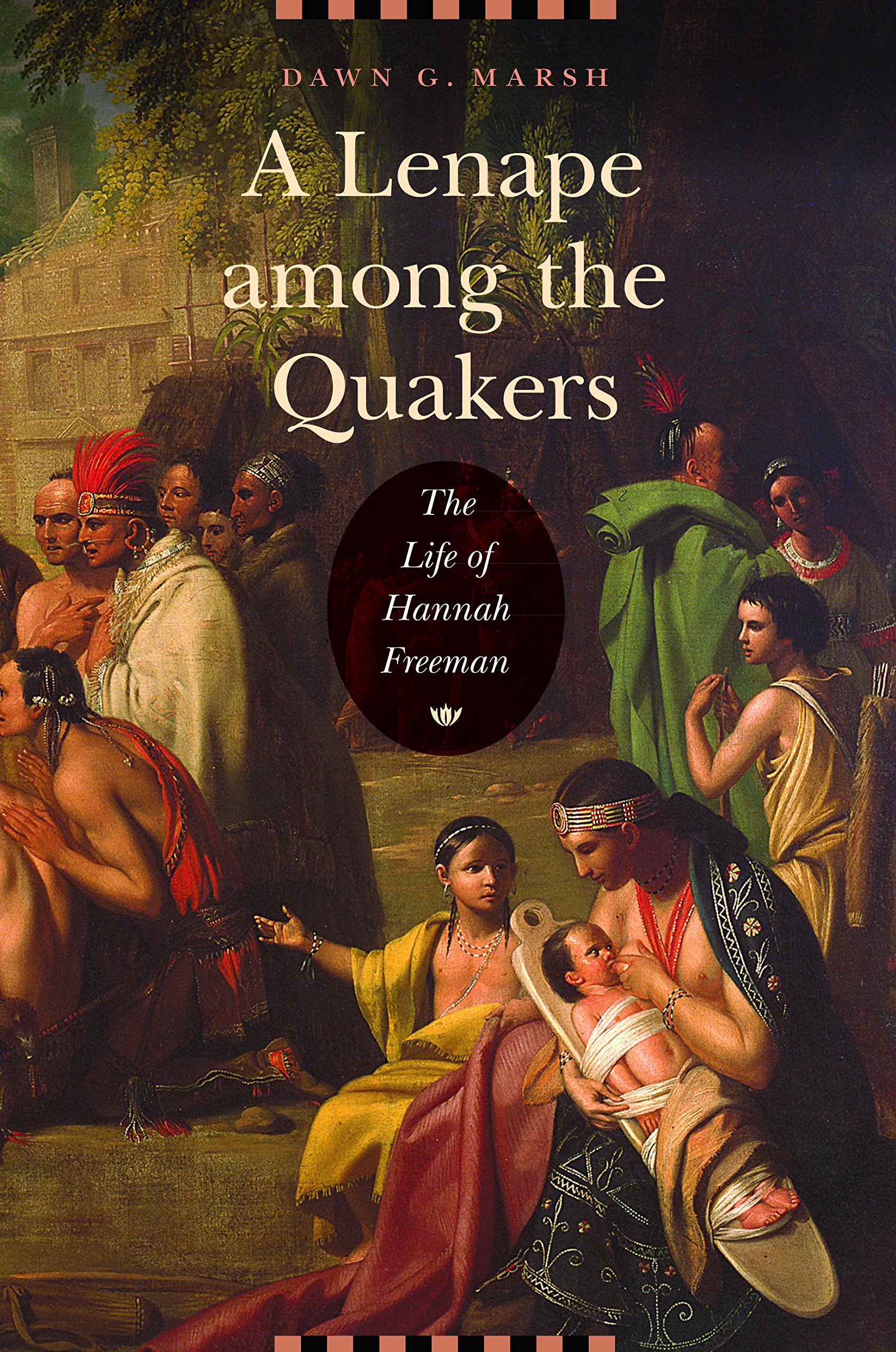



On July 28, 1797, an elderly Lenape woman stood before the newly appointed almsman of Pennsylvania’s Chester County and delivered a brief account of her life. In a sad irony, Hannah Freeman was establishing her residency—a claim that paved the way for her removal to the poorhouse. Ultimately, however, it meant the final removal from the ancestral land she had so tenaciously maintained. Thus was William Penn’s “peaceable kingdom” preserved. A Lenape among the Quakers reconstructs Hannah Freeman’s history, traveling from the days of her grandmothers before European settlement to the beginning of the nineteenth century. The story that emerges is one of persistence and resilience, as “Indian Hannah” negotiates life with the Quaker neighbors who employ her, entrust their children to her, seek out her healing skills, and, when she is weakened by sickness and age, care for her. And yet these are the same neighbors whose families have dispossessed hers. Fascinating in its own right, Hannah Freeman’s life is also remarkable for its unique view of a Native American woman in a colonial community during a time of dramatic transformation and upheaval. In particular it expands our understanding of colonial history and the Native experience that history often renders silent. Marsh’s elucidating account of the “less than peaceful indigenous-white experience in colonial Pennsylvania” focuses on one Lenape woman, Hannah Freeman, the last of her tribe to maintain residence in its Brandywine River Valley homeland. By means of extensive use of original documents—including the writings of William Penn, who arrived in southeastern Pennsylvania in 1682 espousing his doctrine of “benevolent colonialism”—Marsh demonstrates how the Lenape lost their land piece by piece. By the time of Hannah’s birth early in the eighteenth century, much of the Lenape land was already taken, but she steadfastly stayed on her family’s land even as many of her people left for the western part of the state. She worked for, and was well treated by, her Quaker neighbors until she was placed in the almshouse, where she died five years later. Marsh’s account of events that are also poignantly encapsulated in the iconic Benjamin West painting Penn’s Treaty with the Indians, a bucolic scene masking the Indians’ imminent removal to what was essentially a reservation, is a thoughtful documentation of one woman’s struggle to maintain her ancestral homeland. --Deborah Donovan "This book will prove useful for those interested in the history of colonial British America, women's history, ethnohistory, and the history of memory."—Michelle LeMaster, Ethnohistory "A thoughtful documentation of one woman's struggle to maintain her ancestral homeland."— Booklist Published On: 2014-04-15 “With great insight and sensitivity, Dawn Marsh has pieced together Hannah Freeman’s story. All who have ever wondered what happened to Pennsylvania’s Native people should read this book.”—Nancy Shoemaker, author of A Strange Likeness: Becoming Red and White in Eighteenth-Century North America Published On: 2013-09-20 “Using the closely examined life of a single eighteenth-century Native American woman, Dawn Marsh convincingly challenges Pennsylvania’s claim to a more just and humane treatment of its indigenous peoples, persuasively contending that Native Americans adopted complex strategies to preserve their cultural heritage, and explores the significance of the continuing mythology of ‘Indian Hannah’ Freeman—all in a good read.”—Melton McLaurin, author of Celia, A Slave Published On: 2013-10-03 Dawn G. Marsh is an assistant professor of history at Purdue University. Her articles have appeared in Ethnohistory , Ohio History , and edited books.