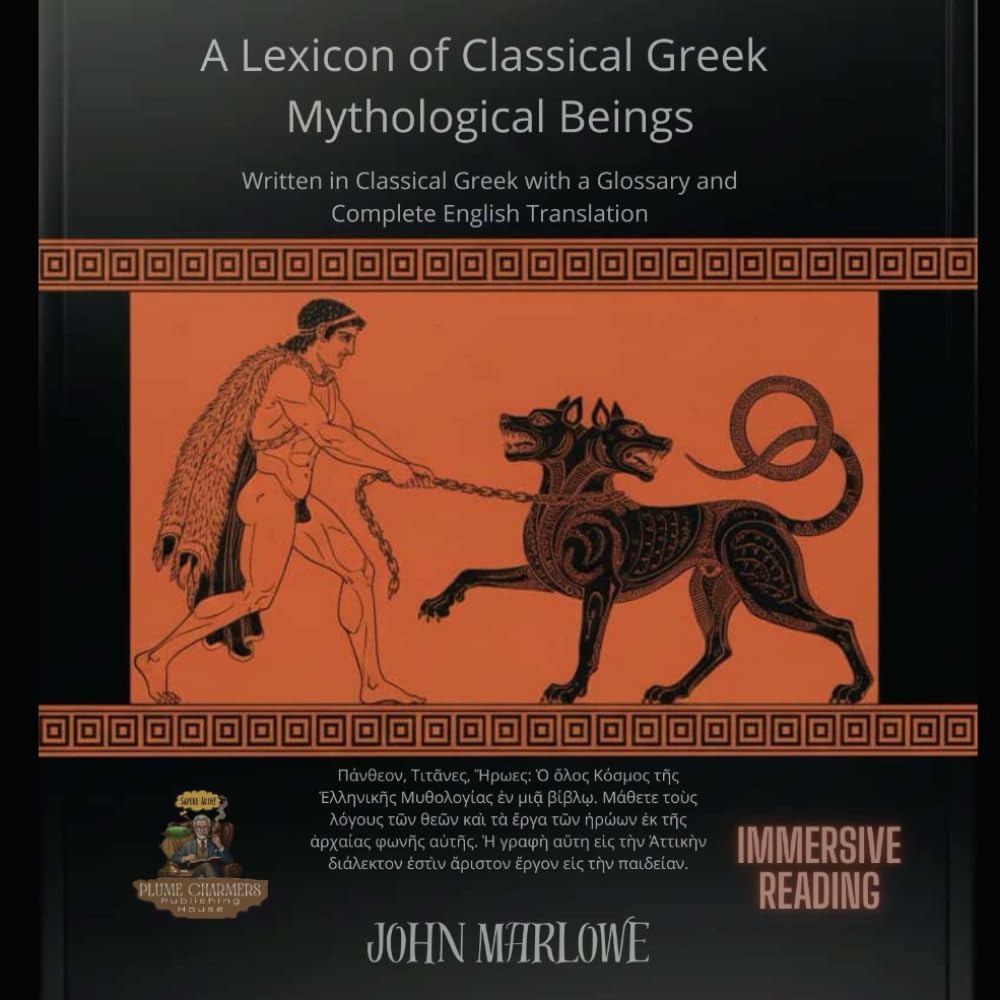
A Lexicon of Classical Greek Mythological Beings: Written in Classical Greek with a Glossary and Complete English Translation
$25.00
by John Marlowe



The Gates of Olympus and the Labyrinth of Lore In an age dominated by fleeting information, there remains an enduring power in the narratives that shaped Western civilization—the myths of Ancient Greece. This book, A Lexicon of Classical Greek Mythological Beings , is not merely a catalogue of divine and monstrous entities; it is a meticulously crafted key, inviting you to unlock the profound relationship between story, culture, and the very language that first brought these figures to life. For the curious reader, the mythology contained within these pages is a vibrant journey. We traverse the heights of Mount Olympus, detailing the supreme authority of Zeus and the Olympian Gods and the revelatory ecstasy of figures like Dionysus . We explore the wilderness and the sacred groves, inhabited by the beautiful, localized spirits of nature—the Nymphs —and dive into the abyssal depths to meet the fearsome Tritons and the strange, shape-shifting entities of the sea. A Struggle for the Cosmos The Lexicon chronicles the epic wars that established the cosmic order. You will encounter the primordial powers—the gigantic Titans , who reigned during the Golden Age before their violent defeat in the Titanomachy. Following them are the earth-born Giants , the embodiment of untamed nature, whose ferocious war against the Olympian newcomers solidified the modern pantheon's rule. And guarding the gates of the ultimate darkness, you will face Cerberus , the formidable, three-headed spawn of Typhon, whose existence defines the boundary between the living and the dead. Crucially, we celebrate the human element: the Heroes and Demigods . These figures, often born of both divine power and mortal frailty, represent humanity's struggle for justice and order against chaos. The book dedicates a section to the archetype of the hero himself, Heracles , whose Twelve Labours became the ultimate demonstration of strength, virtue, and the path to eventual, hard-won immortality on Olympus. Why Read This Book in Greek? The Power of the Original Tongue What truly distinguishes this work is its unique presentation. Every entry is presented in the Classical Greek language , the tongue of Homer, Plato, and Sophocles. This choice is deliberate, offering unparalleled benefits for the student, scholar, and enthusiast alike: Linguistic Precision: Mythology is interwoven with etymology. Reading the descriptions of the Titans or the functions of the Nymphs in the original Greek provides immediate clarity on the meaning and cultural context of these names. - Immersive Experience: To read Κέρβερος (Cerberus) or Ἡρακλῆς (Heracles) as the ancients knew them is to step directly into the world of the original listeners and poets. It offers a deeper, more visceral connection to the source material. - An Invaluable Study Tool: This Lexicon functions as a multi-layered educational instrument. Every Greek passage is immediately followed by a comprehensive Glossary (Greek-English) and a full, modern English Translation . This structure allows beginners to build vocabulary, intermediate students to practice syntax, and advanced readers to appreciate the subtle nuances of Classical prose. Whether you are a devoted Hellenist seeking a novel way to engage with the language, a curious mythologist wishing to access the primary source descriptions, or a newcomer ready to start your journey into Greek, this book is your essential guide. Enter these pages and discover not only the stories of the gods, but the majestic language of their creation.