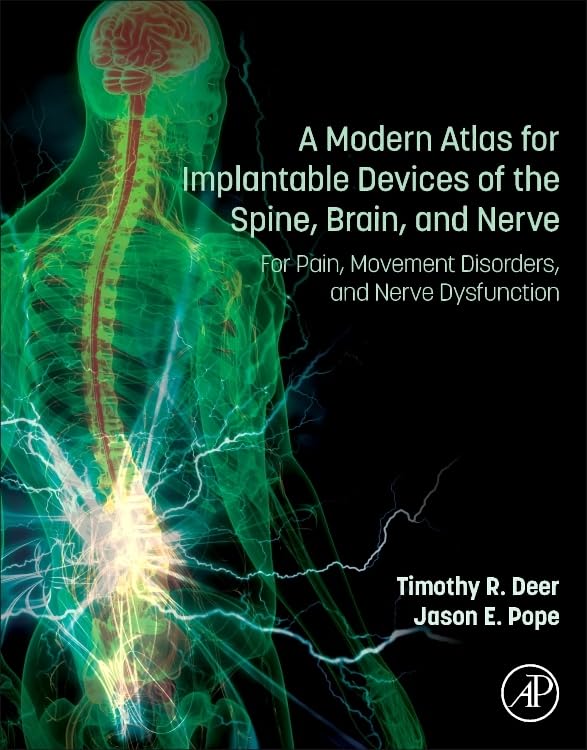
A Modern Atlas for Implantable Devices of the Spine, Brain, and Nerve: For Pain, Movement Disorders, and Nerve Dysfunction
$175.00
by Timothy R. Deer MD



A Modern Atlas for Implantable Devices of the Spine, Brain, and Nerve: For Pain, Movement Disorders, and Nerve Dysfunction is an essential resource for healthcare professionals and researchers working in neuromodulation. This groundbreaking text focuses on the latest advancements in implantable technologies, exploring innovative techniques, frequencies, and neural targets that have revolutionized patient care. Covering a diverse range of conditions related to pain, movement disorders, and nerve dysfunction, the atlas provides a detailed overview of spinal, brain, and peripheral nerve procedures. It combines anatomical insights with clinical best practices to help professionals achieve enhanced outcomes in complex medical scenarios. In addition to introducing cutting-edge devices, the book delves into procedures like spinal cord stimulation and dorsal root ganglion modulation, offering a roadmap for navigating intricate anatomical and procedural landscapes. The atlas includes valuable sections on sacral nerve modulation and peripheral nerve stimulation, ensuring comprehensive coverage of neuromodulation's expanding possibilities. By bridging theoretical knowledge with practical application, this resource equips practitioners with the tools needed to address diverse patient challenges effectively. Includes comprehensive coverage of new implantable devices and techniques not previously available, catering to the latest advancements in neuromodulation - Details anatomical insights and procedural guidelines for spine, brain, and peripheral nerve stimulations - Presents in-depth sections on brain stimulation, vagal nerve stimulation, and glossopharyngeal nerve stimulation - Explores advanced waveforms and frequencies tailored for optimizing pain management and therapeutic outcomes across various neural targets A comprehensive atlas featuring cutting-edge techniques and advanced therapies seeking to revolutionize patient care A Modern Atlas for Implantable Devices of the Spine, Brain and Nerve: For Pain, Movement disorders, and Nerve Dysfunction is a vital resource for medical practitioners and researchers in the rapidly evolving field of neuromodulation. This comprehensive reference navigates the intricate landscape of implantable technologies with a focus on new techniques, advanced waveforms and frequencies, and novel neural targets spanning the spine, brain, and peripheral nerves. This atlas introduces groundbreaking devices, including best practices tailored to enhance clinical outcomes. From spinal cord stimulation to intricate procedures involving the dorsal root ganglion, and sacral nerve, each section reviews both the anatomical nuances and procedural details, equipping practitioners with the expertise needed to tackle a diverse array of disease states and patient conditions. Timothy R. Deer is a clinical professor of anesthesiology at the West Virginia University School of Medicine, where he also received his medical degree. He completed his training in anesthesiology and pain medicine at the University of Virginia. Dr. Deer has published on a range of topics, including injection techniques, minimally invasive disc procedures, intrathecal drug delivery, and spinal cord and peripheral nerve stimulation. He lectures at many national and international symposiums and has been involved in the hands-on training of more than a thousand interventional pain specialists. He serves on the board of directors of the North American Neuromodulation Society and American Academy of Pain Medicine. He is a past chair of the committee on pain medicine of the American Society of Anesthesiologists, a member of the editorial board of the journal Neuromodulation, president of the West Virginia Society of Interventional Pain Physicians, and serves on several other boards and committees. Dr. Pope is a leader in clinical research and innovation. He is involved with clinical trials encompassing many treatment strategies, including cellular therapy and regenerative medicine, medical devices to treat pain and wellness strategies. He is also focused on furthering education in the field of pain medicine. He has published over 100 peer-reviewed journals and spoken at numerous national and international conferences. He has served as the principal investigator for numerous national and international studies, started and clinical research organization, and helped numerous practices begin their research departments. When not helping his patients improve their quality of life, Dr. Pope enjoys spending time with his three children and writing.