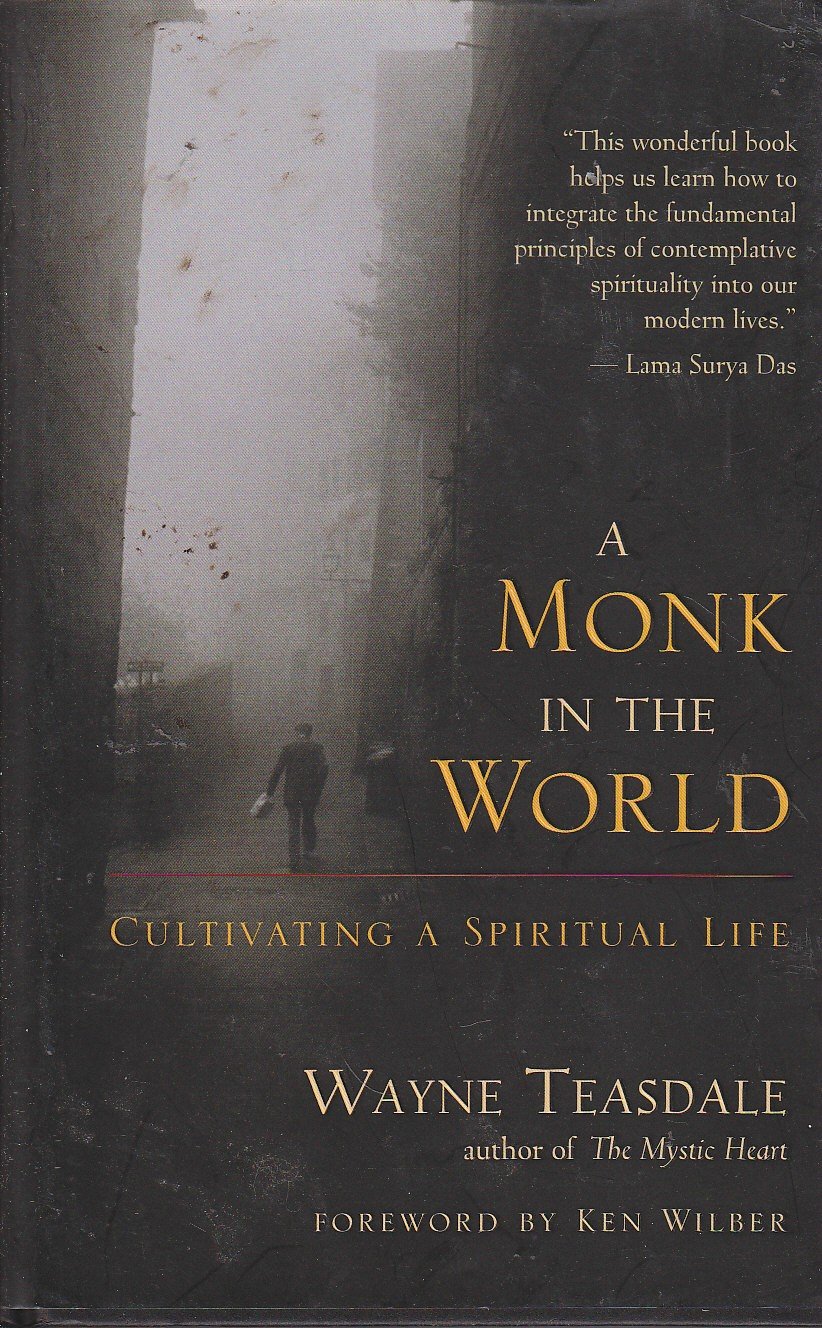



The author outlines a spiritual path combining Eastern and Western religious traditions and explains how he has integrated teachings from the world's religions with his own Catholic training. When Brother Wayne Teasdale took the naked plunge into the sacred Kavery River of India and renounced his possessions and former identity to become a Catholic monk, he expected to remain in the nirvanic atmosphere of the Shantivanam monastery. But hours later his teacher turned to him and said that his mission was not to remain in retreat, but rather to go home to America. "Without a doubt there is great value in spirituality that emphasizes and supports withdrawal from society," writes Teasdale. "But in our time, we require a spirituality of intense involvement and radical engagement with the world." By this he means taking on daily tasks, such as "earning a living, paying bills, saving money, getting along with others, being entertained, enjoying a healthy recreation, and learning how to interact with difficult people." At the same time, the monk must not succumb to "greed, indifference, insensitivity, noise, confusion, pettiness, unease, tension, irreverence." Of course, readers quickly catch on that he's describing the collective mission of humankind. A Monk in the World is the book that contemporary seekers yearn for--solid advice on how to live with spiritual values in a modern world. Teasdale covers the nuts and bolts: how to introduce periods of silence and solitude into daily life, cultivate spiritual friendships, create a spiritual workplace, and how to understand and respond to the world's suffering. Such guidance shows Teasdale at his best, a man committed to building a global "interspiritual" movement--where we all become monks in the world, collectively doing the right thing while honoring the many and diverse paths to God. --Gail Hudson Publishers are responding to an increased demand for books that can help people lead more meditative lives, and these inventive essay collections will please progressive Christian and New Age readers alike. In The Soul's Religion, Moore's companion volume to his 1992 best seller, Care of the Soul, brief essays by the famed therapist and former monk offer perspectives on the soul-deepening potential of coping with failed relationships, natural disaster, and the fools and saints around us. Moore uses a variety of spiritual traditions, including Zen, Taoism, and Christianity, to show readers how they can enhance their spiritual development. In Bringing God Home, a Unitarian minister and son of former senator Frank Church has crafted a poetic autobiography in the form of brief meditations. Lay people will savor Church's originality as well as his insights from childhood with a famous father, and English teachers will find inspiration for their classrooms in his thoughts on the pilgrimage literature of John Bunyan, Thomas Wolfe, and Nathaniel Hawthorne. Teasdale's A Monk in the World gives practical tips for enhancing spirituality and promoting social justice. A Hindu monk with a Catholic upbringing, Teasdale teaches at three colleges in the Chicago area. His gentle reflections are punctuated by reminiscences of personal ordeals as well as poignant character sketches of street people. Teasdale's more ambitious The Mystic Heart: Discovering a Universal Spirituality in the World's Religions has been popular, and his new work should be, too. All three books can be added to larger public libraries, but those that can afford just one should consider purchasing Moore's, which will be in demand owing to the author's widespread popularity. Joyce Smothers, Student, Princeton Theological Seminary, NJ Copyright 2002 Reed Business Information, Inc. Drawing on the wisdom of the world's great religions, lay monk Teasdale explores such fundamentals as the meaning of friendship, the inherent dignity of work, the nature of suffering, and ways to enact social change. So doing, he offers spiritual guidance to religious seekers who want to effectively and meaningfully balance prayer, work, study, and leisure. Teasdale, who himself lives in the heart of a big American city (Chicago), explains how to cultivate contemplation and integrate monasticism into everyday life in a busy world. The contemplative attitude can be nourished, he suggests, by developing the capacity to see one's surroundings in a new and selfless way, which involves things as simple as taking time to appreciate what one has. At his most heartfelt and optimistic, Teasdale advocates a truly kinder, gentler society, in which compassionate and loving hearts may transform the crass and dehumanizing aspects of capitalism. Mostly, however, he depicts the contemplative person as an agent of social change, a revolutionary in the most expansive, spiritual sense of the word. June Sawyers Copyright © American Library Association. All rights reserved