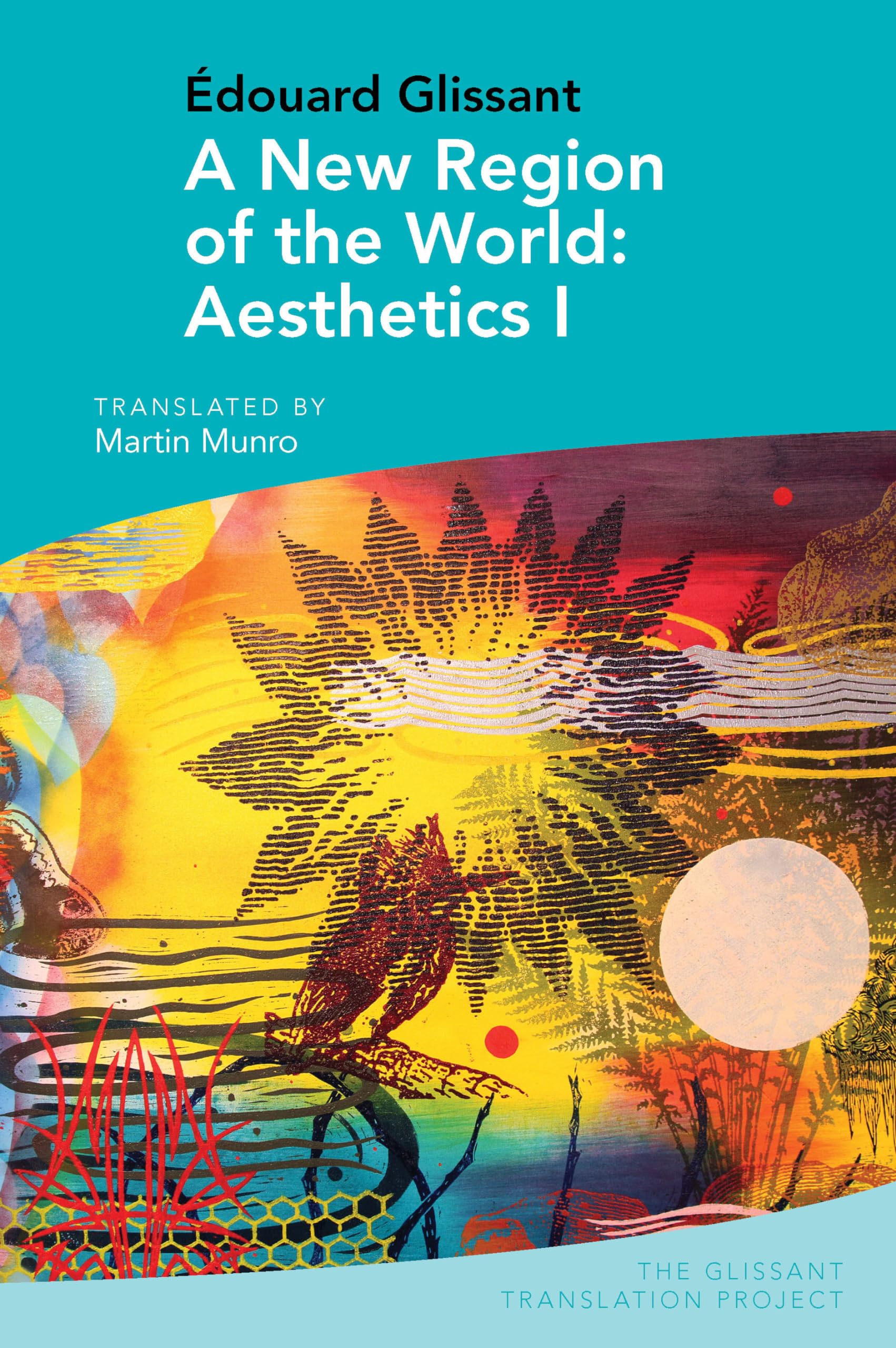
A New Region of the World: Aesthetics I: by Édouard Glissant (The Glissant Translation Project, 4)
$29.99
by Martin Munro



We are all now entering into a new region of the world , which designates its sites on all the given and imaginable expanses, and of which only a few had been able to foresee in the distance its wanderings and obscurities. […] This region itself, we soon foresee, as difficult as it may seem to formulate its partition, is mixed in time as much as in space, a common site which hides another gap. Time has changed and space has changed. A steep separation of time and space, overwhelming one another. A new region that is an epoch, mixing all times and all durations, an epoch also which is an inexhaustible country, accumulating expanses, which are looking for other limits, in incalculable but always finite number, as has been said of atoms. […] we are entering into this new region of the world , of totalized space, of relativized time, where everyone already admits that differences are determinant, but most often they refuse to recognize that their sum, their realized quantity, sketches another Relation, quite different because we have so long ignored it, but we know that it is made and brewed from inextricable and propitious contaminants. […] And we enter into the Whole-World, which always for us covers the totality of the world, but here it is that this Whole-World is also in our actuality another region of the world , a whole new region, and the world is there, it is right-here, it is ahead of us, who say it without saying it while saying it again, undertaking a new category of literature. None of the regions of the world is really unknown, the explorers have driven their trains to their endpoint, yet there is another region of the world in the world, which we have not traveled so much, for we will have to cross it all together, it is this very improbable Whole-World, and a few had knowledge of it . Well then, the world is completely recognized, and the Whole-World covers entirely the world, however and for us the Whole-World is to be discovered and known. It is a part of the world, which right-here transcends the world and designates it. “The spirit and letter of the essay have been beautifully transferred into English, without betraying any of the original impetus […] it reproduces, in interesting and sometimes surprising ways, exactly what the Francophone reader would experience faced with the original text.” Hugo Azerad, University of Cambridge ‘The creativity and originality of Glissant’s use of language of course means that he is not easy to translate, but as I hope my quotations have made clear, Martin Munro has done an excellent job.’ Celia Britton, New West Indian Guide ?The spirit and letter of the essay have been beautifully transferred into English, without betraying any of the original impetus [?] it reproduces, in interesting and sometimes surprising ways, exactly what the Francophone reader would experience faced with the original text.? Hugo Azerad, University of Cambridge Glissant's dizzying essay explores and brings into being his idea of a new region of the world, where time is totalized and space relativized, and all things imagined at once. Hugely ambitious, relentlessly poetic, Glissant guides you into this work, this world, which he says has been little travelled, but will have to be crossed together, as one, and transcends and designates the world as it has been known. https://global.oup.com/academic/product/9781802077964?cc=us Martin Munro is Winthrop-King Professor of French at Florida State University. He previously worked in Scotland, Ireland and Trinidad. His latest academic monograph is The Music of the Future: Sound and Vision in the Caribbean (Oxford, 2024).