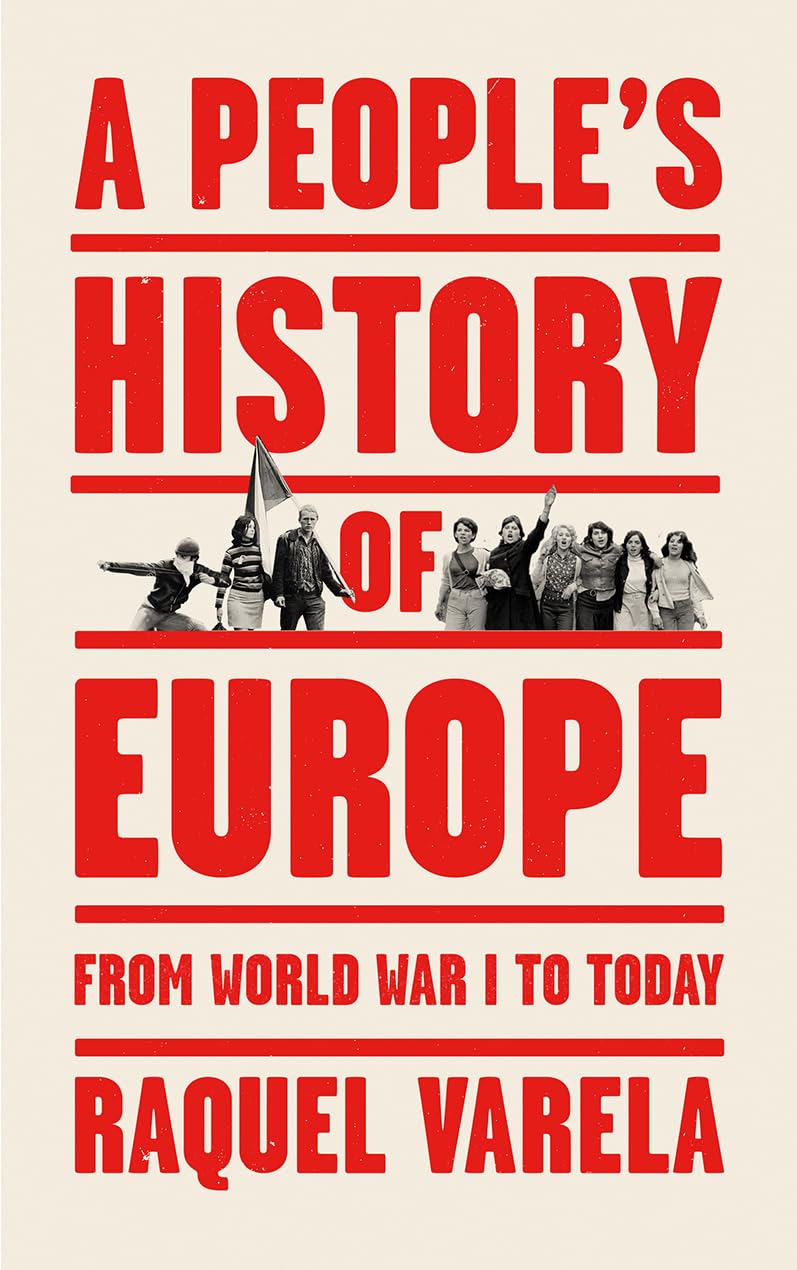



This concise people's history of Europe tells the story of the last hundred years of a very old continent and the ordinary people that shaped the events that defined it from World War I to today. From the Russian Revolution, through May '68 and the Prague Spring, to the present day, we hear from feminists, trade unionists, conscientious objectors and activists and learn of immigration struggles, anti-colonial conflicts and labor movements. Cutting against the grain of mainstream histories, this is a history of Europe told from below. Containing new and fascinating insights, Raquel Varela paints a different picture of the European story; one where ordinary Europeans are active agents of their own history. 'A vivid and passionate fresco of a century of tumultuous European social history' -- Pietro Basso, Ca' Foscari University of Venice 'Raquel Varela succeeds in explaining the disasters of European neoliberalism, without ever romanticising the social pact that went before it. In a work with a rich sense of historical possibility, she shows how every inch of social progress had to be fought for and how little it ever had to do with the European institutions' -- David Broder, 'Jacobin' 'A vivid and passionate fresco of a century of tumultuous European social history' 'Raquel Varela succeeds in explaining the disasters of European neoliberalism, without ever romanticising the social pact that went before it. In a work with a rich sense of historical possibility, she shows how every inch of social progress had to be fought for and how little it ever had to do with the European institutions' Raquel Cardeira Varela is a Professor at New University of Lisbon, and Senior Visiting Professor at the Fluminense Federal University. She is also president of the International Association of Strikes and Social Conflicts and co-editor of its journal. She is the author of A People's History of the Portuguese Revolution (Pluto, 2018).