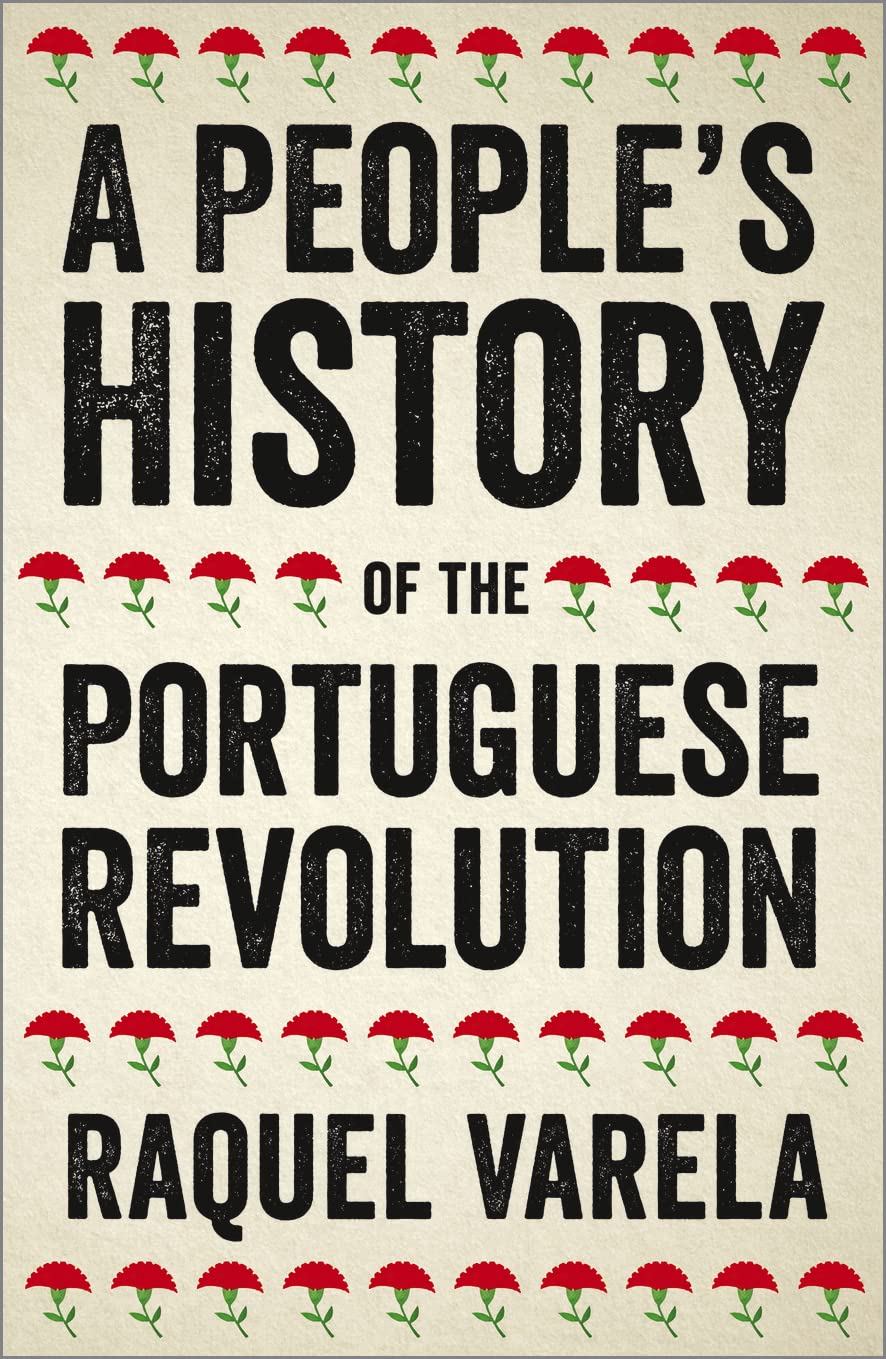



On the 25th April 1974, a coup destroyed the ranks of Portugal’s fascist Estado Novo government as the Portuguese people flooded the streets of Lisbon, placing red carnations in the barrels of guns and demanding a ‘land for those who work in it’. This became the Carnation Revolution - an international coalition of working class and social movements, which also incited struggles for independence in Portugal’s African colonies, the rebellion of the young military captains in the national armed forces and the uprising of Portugal’s long-oppressed working classes. It was through the organising power of these diverse movements that a popular-front government was instituted and Portugal withdrew from its overseas colonies. Cutting against the grain of mainstream accounts, Raquel Cardeira Varela explores the role of trade unions, artists and women in the revolution, providing a rich account of the challenges faced and the victories gained through revolutionary means. “Lively, brilliantly documented and filled with the voices of Portugal’s ordinary people, Raquel Varela’s book recovers the revolution from below that shook Portugal in 1974-5, a ‘democratic transition’ that revealed another world is possible. This book deserves the widest circulation.” -- Colin Barker, author of Festival of the Oppressed: solidarity, reform and revolution in Poland, 1980-81 'Lively, brilliantly documented and filled with the voices of Portugal's ordinary people, this book recovers the revolution from below that shook Portugal in 1974-5' 'An excellent, well-written, and radical introduction to a complex and immensely important history.' Raquel Cardeira Varela is a researcher at the Institute of Contemporary History at the Universidade Nova de Lisboa. She is president of the International Association of Strikes and Social Conflicts and coeditor of its scholarly journal, Workers of the World: International Journal of Strikes and Social Conflicts. A People's History of the Portuguese Revolution By Raquel Varela Pluto Press Copyright © 2019 Bertrand Editora and Raquel Varela All rights reserved. ISBN: 978-0-7453-3857-6 Contents Photographs, Figures and Tables, ix, Acknowledgements, xi, Editor's note on the English edition, xii, Abbreviations, xiii, 1. Introduction, 1, 2. The Seeds of Change, 6, 3. 25 April 1974: 'The People are No Longer Afraid', 16, 4. Who Governs?, 32, 5. The Anti-Colonial Movements and the Myth of a 'Bloodless Revolution', 52, 6. Strikes and their Reverberations, 67, 7. Self-Management and the Struggle Against Redundancies, 83, 8. Women in a Democracy are Not Mere Decoration: Social Reproduction and Private Life in the Revolution, 98, 9. Artists and the Revolution, 109, 10. Workers' Commissions and Unions, 119, 11. 'Here is the Nursery' — Urban Struggles and Residents' Commissions, 128, 12. Workers' Control, 11 March and Nationalisations, 139, 13. The Birth of the Welfare State, 155, 14. Scheming for Power, 167, 15. The Land for its Workers: Agrarian Reform, 183, 16. The 'Hot Summer' of 1975 and the Fifth Government's Frail Governance, 194, 17. Spain and other 'Links in the Chain', 212, 18. The Crisis, 225, 19. Democracy and Revolution: The Meaning of the Carnation Revolution, 249, 20. In Celebration, 266, Chronology, 271, Notes, 285, Bibliography, 315, Index, 324, About the author, 334, CHAPTER 1 Introduction For those who want to overthrow the system that oppresses them, it helps to learn and remember and to be inspired by others who have tried to do the same. A revolution took place in Portugal. We can date this precisely: between 25 April 1974 and 25 November 1975. The revolution was the most profound to have taken place in Europe since the Second World War. During those 19 months, hundreds of thousands of workers went on strike, hundreds of workplaces were occupied sometimes for months and perhaps almost 3 million people took part in demonstrations, occupations and commissions. A great many workplaces were taken over and run by the workers. Land in much of southern and central Portugal was taken over by the workers themselves. Women won, almost overnight, a host of concessions and made massive strides towards equal pay and equality. (Strikes towards equal pay were also made by men in favour of women – it was a class approach not just gender.) Thousands of houses were occupied. Tens of thousands of soldiers rebelled. Nobody predicted that so many would try quickly to learn and put into practice the ideas that explode from those who are exploited when they try to take control of their own destiny. Portugal 1974–1975 was not an illusion. We have to remember, celebrate and learn from Portugal. That is why this book has been written. This is not the first book which tries to capture and celebrate our achievements. I am deeply indebted to some of the work and research that has been done already. The history of the Portuguese Revolution, as with the