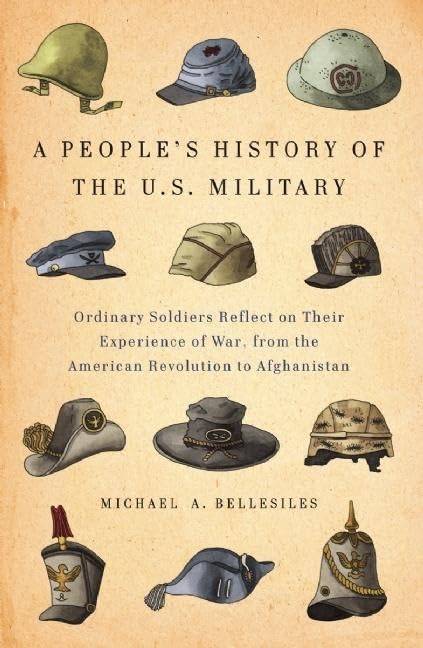



In A People's History of the U.S. Military, historian Michael A. Bellesiles draws from three centuries of soldiers' personal encounters with combat―through fascinating excerpts from letters, diaries, and memoirs, as well as audio recordings, film, and blogs―to capture the essence of the American military experience firsthand, from the American Revolution to the wars in Iraq and Afghanistan. Military service can shatter and give meaning to lives; it is rarely a neutral encounter, and has contributed to a rich outpouring of personal testimony from the men and women who have literally placed their lives on the line. The often dramatic and always richly textured first-person accounts collected in this book cover a wide range of perspectives, from ardent patriots to disillusioned cynics; barely literate farm boys to urbane college graduates; scions of founding families to recent immigrants, enthusiasts, and dissenters; women disguising themselves as men in order to serve their country to African Americans fighting for their freedom through military service. A work of great relevance and immediacy―as the nation grapples with the return of thousands of men and women from active military duty― A People's History of the U.S. Military will become a major new touchstone for our understanding of American military service. Controversial historian Bellesiles’ most recent book explores the American army from the Revolution through Iraq and Afghanistan, using excerpts from letters, diaries and memoirs, recordings, and videos and blogs of soldiers in combat. In it he shows that military service can enrich or destroy a life in many ways, but that our soldiers’ comradeship under fire and strong sense of nationalism, despite poor supplies, low pay, and contempt for veterans, have kept this country going for 236 years. The material from the Revolutionary War shows that many young men enlisted for the promised food and pay, which were often short or not provided at all. There were major conflicts on both sides as to whether black men should serve in the armies. Many of the same men, a generation older, fought in the War of 1812. The documents show that quite a few soldiers were confused as to why the war was being fought—that hasn’t changed in 200 years—but glad to accept General Andrew Jackson as a popular hero. The Mexican War, with its low casualty rate, was generally a celebration of Manifest Destiny, although certain farseeing individuals, including Lieutenant Ulysses S Grant, altered their career plans as a result of the conflict. The Civil War, with its rapid-firing weapons, more powerful artillery, and frightful casualty rates, was a shock for men and women on both sides. Bellesiles finishes with accounts from the ongoing conflicts in Iraq and Afghanistan. This history is compact yet complete, and its narrative is excellent. Its only fault is a somewhat didactic plea for honoring and understanding our veterans. Except for the 20-odd years following WWII, American veterans have been mistrusted, regarded as degenerate and a source of social tension. Their pensions have frequently been reneged upon. Even today, there is a very high suicide rate for veterans of Afghanistan and Iraq. --Frieda Murray A Choice magazine Outstanding Academic Title selection "Surrounded by Bellesiles' acerbic commentary, this is a useful, unsettling bottom-up history of America's wars that emphasizes the soldiers' mistreatment, suffering and injustice." ― Kirkus Reviews "Bellesiles' most recent book explores the American army from the Revolution through Iraq and Afghanistan, using excerpts from letters, diaries and memoirs, recordings, and videos and blogs of soldiers in combat. . . . . This history is compact yet complete, and its narrative is excellent." ― Booklist Michael A. Bellesiles teaches history at Central Connecticut State University. The author of numerous books, including 1877: America's Year of Living Violently , he lives in Connecticut. Reference Book