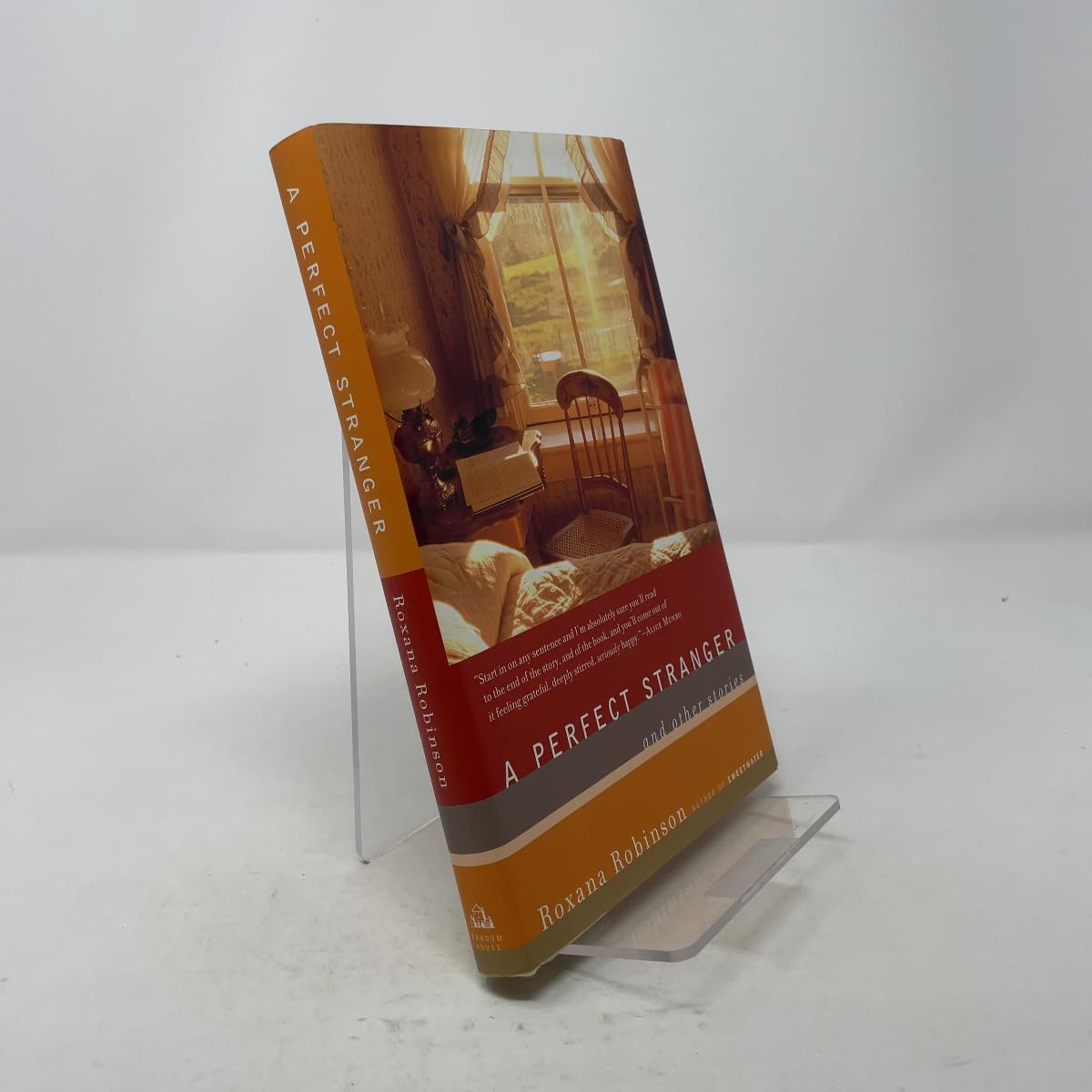



In Roxana Robinson’s lucid and elegant prose, her characters’ inner worlds open up to us, revealing private emotional cores that are familiar in their needs, their secrets, and their longings. These people tell us the truth–not only about themselves, their relationships, and their lives, but about ourselves as well. In “Family Christmas,” a young girl takes a holiday trip to her grandparents’, where the formal atmosphere is shattered by a mysterious and chaotic event that she knows she’s too young to understand but struggles to comprehend. In “Blind Man,” a college professor copes with the onslaught of grief after his daughter’s death. In “The Face Lift,” two college friends renew their bond across a great cultural divide. The sad and hilarious “Assistance” flawlessly details the tragicomic aspects of ageing–seen through the eyes of a daughter-turned-caretaker. The terrors of illness are explored in “The Treatment,” and in “Assez,” a trip to Provence reveals the true volatility of love–and reminds us that we often don’t realize that what we have is enough until it’s gone. A Perfect Stranger powerfully and affectingly examines the complex, intricate network of experiences that binds us to one another. These stories are tender, raw, lovely, and fine–and they reaffirm Roxana Robinson’s place at the forefront of modern literature. Adult/High School–This collection of stories is most notable for its variety and diverse points of view. In Family Christmas, readers are privy to the confused thoughts and emotions of a girl as she recounts the tensions and unhappiness of the adults around her, trying to make sense of the charged atmosphere. Readers understand the complex issues and ache for the child observer. The other first-person narratives are equally compelling: Face-lift is about two girls who meet in boarding school and continue their friendship into adulthood. The story is told from the perspective of the one who observes and envies the exciting life of the other. Envy is also the theme of The Football Game. Here, it is the apparently normal, carefree McArdles and their way of life that is dramatically revealed to be …more dangerous and beautiful…and immanent with love and sorrow than the narrator ever imagined. In other tales, the author recounts the desperation and despair of a housewife and the complex conversations at a dinner party in which the guest of honor is as reluctant as the host; in Shame, the narrator comes to terms with her selfhood, defiantly affirming her lesbianism. The descriptive language presents a vivid sense of place that subtly illuminates and complements the strong characterizations in each of the narratives. Readers looking for good stories and examples of good writing will be more than satisfied. –Jackie Gropman, Chantilly Regional Library, VA Copyright © Reed Business Information, a division of Reed Elsevier Inc. All rights reserved. Robinson follows her powerful novel, Sweetwater (2003), with a short story collection, her first in nine years, and one that dramatizes illness, aging, departed spouses, grown children, and dissolved friendships. Robinson is wonderfully observant of her characters, and makes them equally perceptive of each other. The title story, the book's best, presents the shared narration of an English intellectual on a lecture tour and the nervous married woman who houses him for two nights; the subtle contrast between their polite conversations and curious awareness of each other's lives is telling and humorous. Many characters are embarking on new phases of life, and are defined by their relationships to each other as Robinson, and her characters, closely exam the spaces between lives. If there is one flaw here, it's Robinson's determination to draw neat parallels or contrasts, often with a lesson learned in the final paragraphs of a story. But despite a few heavy-handed metaphors, this is a lucid and resounding collection rich in memorable human relationships. Annie Tully Copyright © American Library Association. All rights reserved "Start in on any sentence, and I'm absolutely sure you'll read to the end of the story, and of the book, and you'll come out of it feeling grateful, deeply stirred, seriously happy." -- Alice Munro "Roxana Robinson's beautifully rendered prose captures moments of domestic drama - sometimes painful, sometimes ecstatic, always heartrending and illuminating." -- Joyce Carol Oates Acclaim for Roxana Robinson: Sweetwater “Ambitious, intelligent and gracefully written . . .[Robinson] is one of our best writers.” –Jonathan Yardley, The Washington Post Book World “Abundant in poetic language and incisive imagery . . . The book plumbs the subject of human communion and how necessary this connection is to sustain life. . . . Robinson frames this vista with an expertly constructed narrative. And when she pulls off the ending with breathtaking skill, the effect is utterly satisfying.” –Bernadette Murphy, Los Angel