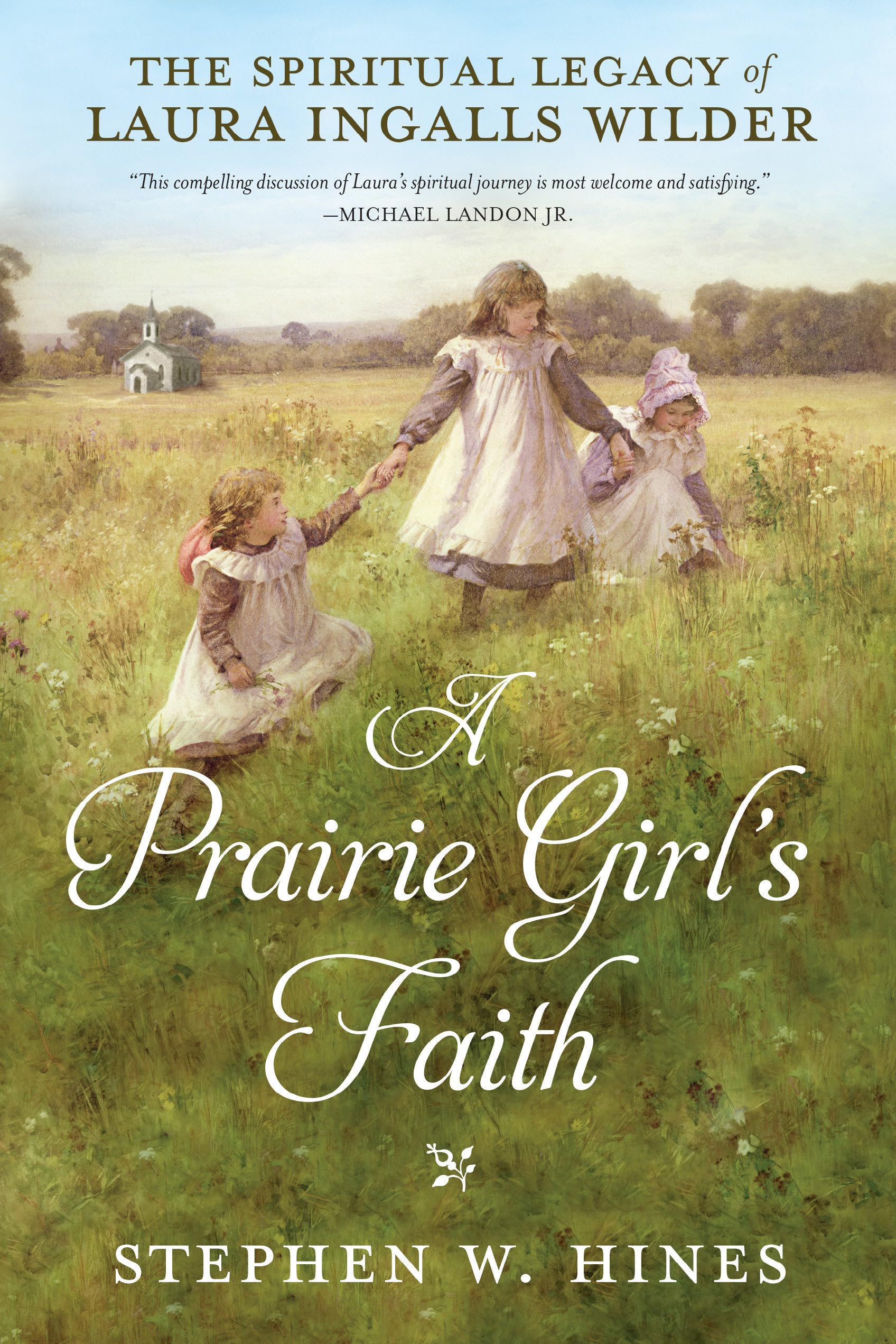
A Prairie Girl's Faith: The Spiritual Legacy of Laura Ingalls Wilder
$10.70
by Stephen W. Hines



The first in-depth look at the spiritual path of legendary storyteller Laura Ingalls Wilder. With her extraordinary God-given pluck, the creator of the epic Little House series survived the harshness of frontier life—from the heartbreak of sudden crop losses to murderous storms to unrelenting loneliness. Yet in every season, Laura found strength through her relationship with God. Now, several generations later, Laura’s insights about work and rest, trust in the face of hardship, and the value of faith are more relevant than ever. Through Laura’s discerning newspaper pieces as an early advice columnist, interviews with people who knew her personally, and extensive investigation by Stephen Hines, we witness an authentic faith that comes not from pretending all is well but from growing through difficult times. With photos and authentic recipes from the Little House era, A Prairie Girl’s Faith also opens a wider window into the lives of pioneers as it offers a revealing look at the beliefs, character, and culture into which Laura was born and grew to maturity. “Because of my father’s role in the Little House on the Prairie television series, I have long admired Laura Ingalls Wilder and the values she portrayed so memorably in her books. It’s no secret to her readers that faith was central to the Ingalls family. This compelling discussion of Laura’s spiritual journey is most welcome and satisfying.” —Michael Landon Jr., actor, director, writer, and producer Stephen Hines is a recognized authority on Laura Ingalls Wilder and has authored several best-selling volumes on her life, including Little House in the Ozarks . He grew up in the midwest in an area where Wilder once lived. Hines was the founding Director of Communications for the Tennessee Department of Children's Services and has held several editorial positions in magazine, newspaper, and book publishing. The author is a contributor to the Little House on the Prairie website. He lives with his wife, Gwen, in Nashville, Tennessee. 1 Pioneer Faith There is no turning back nor standing still; we must go forward, into the future, generation after generation toward the accomplishment of the ends that have been set for the human race. —Laura Ingalls Wilder Virtually every reader and fan of Laura Ingalls Wilder’s children’s books comes to realize that her religious faith is woven into her family’s story of pioneering in the old West. Throughout the eight original titles there are, in the foreground, references to Scripture, hymns, and prayer—to a daily life that experienced the reality of God. We are no more than twenty-three pages into the first title, Little House in the Big Woods, before Pa is playing his fiddle from which poured such standards as “Rock of Ages,” “On Jordan’s Stormy Banks I Stand,” and “A Shelter in the Time of Storm,” songs that were in the hymnals of my youth but are seldom found sixty years later. To find the roots of Laura’s faith we must, of course, discover what we can about the spiritual journey of her parents, Charles and Caroline. The Family That Travels Together Stays Together Fortunately, Dr. John E. Miller, professor emeritus of history at South Dakota State University, has noted their journey and gives us some insights into early Ingalls and Quiner (Ma Ingalls) beginnings. Any recounting would be almost a blank without his work, but even he cannot tell us everything. (For example, we know that Ma’s father drowned in Lake Michigan when Ma was only four, but we do not really know the overall effect this had on her.) What Miller does tell us is that both the Ingalls and Quiner families, along with many other families of their day, saw almost all their hopes for economic gain to be in traveling west. There needed to be a movement from the crowded East into the vastness of the “wilderness.” Their faith and family backgrounds certainly went with them on the journey. Grandma and Grandpa Ingalls (Laura and Lansford) migrated all the way from Cuba, New York, to the woods of Wisconsin. Both of them would have grown up in a sort of mixed Puritan and Congregational background common to the times. They would have considered themselves in the mainstream of Protestantism of that day, with elements of reformational teaching of the Bible as an absolute authority on doctrine, supplemented by attitudes that came out of the Great Awakening led by Jonathan Edwards (1703–1758). Edwards believed, in part, that God was wrathful and impatient toward sinners and ready to kick butt, so to speak. Later revivalists of the era following the Civil War were more likely to emphasize God’s love and mercy as reasons to live the Christian life. The background for Henry and Charlotte Quiner (Ma and Pa Quiner) was much the same, except that during their migrations they spent time in Connecticut, Ohio, and Illinois before ending up near Pepin, Wisconsin, which is near the border with Minnesota. The Quiner and Ingalls families were neighbors, which most like