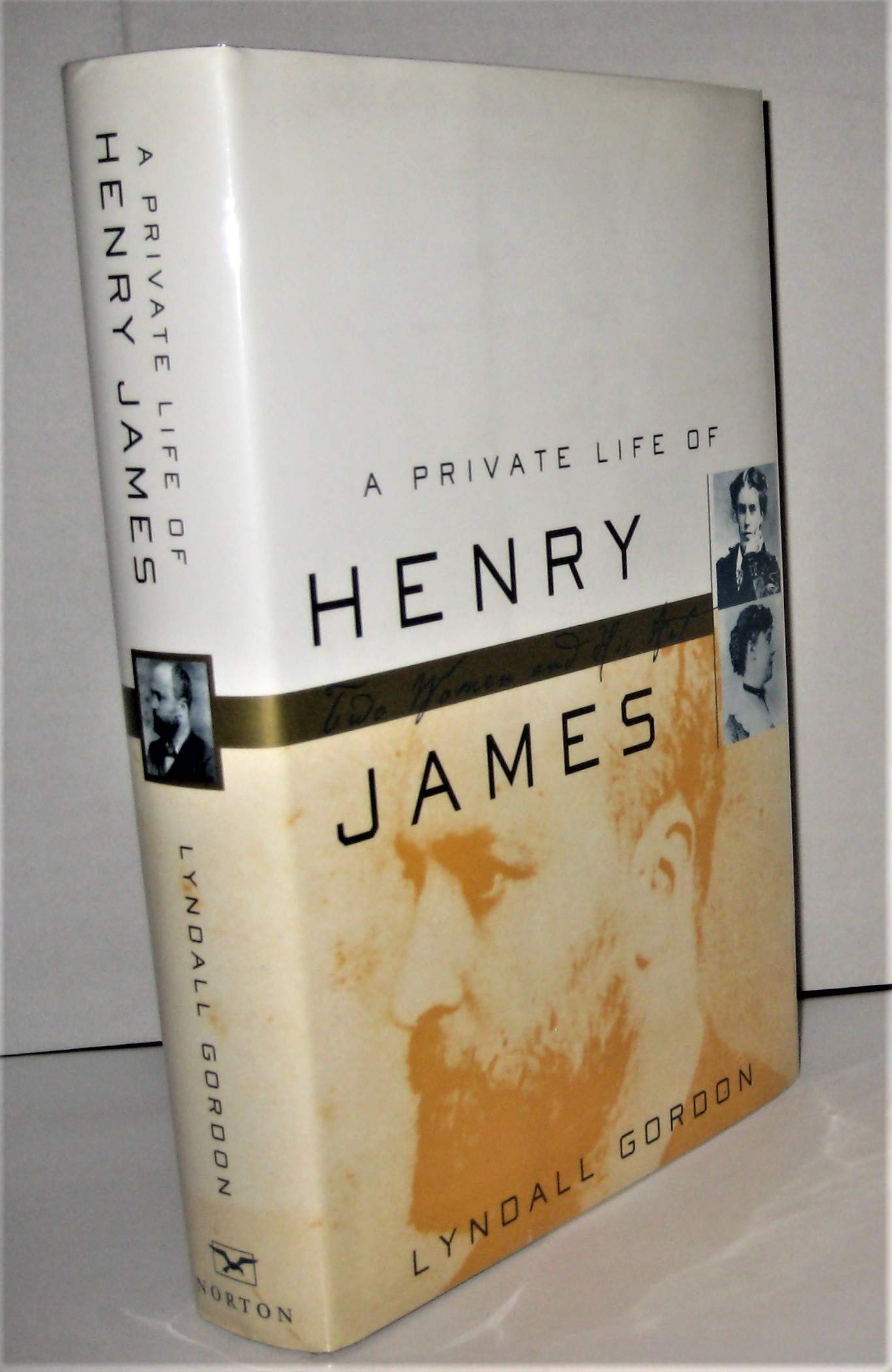



An exploration of influences in Henry James's life shows how his cousin Minny Temple, the hero of his youth, and writer Constance Fenimore Woolson, an ambitious and skilled author, had a lasting effect on the developing novelist. If you thought that previous biographers of Henry James had exhausted the field, think again. Lyndall Gordon--whose earlier work includes lives of T. S. Eliot and Charlotte Brontë--narrows her focus to examine the relationships James had with two women, a decade apart. The first was his cousin, Minny Temple, who contracted tuberculosis when she was 22. As she neared death, the vivacious, intelligent young woman dropped discreet hints to James in her correspondence that she would love to accompany him to Europe. He withdrew, and she died in 1870, only 24 years old. He would later use her as the template for such characters as Daisy Miller and Isabel Archer. Then, in 1880, James met the commercially successful author Constance Fenimore Woolson. During their 14-year relationship, the two not only inspired various characters in each other's fiction, but, Gordon suggests, Woolson set James on the path of writing metaphorically about the artist's life. But their relationship ended badly: he wrote a condescending essay about her in Harper's , which ensured her literary downfall; she ultimately fell to her death from a bedroom window (most likely, based on the evidence Gordon assembles, of her own volition). A Private Life of Henry James offers an unflinching look at its subject, demolishing the myth of James's solitary genius while respecting the complexity of his circumstances. Noted literary biographer Gordon (e.g., Charlotte Bronte: A Passionate Life) approaches James through two major women in his life: cousin Minny Temple and writer Constance Fenimore Woolson. Copyright 1998 Reed Business Information, Inc. A sharply observed but ultimately frustrated view of the Master, as reflected through the lives of one woman who inspired his art and another who shared in his dedication to fiction. To the frustration of his biographerseven, to an extent, the dedicated Leon EdelJames's scrupulous maintenance of his privacy was equal to his construction of the public persona. Gordon (Virginia Woolf: A Writer's Life, 1985, etc.) takes an indirect approach to illuminating his inner existence through two atypical outside lives. The first is his cousin Minny Temple, whom he used as the model for Daisy Miller, Isabel Archer, and Milly Theale. The second, who arrived as James published Daisy Miller, is a fellow expatriate American novelist, Constance Fenimore Woolson, whose suicide in Venice would be a magnet for later biographers. James's overshadowing idealization of his cousin, who died tragically young enough to be an excellent resource for his fiction and his memoir, bears only partial resemblance to the real person. Gordon's factual, perceptive portrait of the socially unconventional, intellectually questing Minny unfortunately lacks only the vitality that fascinated James and that fails to emerge her letters, excerpted here, mostly to people other than James (who burned his). Constance Woolson, nicknamed Fenimore for her great-uncle James, comes across as less original, even with Gordon's extra sympathy. Nonetheless, Fenimore was able to live abroad independently and write her novels, which became far more popular than James's later workto the Master's dismay. While some biographers have imagined a romance between James and the woman Alice James called a ``she-novelist,'' Gordon portrays the relationship on Fenimore's side as intellectually motivated and on James's as typical masculine condescension and inability to commit. Despite the focus on these two relationships, this Jamesian portrait is otherwise little different from other biographers'. Although Gordon works hard to detach Minny and Fenimore from James's shadow, she can't quite unravel his strategies to keep his private life private. (16 pages b&w photos, not seen) -- Copyright ©1999, Kirkus Associates, LP. All rights reserved. ...Lyndall Gordon has produced a remarkably entertaining and informative study, funny and moving by turns, full of fresh material and provocative assertions. -- The New York Times Book Review , Brooke Allen