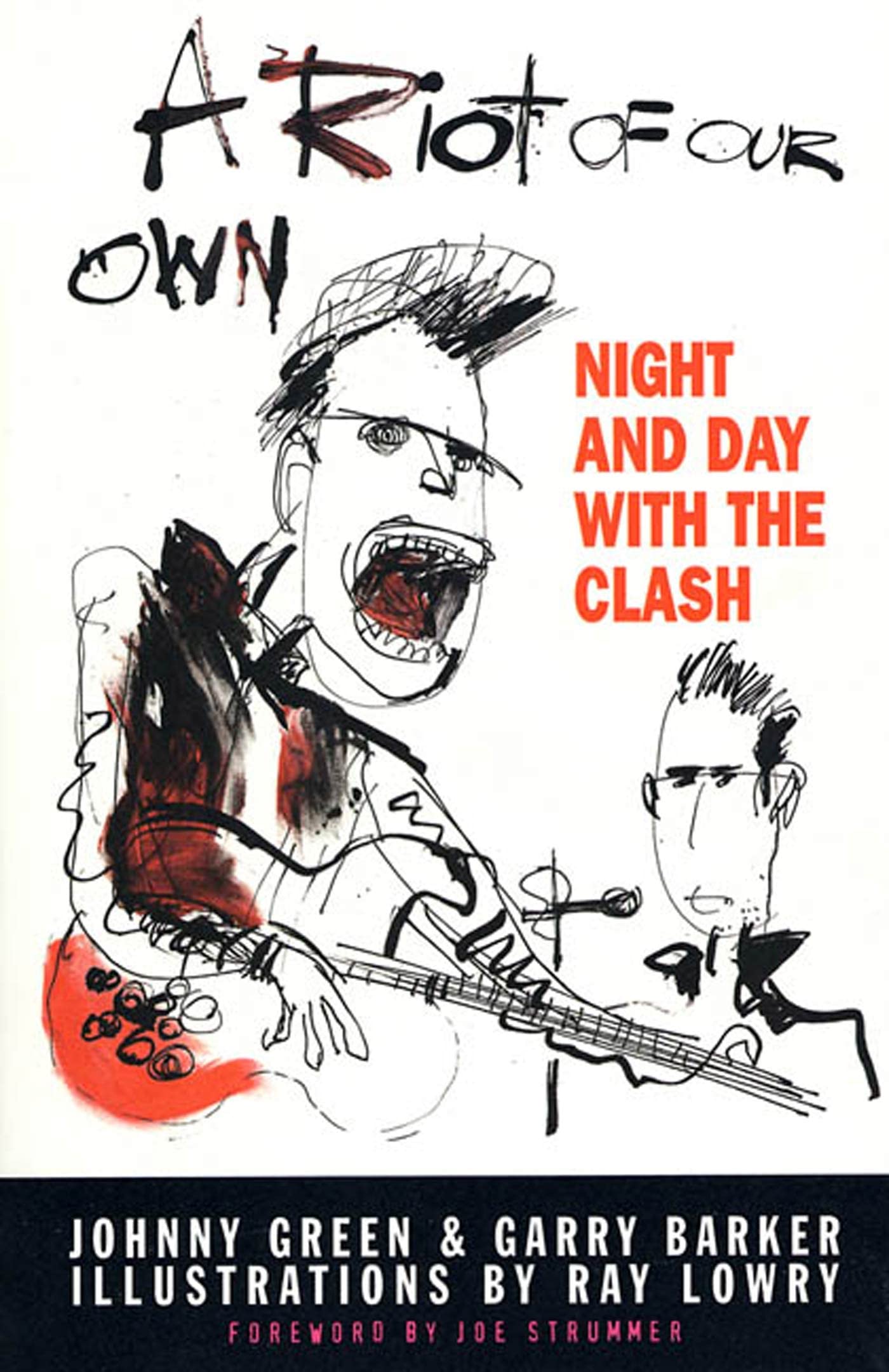



Johnny Green was a footloose slacker who loved punk rock, stumbled into being a roadie for the Sex Pistols, then tripped again into a job pushing sound equipment for the Clash and driving their beat-up van to performances in the mean industrial towns of England. Disaffected youth anointed the Clash as their spokesmen and made the group synonymous with punk itself in the late 1970s. Eventually becoming the band's road manager, Green had a unique vantage point from which to witness the burgeoning punk rock movement while helping the band in their perpetual search for women, booze, and drugs. Green was with the Clash when they conquered America, bringing with them their bad behavior and great music, and burning out after their third, too-long tour. Written in a tell-it-as-it-was style and accompanied by contemporaneous drawings by Ray Lowry, who tagged along with the Clash on their American tour as their official "war artist," A Riot of Our Own pierces the heart of the culture and music of punk rock and the people who lived it. Chronicles of the 1970s punk era aren't scarce by any means, but Johnny Green's narrative escapes the multiple traps of dried-out historical reportage, sociological analysis, and glory taking. Instead, he offers a certain worm's-eye vantage point on the advance of the Clash's career. A Belfast college grad when he met the band in 1977, Green accompanied them on endless tours, and he describes various episodes with a mix of detailed dialogue and picaresque humor. The Clash don't get the lavish hagiographic treatment one might expect from a fan. They come off, rather, as funny characters--intensely charged and, of course, young, sometimes-stumbling artists with insurmountable energy for performances. Green describes clearing the spit off band members' instruments in the same way that he recalls losing the demo tapes of London Calling . And then it all winds to an uneventful close, as so many things do (remember T.S. Eliot's maxim, "This is the way the world ends, the world ends, the world ends / Not with a bang but a whimper"?). There's not even a whimper here, though, just Green announcing to the band--at their career peak, on the London Calling tour in the U.S.--that he wanted to see more of North America. Such a low-key ambition to end such a high-key narrative! Nonetheless, this is an essential document in the annals of punk. --Andrew Bartlett Familiar to American fans for their megahit "Rock the Casbah," a music video staple during the early days of MTV, the British group The Clash have emerged in the ensuing 20 years as one of the most memorable and significant punk rock bands. Green, who was their road manager and procurer of assorted drugs and women, here recollects with considerable zest and humor just what it was like to be on tour with The Clash. Though bawdy and occasionally lurid details spice up the narrative, there is a remarkable sense of lighthearted fun throughout, splendidly enhanced by Ray Lowry's cartoonlike drawings. Green manages to make this chronicle of overindulgence, wrecked hotel rooms, and police arrests seem much less menacing than the events themselves might suggest. A rollicking insider's account that nicely complements the definitive bio, Marcus Gray's Last Gang in Town: The Story and Myth of The Clash (LJ 9/15/96). Recommended for rock music collections.?Richard Grefrath, Univ. of Nevada Lib., Reno Copyright 1999 Reed Business Information, Inc. The Clash gets more radio play now than it did in its '70s heyday, so perhaps a wonderful book about the band comes as no surprise. Green, the band's road manager, kindred spirit, and partner in misadventure, tells its story with richness and immediacy, thanks in part, no doubt, to writer Barker's collaboration, and the book's collection of true tales of the road reads like an admirable combination of Tony Sanchez's classically sleazy rock tell-all, Up and Down with the Rolling Stones (1979), and Hunter Thompson's chef d'oeuvre, Fear and Loathing in Las Vegas (1972). For one thing, artist Ray Lowry's laughably troubling illustrations perfectly capture the mood of the book, as Ralph Steadman's did for Fear and Loathing . Among band activities chronicled are the requisite casual drug use and a good bit of casual sex, but . . . this is rock and roll! For faithfully capturing what a shot in the arm the Clash was for a rock world grown soft and flatulent in the depths of the age of disco, this is right on target. As a chronicle of a band whose influence is arguably still not fully appreciated, it is essential. Mike Tribby A roadie's engaging and often amusing memoir of life in the eye of the punk rock storm. Green, who served the Clash as road manager from their commercial breakthrough in England in 1977 through their emergence as an international colossus in 1980 or so, lets it all hang out, giving his fond remembrances of life on the road and in the studios. While Green was with the Clash, the band's fortu