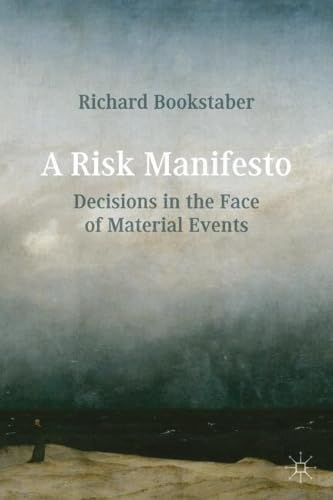



Geopolitical realignment, climate disruption, demographic shifts, and technological transformation present risks with no historical precedent. Pension systems are breaking under the weight of aging populations. Semiconductor production concentrates in a single geopolitical flashpoint. AI is reshaping everything from energy demand to the future of work to the waging of war. These are not future risks. They exist now. Yet our current approaches toward risk cannot see them, leaving institutions exposed when these transformations strike. This open access book presents a fundamental reimagining of how we think about and manage risk. It demonstrates that material risks cannot be reduced to statistics or confined to financial markets. They are rooted in the physical world: supply chains, demographic realities, geography, and human behavior. The transformation occurs across five dimensions: Financial > Physical Material constraints drive markets, not the reverse. Statistical > Structural Dependencies matter more than correlations. Static > Dynamic Systems adapt as participants respond to them. Mechanical > Human Interpretation, reflexivity, and contingency shape outcomes. Numbers > Narratives Decisions happen in conversations, not spreadsheets. Essential reading for chief risk officers, asset owners and allocators, policymakers and anyone responsible for navigating risks that are reshaping economies and societies. Geopolitical realignment, climate disruption, demographic shifts, and technological transformation present risks with no historical precedent. Pension systems are breaking under the weight of aging populations. Semiconductor production concentrates in a single geopolitical flashpoint. AI is reshaping everything from energy demand to the future of work to the waging of war. These are not future risks. They exist now. Yet our current approaches toward risk cannot see them, leaving institutions exposed when these transformations strike. This open access book presents a fundamental reimagining of how we think about and manage risk. It demonstrates that material risks cannot be reduced to statistics or confined to financial markets. They are rooted in the physical world: supply chains, demographic realities, geography, and human behavior. The transformation occurs across five dimensions: Financial > Physical Material constraints drive markets, not the reverse. Statistical > Structural Dependencies matter more than correlations. Static > Dynamic Systems adapt as participants respond to them. Mechanical > Human Interpretation, reflexivity, and contingency shape outcomes. Numbers > Narratives Decisions happen in conversations, not spreadsheets. Essential reading for chief risk officers, asset owners and allocators, policymakers and anyone responsible for navigating risks that are reshaping economies and societies. Richard Bookstaber has been at the forefront of financial risk management through every major crisis of the past four decades — and the emerging disruptions reshaping the world today. His career has spanned chief risk officer roles at major hedge funds, Moore Capital and Bridgewater, and at the investment banks Morgan Stanley and Salomon Brothers. During the 2008 financial crisis, he served in Washington developing the regulatory architecture for systemic risk oversight. More recently he was the chief risk officer for the pension and endowment of the University of California and the director of risk research at MSCI following their acquisition of Fabric, a wealth management platform he co-founded. He is the author of A Demon of Our Own Design and The End of Theory . A black belt in Brazilian Jiu Jitsu, he trains at the Renzo Gracie Academy in New York City. Richard Bookstaber has been at the forefront of financial risk management through every major crisis of the past four decades — and the emerging disruptions reshaping the world today. His career has spanned chief risk officer roles at major hedge funds, Moore Capital and Bridgewater, and at the investment banks Morgan Stanley and Salomon Brothers. During the 2008 financial crisis, he served in Washington developing the regulatory architecture for systemic risk oversight. More recently he was the chief risk officer for the pension and endowment of the University of California and the director of risk research at MSCI following their acquisition of Fabric, a wealth management platform he co-founded. He is the author of A Demon of Our Own Design and The End of Theory . A black belt in Brazilian Jiu Jitsu, he trains at the Renzo Gracie Academy in New York City.