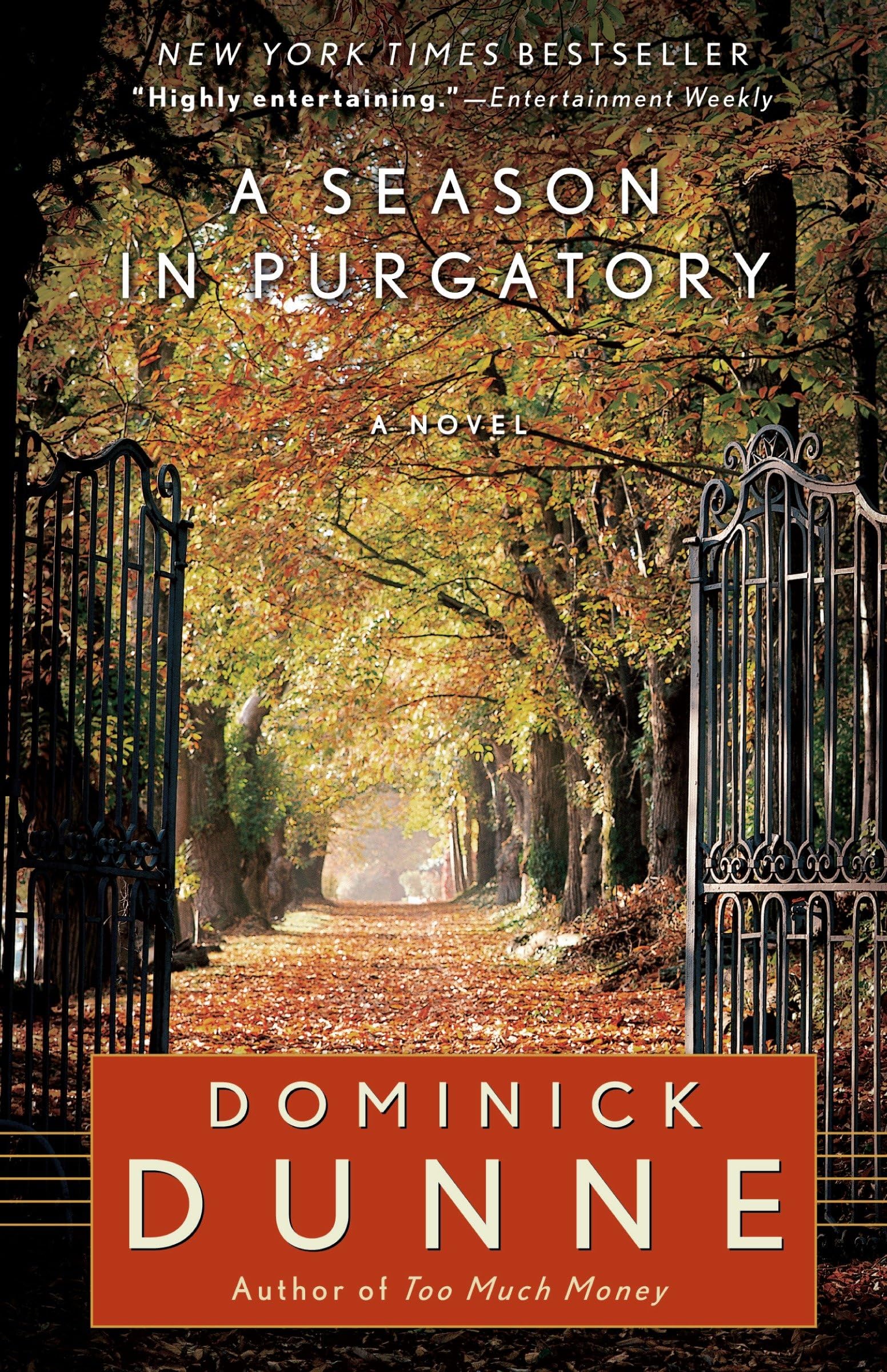



NEW YORK TIMES BESTSELLER They were the family with everything. Money. Influence. Glamour. Power. The power to halt a police investigation in its tracks. The power to spin a story, concoct a lie, and believe it was the truth. The power to murder without guilt, without shame, and without ever paying the price. They were the Bradleys, America's royalty. But an outsider refuses to play his part. And now, the day of reckoning has arrived. Praise for A Season in Purgatory “Highly entertaining.” — Entertainment Weekly “Stunning.” —Liz Smith “Compelling.” —New York Daily News “Mesmerizing.” — The New York Times “Potent characterization and deftly crafted plotting.” — Publishers Weekly "Highly entertaining."— Entertainment Weekly "Mesmerizing."— New York Times "Stunning."—Liz Smith "Compelling."— New York Daily News "Potent characterization and deftly crafted plotting."— Publishers Weekly They were the family with everything. Money. Influence. Glamour. Power. The power to halt a police investigation in its tracks. The power to spin a story, concoct a lie, and believe it was the truth. The power to murder without guilt, without shame, and without ever paying the price. America's royalty, they called the Bradleys. But an outsider refuses to play his part. And now, the day of reckoning has arrived. . . . Dominick Dunne was the author of five bestselling novels, two collections of essays, and The Way We Lived Then , a memoir with photographs. He had been a special correspondent for Vanity Fair for twenty-five years, and the host of the television series Dominick Dunne's Power, Privilege, and Justice . He passed away in 2009 after completing Too Much Money . 1 The jury is in its third day of deliberation. Early in the day, the jury foreman requested that Judge Edda Consalvi have the testimony of Bridey Gafferty, the Bradleys’ cook, read back to them, and in the afternoon the foreman asked to see the weapon—half of a baseball bat—and the autopsy pictures of Winifred Utley’s bludgeoned body, the pictures that had caused so much distress to Winifred’s mother, Luanne Utley, when they were presented as exhibits by the prosecutor during the trial. After both requests by the jury, there was much comment in the press corps as to the interpretation and, as always in this case, considerable diversity of opinion. The air is charged with tension. Judge Consalvi has proved herself a martinet. Yesterday she ordered the bailiff to oust from her courtroom the reporter from Newsweek after he grinned broadly and snickered when the court reporter reread Billy Wadsworth’s statement that the defendant, Constant Bradley, after cutting in on him at the country club dance, said to Winifred Utley, “Do you mind dancing with a man with an erection?” They, the Bradleys, have a special room where they all sit together during recesses and breaks, so as not to be on view to the media or the merely curious, but occasionally one of them emerges to use the telephone or the bathroom facilities. Today I saw Kitt in the corridor of the courthouse. We passed so closely that the skirt of her blue-and-white silk dress brushed my trouser leg, but she walked past me, eyes straight ahead, without speaking. It was not so much that she cut me. She simply did not, by choice, see me. I have become nonexistent to her. By now I am used to that, both from Kitt, who once meant so much to me, and from the whole Bradley family. I won’t even mention what happened yesterday in the men’s room, when I encountered Constant at the adjoining urinal. Oh, hell, perhaps I will mention it. What difference does it make? Constant was standing there next to me when, suddenly, without speaking a word, he turned and aimed the strong steady stream of his urine in my direction, soaking my blazer and trousers. Once before, in my youth, I had seen him do such a thing, to a boy no one liked called Fruity Suarez, when we were in school at Milford. His face then was filled with impish levity, a spoiled boy playing a mischievous prank. Yesterday, there was no trace of mischievousness in his look. Only hate. But it was Kitt’s disdain, not Constant’s piss, that was the more wounding. Of course I know that, in telling the story that I am about to tell, I run the risk of losing everything that I have achieved and acquired in my life, including my reputation. I know also that I will be earning the eternal enmity of the family, and I have witnessed over the years, sometimes at very close range, the meaning of their eternal enmity, when it was the lot of others to experience it. They, the family—who are referred to, among themselves and even sometimes in the press, as the Family—are not my own family, but the family that I was accepted into twenty years ago. I first came as a school chum of Constant’s, a month-long visitor at the Bradley estate. We were then at Milford, a school in Connecticut for privileged boys from rich Catholic families, which had b