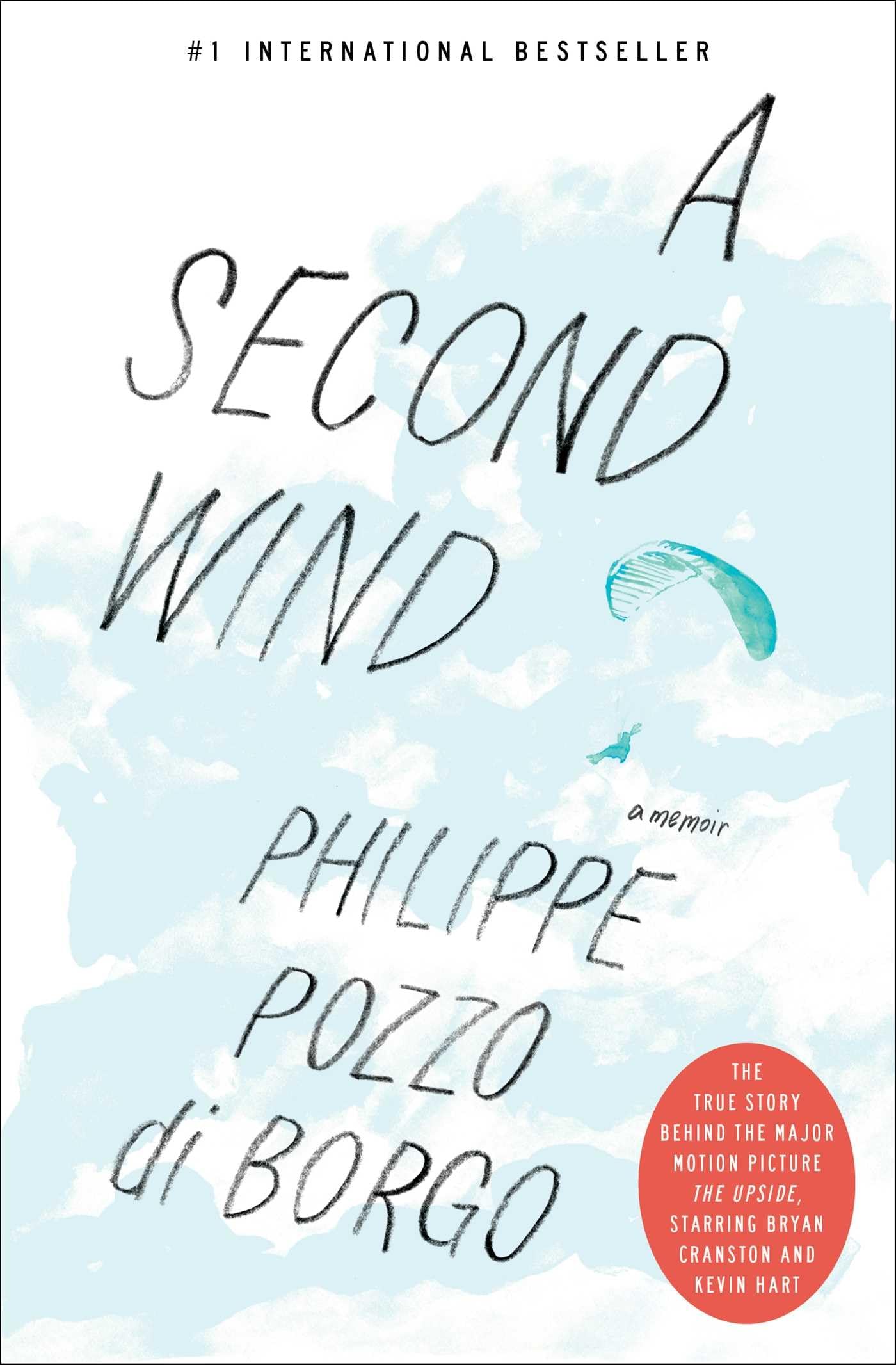



Now a major motion picture— The Upside— starring Bryan Cranston, Kevin Hart, and Nicole Kidman. Discover the moving and heartfelt #1 international bestseller and inspiration for the film The Upside about an aristocratic Frenchman who is paralyzed in an accident and has to adjust to his new normal with the help of his unlikely caregiver. As the descendant of two prominent French families and director of a legendary vineyard, Philippe Pozzo di Borgo was not in the habit of asking for help. Then, in 1993, right on the heels of his beloved wife’s diagnosis of a terminal illness, a paragliding accident left him a quadriplegic. He was forty-two years old and unable to do anything—even feed himself—without the help of another person. Passing his days hidden behind the high walls of his Paris townhouse, Philippe was totally isolated. His paralysis rendered him unable to reach out to others and seemed to make people unwilling to touch him or acknowledge the reality of his existence. For the first time, he learned what it felt like to be excluded. The only person who seemed not to be bothered by Philippe’s condition was someone who had been marginalized his entire life: Abdel, an unemployed, uninhibited Algerian immigrant from the outskirts of society who would become Philippe's unlikely caretaker. With his tenacious spirit and irreverent sense of humor, Abdel is able to reawaken Philippe’s connection to people and the larger world around him. A Second Wind is the inspiring true story of two men who refused to ask for help, and then wound up helping each other in more ways than they could imagine. Philippe Pozzo di Borgo spent his childhood in Paris, London, Amsterdam, Trinidad, Morocco, Algeria and Corsica. He now lives in Essaouira, Morocco. A descendent of both the Ducs Pozzo di Borgo and the Marquises de Vogue, he is the former director of Pommery Champagnes (LVMH). His bestselling memoir Le Second Souffle (Second Wind) served as the basis for the hit French film, Intouchables (Untouchables). A Second Wind I Was Born… AS THE DESCENDANT of the Dukes of Pozzo di Borgo and the Marquis de Vogüé, to say I was born lucky is putting it mildly. During the Reign of Terror, Carl-Andrea Pozzo di Borgo parted ways with his erstwhile friend Napoleon. While he was still very young, Pozzo di Borgo became prime minister of Corsica under British protection, was forced into exile in Russia, and from there—thanks to his knowledge of the “Ogre”—played his part in the monarchies’ victory. Whereupon he set about amassing a fortune by putting a very high price on the considerable influence he had with the tsar. Dukes, counts, and all the other European nobles swept aside by the French Revolution thanked him handsomely when he helped them to recover their properties and positions. Louis XVIII went so far as to say that Pozzo “was the one who cost him the most.” Through judicious alliances, the Pozzos have handed down this family dough from generation to generation until the present. You can still hear people in the Corsican mountains say that someone is as “rich as a Pozzo.” Joseph, or “Joe” as he preferred, Duke of Pozzo di Borgo, my grandfather, married an American gold mine, whose grandchildren called her by the English epithet “Granny.” Grandpapa Joe used to relish telling the story of how they got married in 1923. Granny was twenty and had embarked with her mother on a grand tour of Europe to meet the continent’s most eligible bachelors. The two women arrived at the Château de Dangu in Normandy to stay with a Corsican, who turned out to be a head shorter than Granny. Addressing her daughter across the vast dining room table at lunch, Granny’s mother remarked in English (which of course everyone understood), “Don’t you think the duke we saw yesterday had a much prettier château, dear?” This didn’t, however, prevent Granny from choosing the little Corsican over his rival. When the Left came to power in 1936, Joe Pozzo di Borgo was imprisoned for membership in La Cagoule, an extreme right-wing organization that was hell-bent on overthrowing the Third Republic, even though he wasn’t remotely in sympathy with them. During his stay in La Santé prison, he was visited by his wife and a select group of friends. “The awkward thing about being in prison when people want to see you,” he joked, “is that you can’t send someone to say you’re not in.” The Corsican Perfettini clan, who had defended our interests on the island since our exile to Russia, were outraged by grandfather’s plight. A delegation went to Paris armed to the teeth and descended on La Santé. Philippe, the Perfettini patriarch, asked the duke for a hit list so they could mete out retribution, only to be advised by Grandfather to go home quietly. On his way out, old Philippe, surprised and disappointed, anxiously asked the duchess, “Is the duke tired?” Grandfather stopped playing an active role in politics after that and withdrew to his properties: