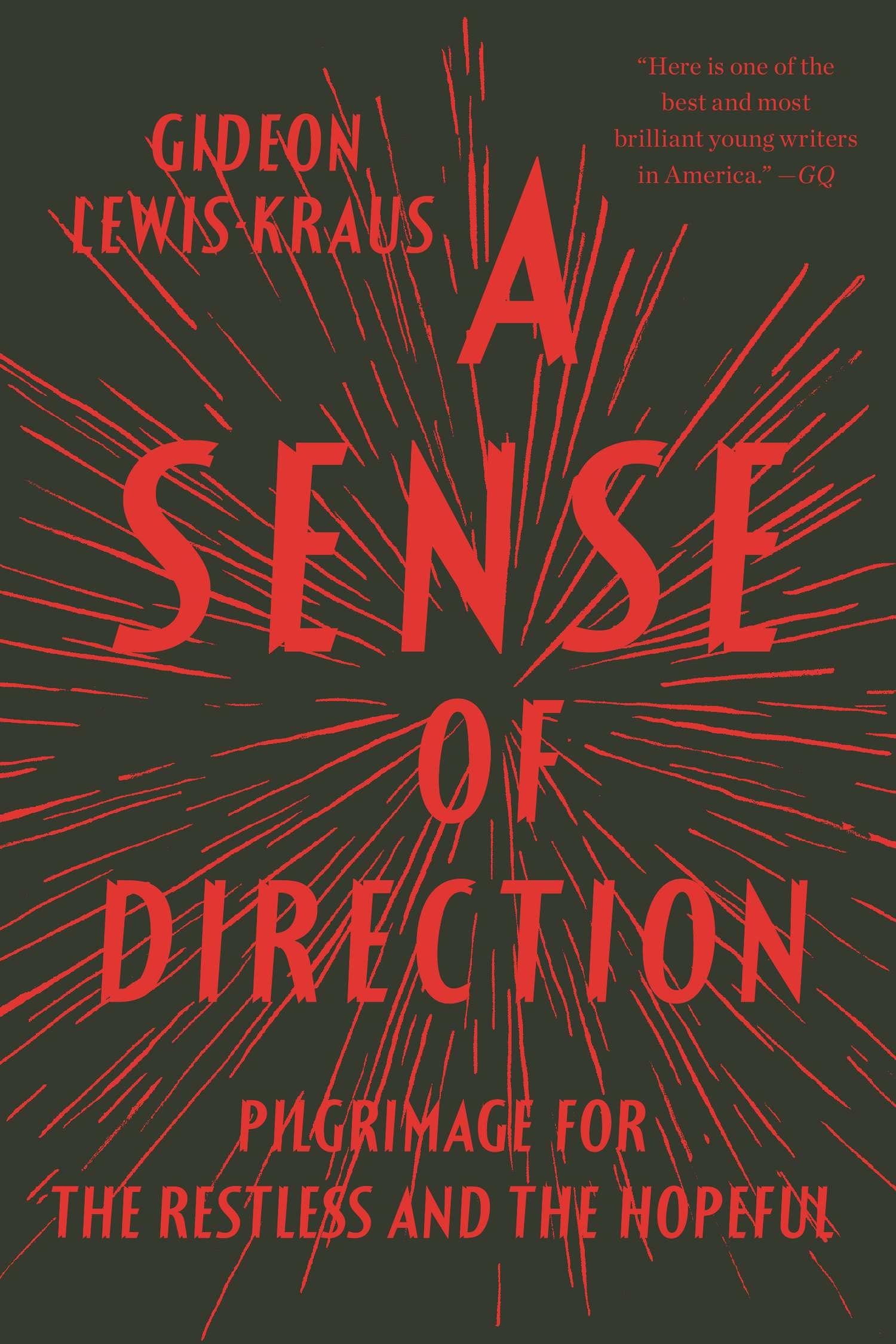
A Sense of Direction: Pilgrimage for the Restless and the Hopeful
$16.00
by Gideon Lewis-Kraus



In medieval times, a pilgrimage gave the average Joe his only break from the daily grind. For Gideon Lewis-Kraus, it promises a different kind of escape. Determined to avoid the fear and self-sacrifice that kept his father, a gay rabbi, closeted until midlife, he has moved to anything-goes Berlin. But the surfeit of freedom there has begun to paralyze him, and when a friend extends a drunken invitation to join him on an ancient pilgrimage route across Spain, Lewis-Kraus packs his bag, grateful for the chance to wake each morning with a sense of direction. Irreverent, moving, hilarious, and thought-provoking, A Sense of Direction is Lewis-Kraus’s dazzling riff on the perpetual war between discipline and desire, and its attendant casualties. Across three pilgrimages and many hundreds of miles, he completes an idiosyncratic odyssey to the heart of a family mystery and a human dilemma: How do we come to terms with what has been and what is—and find a way forward, with purpose? “Beautiful, often very funny… Lewis-Kraus weaves a story that is both searching and purposeful, one that forces the reader, like the pilgrim, to value the journey as much as the destination.” – The New Yorker “A long walk to self-discovery that speaks eloquently of our times.” –NPR.org “Gideon Lewis-Kraus has written a very honest, very smart, very moving book about being young and rootless and even wayward. With great compassion and zeal he gets at the question: why search the world to solve the riddle of your own heart?" – Dave Eggers “Here is one of the best and most brilliant young writers in America.” – GQ "Charming and disarming… a wonderful exploration of the stories we tell ourselves." – T: The New York Times Style Magazine “A witty, deeply felt memoir… an honest, incisive grappling with the brute fact… that we only have one life to live… sparkles with tight, nearly aphoristic observations." – The Boston Globe “Nail[s] our collective anxiety—every sentence rings true… Lewis-Kraus is a master.” – Daily Beast “Rightfully anticipated literary debut.” – Nylon “A complicated meditation on what the physical act of pilgrimage can mean in modern society… [with] moments of brilliant philosophical insight.” – The Onion AV Club “Lewis-Kraus does nothing if not dazzle on the sentence level. But his commentary isn't just pretty; it's deeply self-aware.” – The Cleveland Plain Dealer “Gorgeously written… [Lewis-Kraus is] aimless, sure, but meticulously, obsessively, beautifully so.” – The Rumpus “A young writer seeks a cure for his fecklessness by following roads very much taken in this scintillating travel memoir… Lewis-Kraus’s vivid descriptive powers and funny, shaggy-dog philosophizing [yield] an entertaining, thoughtful portrait of a slacker caught up in life’s quest for something.” – Publishers Weekly “Physically, Lewis-Kraus’ feats are staggering, but more so is how fully and fluidly he recounts them, alongside meditation on his own youthful anxieties and a well-synthesized history of the act of pilgrimage.” – Booklist “If David Foster Wallace had written Eat, Pray, Love , it might have come close to approximating the adventures of Gideon Lewis-Kraus. A Sense of Direction is the digressively brilliant and seriously hilarious account of a fellow neurotic's wanderings, and his hard-won lessons in happiness, forgiveness, and international pilgrim fashion.” –Gary Shteyngart “This is a brilliant meditation on what the spiritual and fraternal and paternal and communal might mean to a person right now, fueled as it is by the funny, thorny, dreamy, generous, cranky, rigorous, truth-seeking voice of Gideon Lewis-Kraus. For the sake of whatever force or idea or feeling sustains you, make a pilgrimage to your nearest bookstore and buy the goddamn book.” –Sam Lipsyte Gideon Lewis-Kraus has written for Harper's , The Believer , The New York Times Book Review , the Los Angeles Times Book Review , Wired , McSweeney's , Bookforum , GQ , Slate , and other publications. For the moment he lives in Brooklyn. Prologue: Tallinn My friend Tom was trapped at home in a tiny, distant city. He had no Estonian visa, and he knew if he left Tallinn he'd be unable to return. More immediately problematic was the Russian stripper he'd been flirting with, or, more specifically, her boyfriend, who had taken to hanging around Tom's front door. Tom pleaded with me to visit, confident the guy wouldn't take on the two of us. Tom and I didn't know each other all that well then, nothing like later, but it sounded like a fun excuse for a trip. Unlike Tom, I could leave my apartment in Berlin whenever I wanted — I had a German freelancer's visa and no cuckolded Baltic criminals camped out on my stoop — and was, in fact, spending more time away than at home. By that point Berlin often left me feeling at loose ends, and one of the things I had come to like most about living there was how easy it was never to be in town. A lot of my frie